Revanth Reddy Reduces Convoy Size
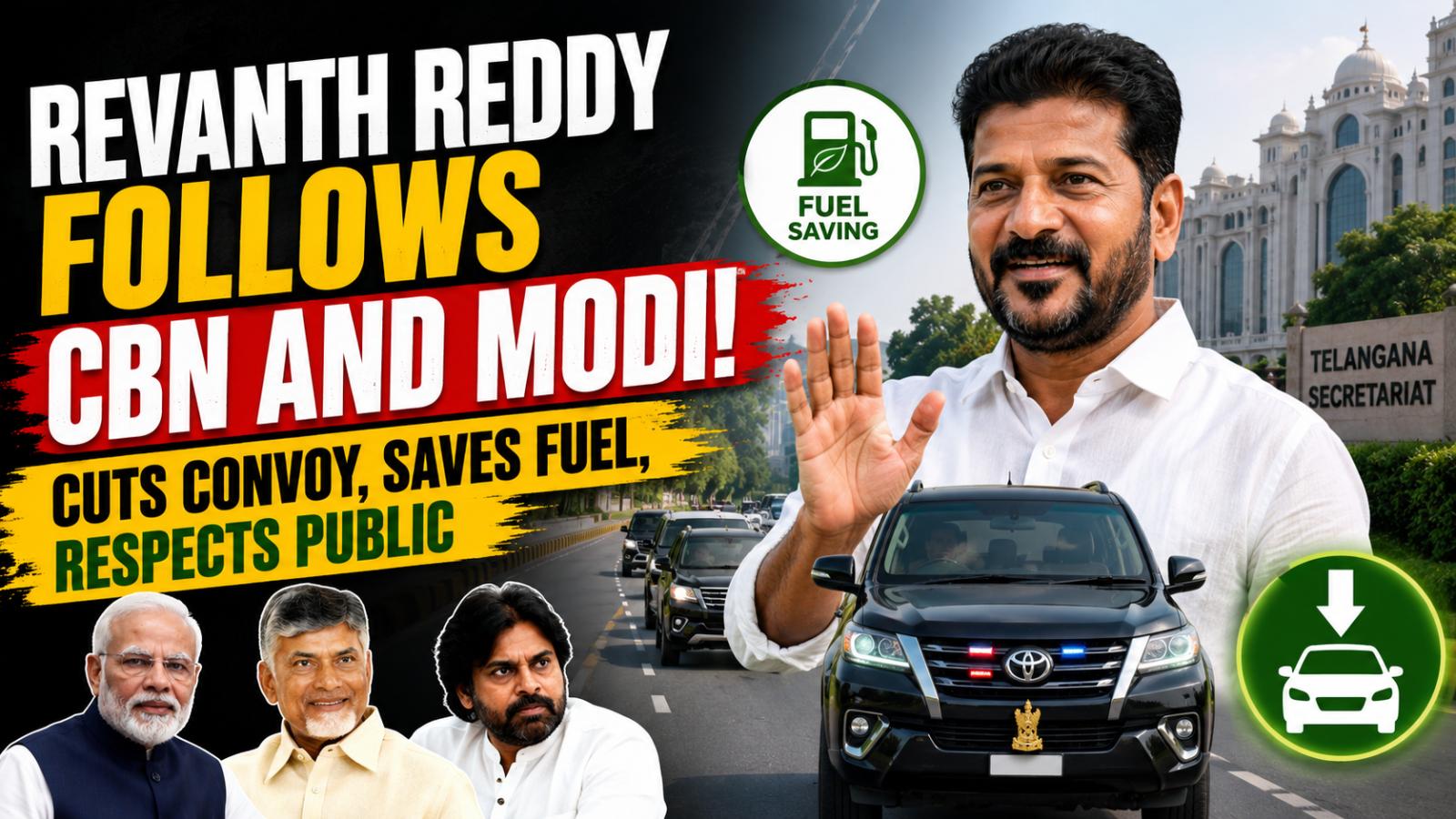
Telangana Chief Minister A. Revanth Reddy has reduced the size of his official convoy, following Prime Minister Narendra Modi’s appeal to save fuel amid rising energy concerns. The Chief Minister reportedly travelled to the Dr BR Ambedkar Telangana Secretariat on Saturday with a much smaller convoy and without causing major disruption to public traffic.
According to reports, Revanth Reddy travelled from his Jubilee Hills residence to the Secretariat in just three vehicles, without the usual high-security arrangements and jammer vehicle. Regular traffic was reportedly allowed to move normally, a move that drew attention on social media and among Hyderabad commuters.
Follows Modi, CBN And Pawan Kalyan
The decision comes after Prime Minister Narendra Modi urged political leaders and government functionaries to adopt fuel-saving practices, especially in view of rising global energy concerns. Several leaders have started reducing convoy sizes as part of the same message.
Andhra Pradesh Chief Minister N. Chandrababu Naidu had earlier reduced his convoy size from 11 vehicles to four, while Deputy Chief Minister Pawan Kalyan reportedly cut his convoy strength by nearly 50 percent. Telangana Governor Shiv Pratap Shukla also reduced his convoy earlier this month following the Prime Minister’s austerity appeal.
Revanth Reddy’s move is being seen as part of this wider political shift toward reduced fuel use, lower public inconvenience and simpler official movement. For a Chief Minister who had faced complaints over traffic restrictions caused by his convoy, this decision also has a strong public relations angle.
Public Traffic Kept Moving
One of the most important parts of the move is not just the reduction in vehicles, but the decision not to stop public traffic during the Chief Minister’s movement. In Hyderabad, VIP convoy movement often leads to roadblocks, diversions and frustration among commuters. Revanth Reddy had been facing public criticism over traffic inconvenience caused during his official travel.
This change directly addresses that complaint. Instead of only presenting the move as fuel conservation, the Telangana government can also project it as a people-friendly administrative correction. If continued consistently, it may help reduce public irritation over VIP culture.
The bigger test, however, is whether this remains a one-day symbolic move or becomes a permanent practice. Reducing convoy vehicles on one route to the Secretariat will get headlines, but the public will judge the government by whether the same discipline is followed during district tours, political events, airport movements and high-security visits.
Officials have reportedly said the Chief Minister’s convoy earlier had around 15 vehicles, which was first reduced to nine and later brought down further to three vehicles. This gradual reduction suggests the state government was already reviewing convoy movement before the latest public appearance.
Politically, the move allows Revanth Reddy to align himself with a national fuel-saving message while also responding to local anger over traffic restrictions. It also puts pressure on other ministers and senior officials in Telangana to follow the same approach. If the Chief Minister can travel with fewer vehicles, the same question will naturally be asked about ministers, bureaucrats and police-protected VIPs.
For citizens, the practical benefit is simple: fewer roadblocks, less waiting time and reduced fuel wastage during VIP movement. For the government, the opportunity is bigger. This can become a visible reform against VIP inconvenience, provided it is implemented across the administration and not limited to media-friendly occasions.
Revanth Reddy’s convoy cut may look like a small administrative step, but in a city like Hyderabad, where traffic delays are already a daily struggle, it can carry strong public appeal. The real impact will depend on consistency. If the move becomes routine, it could help reduce both fuel use and public anger. If not, it will be remembered only as another political photo moment.