- 15 Sep 2026
- 1 posts
In a busy workplace, aisles can become crowded before anyone even notices. A box gets left near a walkway, a pallet extends into a traffic path, or equipment is temporarily placed where people normally walk. These small issues may seem harmless at first, but they can create bigger problems when employees, forklifts, carts, or emergency responders need to move through the area.
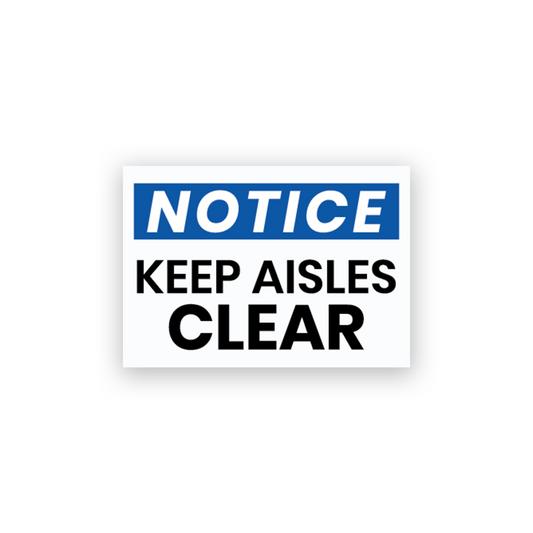
That is where a Keep aisle clear sign can make a real difference. A simple, well-placed sign gives people a quick reminder about keeping important pathways open. But putting up a sign is only part of the solution. Placement matters just as much.
Let’s look at some practical ways to place Keep Aisle Clear signs so they actually get noticed and remain useful in busy workplaces.
Why Does Keep Aisle Clear Sign Placement Matter?
Think about how people move around a warehouse, manufacturing facility, stockroom, or loading area. Employees are often focused on their tasks rather than looking for safety signs.
If a sign is hidden behind a stack of boxes or placed too far away from the area it applies to, people may simply miss it.
Good placement makes the message visible at the right time and in the right location. A Keep aisle clear sign can remind employees not to leave boxes, tools, carts, pallets, or other materials in designated walkways.
Clear signage can also reinforce workplace housekeeping expectations. It works best when combined with employee training, floor markings, designated storage areas, and regular inspections.
1. Place Signs Where the Problem Usually Happens
One of the easiest ways to improve sign placement is to think about where obstructions actually occur.
For example, if employees frequently leave boxes near a warehouse entrance, placing a sign several feet away in another section may not be very effective. The sign should be close enough to the problem area to connect the message with the action.
Consider placing Keep Aisle Clear signs near:
- Warehouse aisles
- Walkways between workstations
- Loading and unloading areas
- Stockrooms
- Emergency access routes
- Equipment pathways
- Stairway approaches
- High-traffic intersections
- Areas where pallets are frequently moved
The goal is simple: put the reminder where people need the reminder.
2. Keep the Sign Easy to See
A safety sign does not help much if employees cannot easily see it.
Avoid placing signs behind shelving, machinery, stacked materials, doors, or other visual barriers. In busy facilities, visibility can change throughout the day as inventory and equipment move around.
Before installing a Keep aisle clear sign, stand where employees normally approach the area. Ask yourself:
Can I see the sign without having to search for it?
If the answer is no, consider moving it to a more visible position.
For wall-mounted signs, eye-level placement can often make the message easier to notice. However, the exact position should depend on the layout, traffic patterns, and potential obstructions in the workplace.
3. Use Signs at High-Traffic Intersections
Some areas deserve extra attention because they have constant movement.
Warehouse intersections, aisle entrances, pedestrian crossings, and equipment routes can become congested quickly. These locations are often shared by employees, forklifts, carts, and other equipment.
A Keep aisle clear sign positioned near an aisle entrance can remind employees that the pathway needs to remain open.
For larger workplaces, you may need several signs rather than relying on one sign at the beginning of a long aisle. Employees farther down the pathway may never see the first sign.
4. Pair Signs With Floor Markings
Signs and floor markings can work well together.
A floor marking can visually show where an aisle or walkway begins and ends, while a sign explains what employees are expected to do with that space.
For example, a designated walkway might have floor markings along its edges and a Keep Aisle Clear sign mounted nearby.
This combination creates a clearer visual message:
This is a designated pathway — keep it open.
Floor markings can be particularly useful in warehouses and manufacturing environments where wall space may be limited or where employees are constantly moving equipment through the facility.
5. Avoid Sign Clutter
More signs do not automatically mean better communication.
Walk through a workplace and you may see signs covering nearly every available wall. When employees are surrounded by too many messages, individual signs can become easier to ignore.
Instead, use Keep Aisle Clear signs strategically in locations where they provide genuine value.
The message should be easy to understand at a glance. Avoid placing the sign where it competes with several unrelated notices or safety messages.
A clean and organized sign layout makes important instructions easier to recognize.
6. Consider Lighting and Visibility
Lighting is another factor that is easy to overlook.
A sign might be perfectly positioned during the day but difficult to read in a poorly lit area. Check whether the message remains visible under the normal lighting conditions of the workplace.
For facilities operating around the clock, consider visibility during different shifts.
Also check whether shadows, glare, dust, or changing inventory can affect readability. A durable, easy-to-read sign is more useful when employees can quickly understand it from a reasonable distance.
7. Place Signs Near Temporary Problem Areas
Not every obstruction happens in the same place permanently.
During maintenance, renovations, inventory changes, or seasonal operations, aisles may become temporarily crowded. In these situations, temporary signage can help reinforce the need to keep pathways open.
For example, if a particular aisle becomes congested during receiving hours, additional signage can be used around that area during the busiest periods.
However, temporary signs should not replace proper storage and housekeeping practices. The long-term goal should always be to prevent recurring obstructions rather than simply reminding people about them.
8. Inspect Signs Regularly
Installing a sign does not mean the job is finished.
Busy workplaces can be tough on safety signage. Signs may become dirty, damaged, faded, loose, or hidden by new equipment and inventory.
Make sign inspections part of regular workplace walkthroughs.
Check for:
- Faded or damaged signs
- Loose mounting
- Obstructed visibility
- Poor lighting
- Changes in aisle layout
- New equipment blocking the sign
- Signs that are no longer relevant
If the workplace layout changes, review your signage too. A sign that worked perfectly six months ago may no longer be positioned correctly after shelving or equipment has been moved.
9. Keep the Message Simple
When people are walking through a busy warehouse or workplace, they usually do not have time to read a paragraph.
That is why simple safety messaging is valuable.
A Keep aisle clear sign communicates its purpose quickly. Employees should be able to understand what the sign means without stopping to study it.
Simple wording combined with clear visual design can make safety communication easier to recognize during normal workplace activity.
10. Make Sign Placement Part of a Bigger Safety Plan
Finally, remember that signs are only one part of workplace safety.
A Keep Aisle Clear sign can remind people about an expectation, but it cannot physically stop someone from leaving a pallet in a walkway. Effective aisle management may also require:
- Clearly designated storage areas
- Employee training
- Routine housekeeping checks
- Floor markings
- Defined pedestrian pathways
- Proper material handling procedures
- Regular safety inspections
- Clear emergency access routes
When these practices work together, employees have both the information and the workplace structure needed to keep aisles accessible.
Final Thoughts
A Keep aisle clear sign may look like a small addition to a workplace, but its placement can have a big impact on how effectively the message is noticed. The best locations are usually areas where people regularly enter aisles, move materials, operate equipment, or encounter potential obstructions.
Keep signs visible, use them strategically, combine them with floor markings and good housekeeping practices, and inspect them regularly. Most importantly, treat signage as part of a larger workplace safety program rather than a standalone solution.