- 27 Oct 2026
- 1 posts
The logistics industry relies on efficient transportation, accurate inventory management, timely deliveries, and smooth communication. As businesses manage more shipments and customer expectations increase, traditional processes and disconnected systems can make daily operations challenging. Companies need reliable technology to coordinate activities, reduce delays, and maintain visibility across the supply chain.
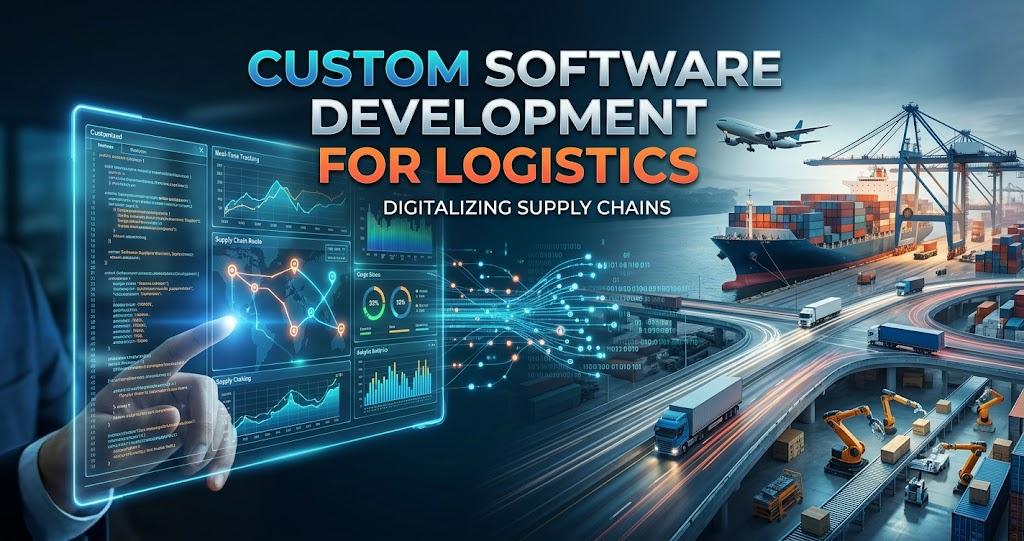
Custom software development for logistics helps businesses address these challenges with digital solutions designed around their operational requirements. From fleet management and shipment tracking to warehouse automation and route planning, customized software can improve efficiency, control operating costs, and support better business decisions.
What Is Custom Software Development for Logistics?
Custom software development for logistics involves designing and building applications specifically for transportation companies, freight forwarders, warehouses, distributors, and supply chain businesses. These solutions connect different processes on a centralized platform, making it easier to manage information and coordinate daily tasks.
Depending on business requirements, logistics software may include:
- Fleet management: Monitor vehicles, maintenance schedules, fuel consumption, and driver activities.
- Shipment tracking: Track deliveries and provide updates on shipment status.
- Route optimization: Plan suitable routes based on distance, traffic, and delivery schedules.
- Warehouse management: Manage inventory, stock movements, picking, packing, and dispatch.
- Order management: Organize customer orders, delivery assignments, and order status updates.
- Reporting and analytics: Review delivery performance, operating costs, and resource utilization.
Businesses can select features according to their needs rather than paying for unnecessary functionality.
Key Benefits of Custom Software Development for Logistics
1. Improved Operational Efficiency
Manual processes often require employees to enter information into multiple systems, coordinate tasks through phone calls, and update records separately. These activities consume time and increase the risk of errors.
Custom logistics software development helps automate repetitive tasks such as order processing, dispatch scheduling, invoice generation, and delivery notifications. Connecting these activities reduces administrative work and allows employees to focus on more important responsibilities.
For example, a transportation company can assign delivery jobs based on vehicle availability, driver schedules, and delivery requirements. This helps dispatchers coordinate daily operations more effectively.
2. Better Shipment Tracking and Visibility
Customers expect accurate information about their deliveries. Without reliable tracking systems, logistics teams may struggle to answer questions about shipment locations, delivery schedules, and unexpected delays.
Custom software can integrate GPS tracking, shipment status updates, and automated notifications to provide better visibility. Depending on the available data and integrations, managers can monitor vehicle movements, identify delivery exceptions, and communicate updates to customers.
Improved tracking also helps businesses identify problems earlier and respond more effectively to changing delivery conditions.
3. Reduced Transportation and Operating Costs
Fuel expenses, vehicle maintenance, inefficient routes, and poor resource allocation can affect profitability. Logistics software helps businesses identify areas where costs may be reduced.
Key cost-management features include:
- Route planning to reduce unnecessary travel.
- Vehicle utilization monitoring to improve fleet efficiency.
- Fuel consumption reports to identify unusual usage patterns.
- Preventive maintenance scheduling to reduce unexpected breakdowns.
- Delivery performance analysis to identify recurring delays.
These features cannot guarantee immediate savings, but they provide useful operational data that supports informed decisions and better resource management.
4. Greater Flexibility and Scalability
Every logistics business follows different workflows. A local delivery company may prioritize last-mile tracking, while a freight management provider may need carrier coordination, shipment documentation, and multi-location operations.
Custom logistics software development allows businesses to build features around their specific requirements. As operations expand, additional users, warehouses, vehicles, integrations, and reporting tools can be introduced according to the system's architecture and budget.
This flexibility makes customized solutions useful for companies that expect their operations to change over time.
5. Improved Customer Experience
Late deliveries, unclear tracking information, and communication gaps can reduce customer satisfaction. Logistics software helps businesses provide more consistent service by making delivery information easier to access.
Customer-focused features may include:
- Shipment tracking and delivery status notifications.
- Estimated delivery times.
- Digital proof of delivery.
- Online order management portals.
- Electronic invoices and delivery documents.
These capabilities help customers understand the delivery process, reduce unnecessary support requests, and improve communication between businesses and their clients.
Common Business Solutions for Logistics Companies
Businesses can implement different software solutions depending on their operational challenges and long-term objectives.
- Transportation management systems (TMS): Coordinate freight movements, carrier selection, dispatching, and transportation expenses.
- Warehouse management systems (WMS): Improve inventory visibility, picking accuracy, and warehouse workflows.
- Fleet management software: Monitor vehicles, maintenance activities, fuel usage, and driver performance.
- Last-mile delivery applications: Manage delivery assignments, route information, customer notifications, and proof of delivery.
- Freight management platforms: Support shipment bookings, documentation, carrier coordination, and shipment monitoring.
Through logistic app development, businesses can also provide drivers and delivery personnel with mobile applications for job assignments, navigation, delivery status updates, and digital signatures. The exact features depend on business requirements, connectivity, and integration needs.
Choosing the Right Software Development Partner for Startups
Selecting a suitable technology partner is important for building reliable software that supports business goals. A Software Development Partner for Startups can help businesses define project requirements, choose appropriate technologies, and develop solutions that fit their operational needs and available budget.
When evaluating a development company, consider the following factors:
- Technical expertise: Look for experience with transportation, fleet operations, warehouse management, or supply chain systems.
- Requirement analysis: The team should understand existing business challenges before recommending features.
- System integration: Confirm that the solution can connect with relevant ERP, accounting, GPS, mapping, and inventory systems.
- Security and reliability: Review data protection measures, access controls, backups, and system monitoring.
- Scalability and maintenance: Discuss future enhancements, technical support, and software updates.
- Testing and deployment: Ensure the development process includes functional testing, performance checks, and user acceptance testing.
A capable development partner should also explain the project scope, expected timelines, implementation risks, and maintenance requirements clearly. This helps businesses make informed decisions before investing in a new system.
Steps to Implement Custom Logistics Software Successfully
A structured development process can reduce implementation difficulties and help businesses get more value from their investment.
- Identify business challenges: Document problems such as delivery delays, manual reporting, or limited shipment visibility.
- Define essential features: Prioritize functions that address the most important operational needs.
- Plan system integrations: Identify the existing tools and data sources the software must connect with.
- Develop and test the solution: Build the application in stages and validate it against realistic workflows.
- Train employees: Help staff understand the new processes and application features.
- Monitor performance: Measure delivery accuracy, processing time, system reliability, and operating costs after launch.
Starting with a minimum viable product (MVP) can help businesses test essential features before investing in a larger platform.
Conclusion
Custom software development for logistics helps businesses improve operational coordination, strengthen shipment visibility, manage transportation expenses, and provide better customer service. Solutions such as fleet management systems, warehouse platforms, transportation management software, and mobile delivery applications address different challenges across the supply chain.
Investing in custom logistics app development can be valuable when existing tools cannot support specific workflows or future growth. By defining clear requirements, choosing appropriate technology, and working with an experienced development team, logistics businesses can build practical software that supports long-term efficiency and sustainable growth.