- 26 Nov 2025
- 33 views
- 1 posts
In any modern network, devices need a reliable way to communicate. Two common pieces of hardware that make this possible are hubs and switches. While they may look similar on the outside, they operate very differently behind the scenes. Understanding these differences helps you build networks that are faster, more secure, and more efficient.
What Is a Hub?
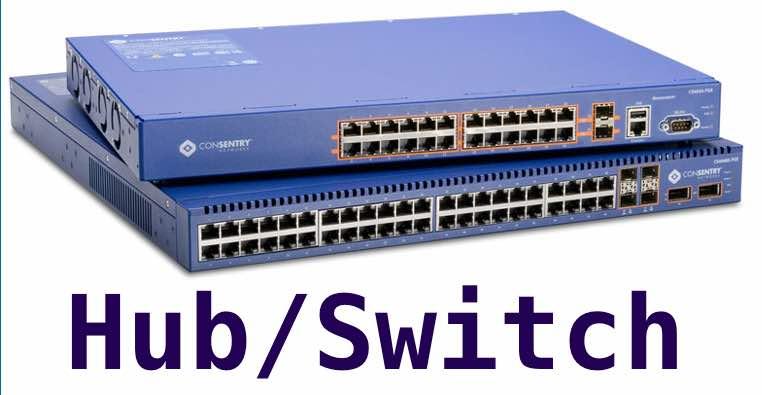
A hub is the simplest form of networking device. It acts as a central connection point for multiple computers or devices. When data arrives at one port, the hub copies that data and sends it out to all other connected devices. This broadcast-style behavior makes hubs easy to use but also introduces limitations.
How Hubs Work
Hubs operate at the physical layer of the OSI model. They do not inspect the data they receive or determine where it should go. Instead, they blindly repeat signals to every port. This creates a single collision domain, meaning devices can interrupt each other’s transmissions, slowing down the network when many users are active.
When Hubs Make Sense
Because Hubs & Switches are inexpensive and straightforward, they were once popular for small home or office networks. Today, they are rarely used outside of very basic setups or special diagnostic scenarios due to their inefficiency.
What Is a Switch?
A switch is a more advanced networking device designed to direct traffic intelligently. Unlike a hub, a switch can identify the destination of incoming data and send it only where it needs to go.
How Switches Work
Switches operate at the data link layer of the OSI model. They maintain a MAC address table that maps physical device addresses to specific ports. When data arrives, the switch reads the destination address and forwards the information only to the intended device. This creates multiple collision-free paths and increases network performance significantly.
Benefits of Using Switches
Switches improve efficiency by reducing unnecessary traffic, which boosts speed and reliability. They also enhance security because data is not broadcast to every connected device. Many modern switches offer advanced features such as VLAN support, Quality of Service (QoS), and link aggregation, making them essential for both home networks and enterprise environments.
Choosing Between a Hub and a Switch
In most cases, a switch is the smarter choice. It provides better performance, stronger security, and greater scalability. Hubs may still have niche uses, but for any network requiring stability and speed, switches are the preferred solution.
Conclusion
Hubs and switches may seem similar, but their internal behavior sets them worlds apart. Hubs share everything with everyone, while switches deliver data with precision. As networking needs continue to grow, switches have become the backbone of modern, connected systems, ensuring smooth communication at every step.