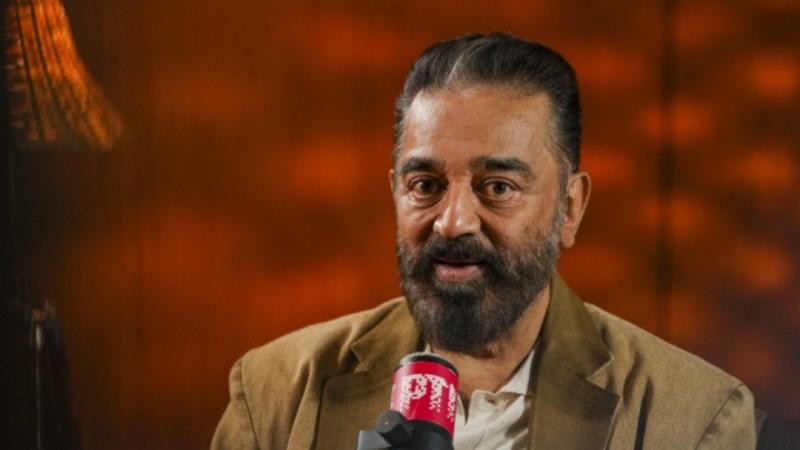
Kamal Haasan’s much-anticipated film Thug Life, directed by Mani Ratnam, is caught in controversy just days before its theatrical release. The actor’s recent remarks, where he claimed that the Kannada language evolved from Tamil, have triggered strong backlash from pro-Kannada groups and the Karnataka Film Chamber of Commerce.
Despite Kamal's clarification that his statement was made out of love and with no ill intent, Kannada organizations have demanded a formal apology, which he has firmly refused. In his words, “Love does not apologize.” This stance has intensified the backlash, leading to several theatre owners across Karnataka vowing not to screen the movie.
To protect the film’s release, Kamal Haasan has approached the Karnataka High Court seeking legal intervention. However, this move has only escalated tensions. Narasimhulu, the president of the Karnataka Film Chamber of Commerce, issued a stern warning, stating, “Let him go to court, but no theatre in Karnataka will screen his film.”
The issue has now transcended the boundaries of cinema, evolving into a sensitive socio-political matter involving state pride and linguistic identity. Narasimhulu emphasized, “This is no longer a film industry issue. It has become a state and language concern. The government, political leaders, and pro-Kannada groups are all united in demanding an apology.”
Meanwhile, Karnataka Deputy Chief Minister DK Shivakumar offered a more measured response, urging calm and promising to review the situation in detail. “We are neighbours, not enemies,” he remarked, signaling a possible path to de-escalation.
Thug Life, starring Kamal Haasan, Simbu, Trisha, Joju George, and Ramya Krishnan, is scheduled to hit screens on June 5. With the film’s release hanging in uncertainty in Karnataka, industry watchers are keenly following developments, wondering whether the court’s intervention or political diplomacy can salvage the film’s state-wide release. The controversy continues to make headlines, raising questions about freedom of expression, regional sensitivity, and the balance between art and politics in Indian cinema.