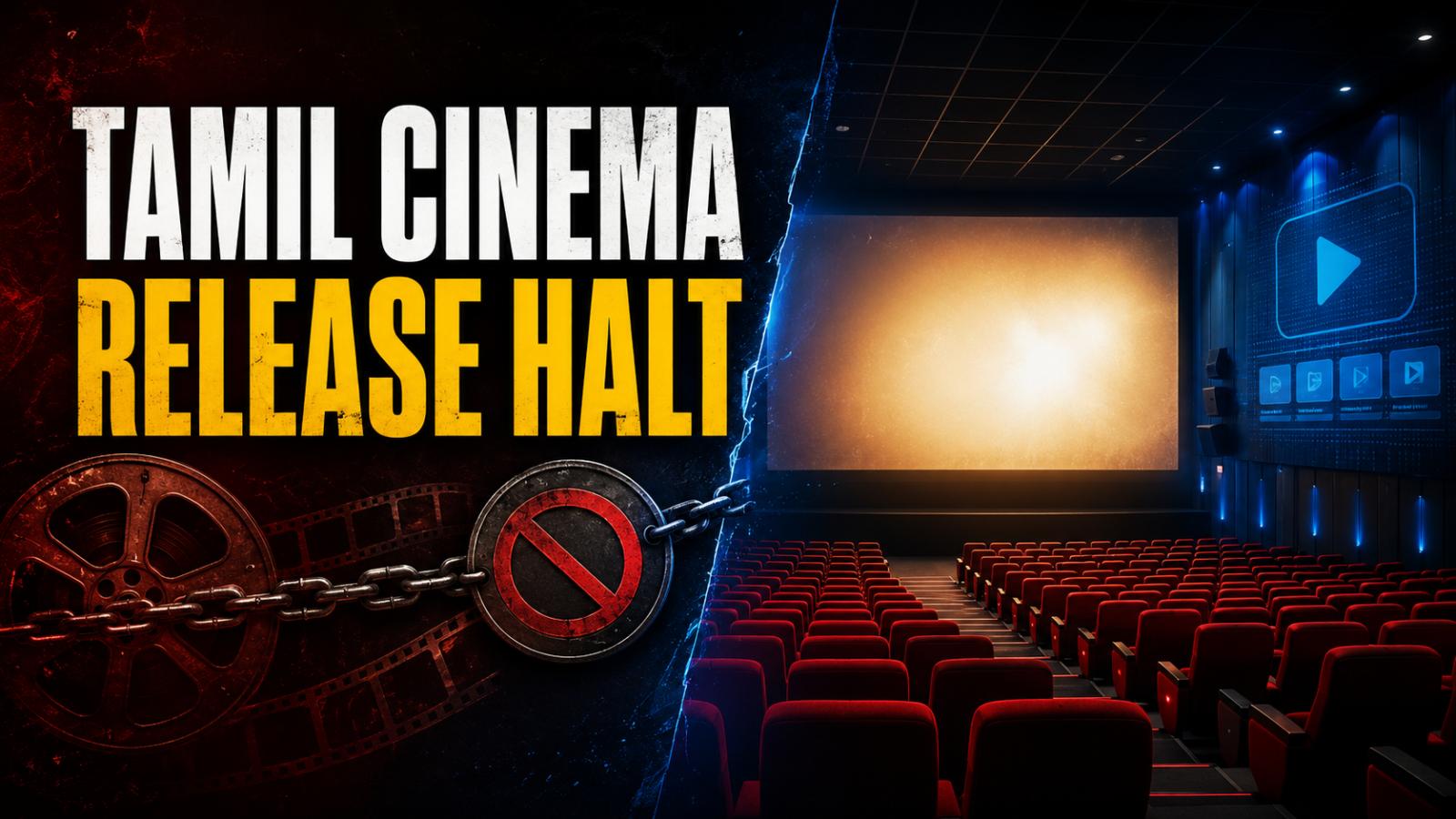
Tamil film producers have announced a major industry-wide halt from September 1, suspending new movie releases as well as shooting and post-production work over an eight-week OTT-window dispute.
Tamil Producers Halt New Releases From September 1
The Tamil film industry is heading towards a major disruption after producer bodies announced that no new Tamil films will be released in theatres from September 1. The Tamil Film Producers Council and the Tamil Nadu Active Producers Association have taken the decision following a disagreement with theatre owners and distributors over the period between a film’s theatrical release and its OTT premiere.
The immediate trigger is the demand from the Tamil Nadu Theatre Owners Association and the Distributors Association for an eight-week compulsory theatrical window before a new film can arrive on an OTT platform. At present, several Tamil films begin streaming around four weeks after their theatrical release.
Producers have objected to the new condition, saying it was announced without consultation with their associations. The disagreement is not just about release timing; it also involves the business arrangements that support film production, distribution and exhibition in Tamil cinema.
The decision could affect audiences waiting for upcoming Tamil releases, while also putting pressure on all sides to find a solution before the September 1 deadline.
Tamil Producers Oppose Eight-Week OTT Window Demand
The Producers Council said theatre owners and distributors cannot impose a new eight-week window unilaterally because it directly affects producers’ financial planning and recovery model. Producers depend on theatrical business, distribution deals, satellite rights and streaming agreements to recover investments, particularly in a market where the cost of making and marketing films can be substantial.
The controversy has widened after distributors and theatre owners also reportedly decided not to provide advance payments for new films. Producers have described this as another major concern, arguing that advance payments have long been an important part of the established financial structure for many projects.
Tamil cinema releases hundreds of films every year, but not every project secures a smooth theatrical run or generates sufficient revenue. Smaller and mid-budget films often face a tougher battle for screens and distribution support. Producers say an extended OTT wait could add pressure to films that rely on quicker digital deals to manage costs and improve financial viability.
Theatre owners and distributors, meanwhile, have pushed for a longer exclusive theatrical run, believing it could help cinemas retain audiences and improve box-office collections. The standoff reflects a wider industry debate over how to balance theatre revenue with the growing importance of streaming platforms.
Tamil Producers Plan Shooting And Post-Production Shutdown
The planned action will go beyond a pause in theatrical releases. Producer bodies have said that shooting and post-production work connected to Tamil films will also stop from September 1. If implemented, the move could affect films at every stage, from those being shot on location to projects undergoing editing, dubbing, visual-effects work and final delivery.
A sustained shutdown could have a wider impact on thousands of workers in the Tamil film ecosystem, including actors, technicians, daily-wage crew members, studios, post-production facilities and other service providers. It may also affect release calendars, promotional plans and contractual commitments for films scheduled for the coming weeks.
The statement was issued on behalf of the Tamil Film Producers Council by vice-president S. Kamalakkannan and secretaries S. Kathiresan and R. Radhakrishnan. The producer bodies have appealed to the Tamil Nadu government to intervene and help facilitate a resolution.
With the deadline fast approaching, industry stakeholders will be watching closely for talks between producers, exhibitors and distributors. A negotiated solution could prevent a prolonged shutdown, but the dispute has already brought the crucial question of theatrical exclusivity and OTT release timing back into sharp focus.