Gemini Daily Horoscope (30 Jun 2026)




It's essential to manage your emotions and shed any fear as soon as possible, as these factors can significantly impact your health and hinder your enjoyment of life. Today is filled with high energy, and unexpected gains are on the horizon. Your knowledge and good humor are likely to impress those around you, but it's important to be on your best behavior, as it won’t take much to upset your partner. Consider forming partnerships with enterprising individuals, as collaboration can lead to fruitful opportunities.
Completing tasks on time is crucial, as it allows you some personal time at the end of the day. Procrastination can increase your stress and add to your workload. However, be prepared for some potential challenges, as the rudeness of your spouse may leave you feeling unsettled throughout the day. Remember, maintaining a positive outlook can make a significant difference in how you navigate any difficulties that arise.
Lucky Number: 2
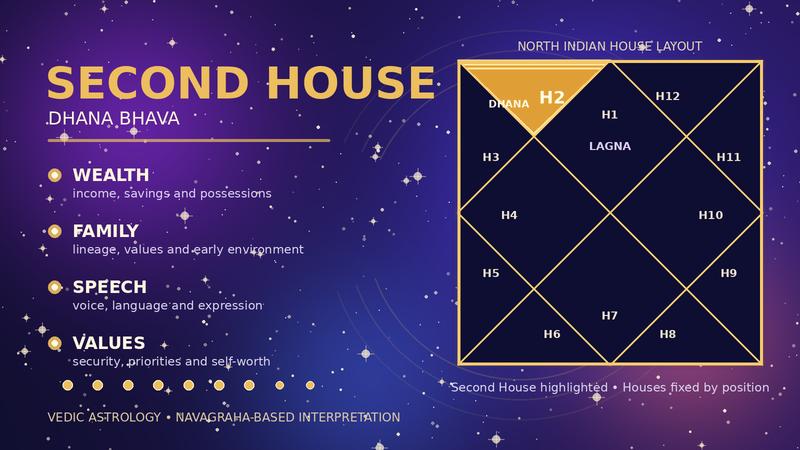
Second House in Astrology: Wealth, Speech and Navagrahas
The Second House in astrology is traditionally associated with wealth, family, speech, food, possessions and personal values. In Vedic astrology, it is often called Dhana Bhava, the house of accumulated resources. While the First House describes identity, the Second House shows how a person may build security, manage resources and express values through speech, family life and material choices. Astrology is a traditional interpretive system whose claims have not been scientifically established. It should not replace professional financial, medical, legal or mental health advice. What Does the Second House Represent? Common Second House themes include: Income and accumulated wealth Savings and possessions Family background Speech and communication style Food and eating habits Personal values Self-worth and security Face, mouth and voice A strong Second House does not automatically guarantee wealth. Its meaning depends on the Rashi occupying it, Grahas placed there, the Second House lord, aspects and the complete birth chart. Wealth, Family and Speech The Second House is mainly linked with resources already earned or accumulated. It may describe saving habits, financial priorities and the way a person seeks material stability. In Vedic astrology, it is also connected with family, especially the early family environment and inherited values. Because it is associated with the mouth and voice, astrologers may examine it for speech, tone and language. Food preferences and eating patterns may also be considered symbolically. Astrological placements should not be used as financial advice or to diagnose health conditions. The Lord of the Second House The Graha ruling the Rashi in the Second House is called the Second House lord or Dhana Bhava lord. Its Rashi, house placement, strength, conjunctions and aspects may show how Second House themes develop. For example, if Taurus occupies the Second House, Shukra becomes its lord, and Shukra’s placement becomes important. Navagrahas in the Second House Grahas placed in the Second House may influence money, speech, values and family matters. Surya (Sun): Pride in family, authoritative speech, status and strong values Chandra (Moon): Emotional attachment to family, changing finances and sensitive speech Mangala (Mars): Direct speech, strong earning drive, risk-taking or family conflict Budha (Mercury): Communication, calculation, business ability and income through intellectual skills Guru or Brihaspati (Jupiter): Wisdom, generous speech, education and expansion of resources Shukra (Venus): Comfort, refined speech, beauty, art and material enjoyment Shani (Saturn): Disciplined saving, cautious speech, delay or family responsibility Rahu: Strong ambition for wealth, unusual income patterns or persuasive speech Ketu: Detachment from possessions, inward values or unconventional expression These are broad traditional meanings. The final interpretation depends on the Graha’s Rashi, dignity, Nakshatra, conjunctions, aspects and the condition of the Second House lord. Rahu and Ketu are lunar nodes rather than physical planets, but they are included among the Navagrahas in Vedic astrology. What Does an Empty Second House Mean? An empty Second House does not mean that a person will lack money, family support or communication skills. Astrologers may interpret it through the Rashi occupying the house, the placement of the Second House lord and aspects influencing the house. An empty house remains active through its ruler. Second House Transits When a Graha moves through the Second House, astrologers may connect the period with finances, savings, family responsibilities, speech or changing personal values. A Guru transit may be associated with growth or learning, while a Shani transit may emphasize discipline, budgeting or long-term responsibility. These interpretations are not guaranteed outcomes. Understanding the Second House The Second House helps astrologers study wealth, savings, possessions, family, speech, food and personal values. Its meaning depends on the Rashi occupying the house, Navagrahas placed inside it, the Second House lord, aspects and the house system used. To understand how it connects with the complete birth chart, read our guide to the 12 houses in astrology.
Read More →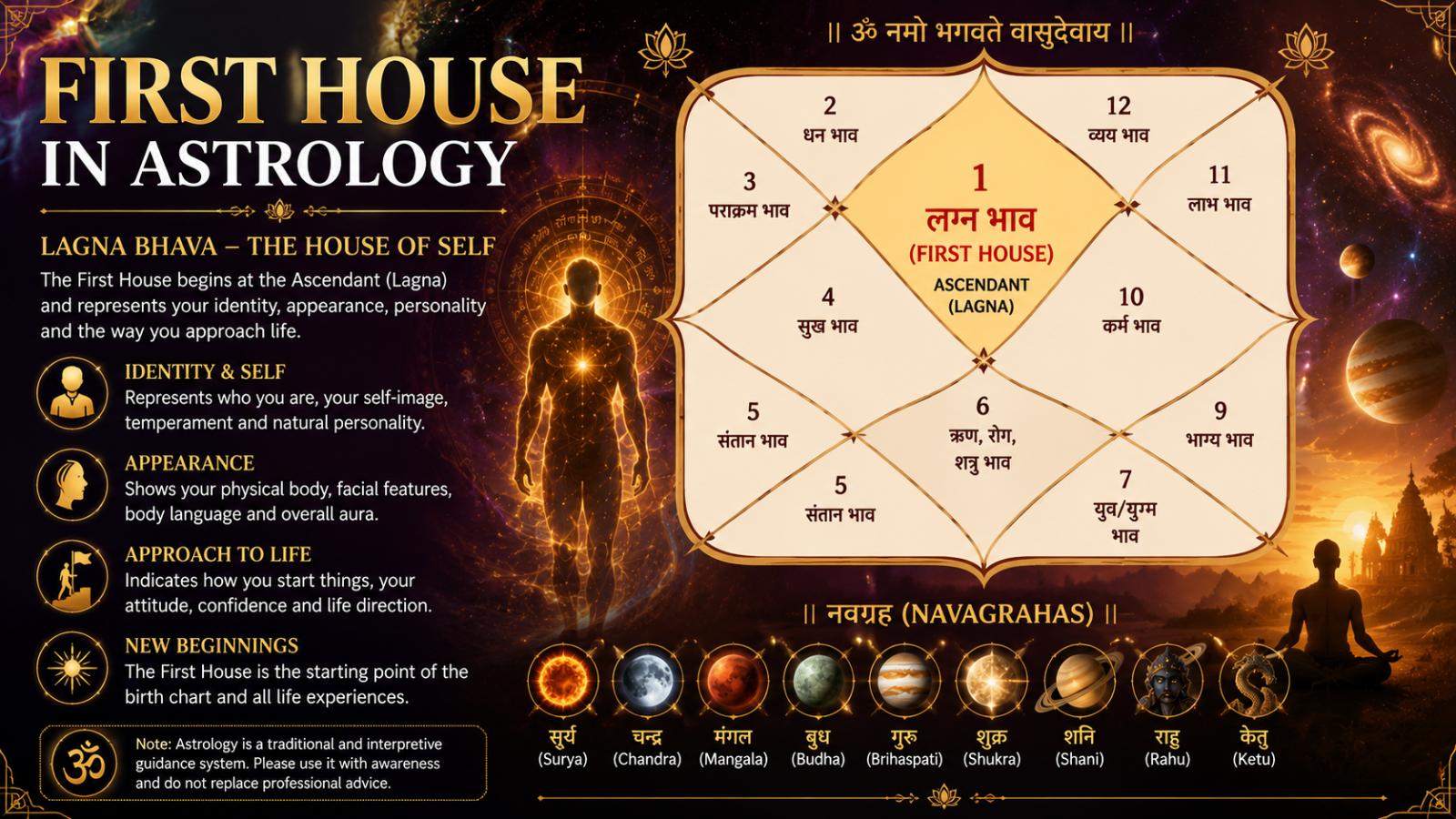
First House in Astrology: Meaning, Planets and Ascendant
The First House in astrology represents identity, appearance, temperament and the way a person approaches life. It begins at the Ascendant, also called the rising sign. While the Sun sign is linked with core identity and the Moon sign with emotional needs, the First House is traditionally associated with outward behavior, first impressions and instinctive reactions. Astrology is a traditional interpretive system whose claims have not been scientifically established. It should not replace medical, legal, financial or mental health advice. What Does the First House Represent? Often called the house of self, the First House may show how a person presents themselves, responds to new situations and begins personal experiences. Common themes include: Identity and self-image Physical appearance Temperament Personal style First impressions Initiative Approach to life A strong First House does not automatically mean someone is confident or self-centered. Its meaning depends on the rising sign, Navagrahas placed there, aspects and the chart ruler. The First House and the Ascendant The Ascendant is the zodiac sign rising on the eastern horizon at the recorded time and place of birth. It marks the beginning of the First House. Because the Ascendant changes throughout the day, an accurate birth time is important. A change in time may alter the rising sign or move a Graha near a house cusp. The Ascendant is traditionally linked with appearance, mannerisms, first impressions and the way a person enters new situations. The Ruler of the First House The planet ruling the Ascendant sign is called the chart ruler or Lagna lord. Its sign, house placement and aspects may provide more information about how the First House is expressed. If Aries is rising, Mars becomes the chart ruler. If Taurus is rising, Venus becomes the chart ruler. The ruler’s placement may connect identity with another area of life. Navagrahas in the First House The Navagrahas placed in the First House are often considered noticeable in personality, appearance and behavior. Surya (Sun): Identity, confidence, authority and self-expression Chandra (Moon): Emotions, sensitivity, adaptability and instinctive reactions Mangala (Mars): Initiative, courage, directness and competitiveness Budha (Mercury): Communication, curiosity, intelligence and mental activity Guru or Brihaspati (Jupiter): Wisdom, optimism, generosity and an expansive presence Shukra (Venus): Charm, sociability, attraction and aesthetic awareness Shani (Saturn): Seriousness, patience, restraint, responsibility and discipline Rahu: Ambition, individuality, desire for recognition and an unconventional identity Ketu: Detachment, introspection, spiritual inclination and inward self-exploration These are only broad starting points. The Graha’s Rashi, dignity, conjunctions, aspects, Nakshatra and overall condition must also be considered. Rahu and Ketu are lunar nodes rather than physical planets, but they are included among the Navagrahas because of their importance in Vedic astrology. Zodiac Signs on the First House Cusp The rising sign influences the style through which the First House may be expressed. Fire signs may appear direct and enthusiastic. Earth signs may seem practical and steady. Air signs may appear communicative and socially responsive, while water signs may seem sensitive or intuitive. These are broad tendencies, not fixed personality descriptions. What Does an Empty First House Mean? An empty First House does not mean that a person lacks identity, confidence or presence. Astrologers may interpret it through the Ascendant sign, Lagna lord and aspects involving that ruler. An empty house remains active through its sign and ruling planet. First House Transits When a Graha moves through the First House, astrologers may connect the period with identity, appearance, personal direction or new beginnings. A Jupiter transit may be associated with growth or expansion, while a Saturn transit may emphasize responsibility, discipline or self-definition. Transit interpretations should not be treated as guaranteed predictions. Understanding the First House The First House is the starting point of the birth chart. It helps astrologers interpret identity, presentation, instinctive behavior and a person’s approach to life. Its meaning depends on the Ascendant, Navagrahas inside the house, the Lagna lord, planetary aspects and the house system used. To see how it fits into the full chart, read our complete guide to the 12 houses in astrology.
Read More →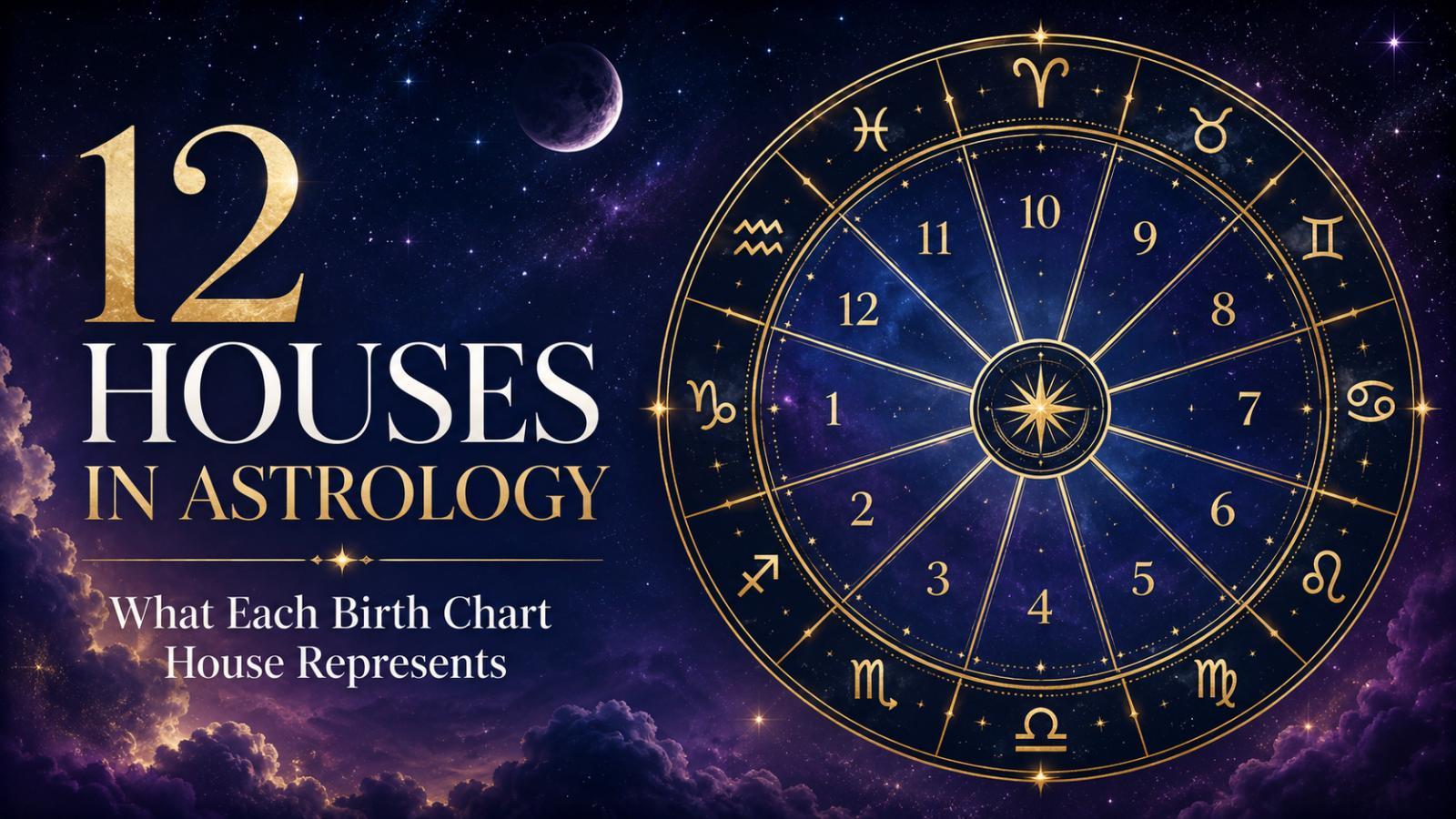
12 Houses in Astrology: Meaning of Each Birth Chart House
The 12 houses in astrology represent areas such as identity, money, communication, home, relationships, career and spiritual reflection. Planets show the energy involved, signs describe how it is expressed, and houses indicate where it may appear. Astrology is a traditional interpretive system whose claims have not been scientifically established. It should not replace medical, legal, financial or mental health advice. What Are the Houses in Astrology? A birth chart is a symbolic map of the sky for a specific date, time and place. It contains 12 houses, each linked with a different area of life. The First House begins at the Ascendant, or rising sign. House boundaries may vary by calculation system. Why Birth Time and Location Matter House calculations require a birth date, recorded birth time and birthplace. These determine the Ascendant and house cusps. A small time difference may change the rising sign or move a planet into a neighboring house. Without a reliable birth time, house placements may be inaccurate. The 12 Houses in Astrology at a Glance The table summarizes the areas linked with each house. House Main meaning Areas traditionally associated with it First House Identity and personal approach Appearance, temperament, first impressions, initiative and approach to life Second House Money and personal values Income, possessions, savings, material security, priorities and self-worth Third House Communication and learning Speaking, writing, siblings, neighbors, practical learning and short journeys Fourth House Home and emotional foundations Family, ancestry, property, private life, belonging and emotional security Fifth House Creativity and self-expression Romance, children, hobbies, entertainment, performance, sports and pleasure Sixth House Work and daily routines Employment conditions, coworkers, habits, service, wellness routines and pets Seventh House Partnerships and agreements Marriage, long-term relationships, business partners, contracts and negotiation Eighth House Shared resources and transformation Joint finances, debt, taxes, inheritance, intimacy, trust and renewal Ninth House Higher learning and beliefs Universities, international travel, philosophy, religion, law and publishing Tenth House Career and public life Reputation, ambition, leadership, recognition, authority and achievement Eleventh House Community and future goals Friends, networks, organizations, teamwork, social causes and aspirations Twelfth House Solitude and reflection Dreams, the subconscious, meditation, retreat, hidden patterns and compassion The table is a starting point. Separate articles will explain each house’s planets, signs, ruler and transits. How Astrologers Interpret a House Astrologers consider several connected factors. The Zodiac Sign on the House Cusp A cusp is a house’s starting boundary. Its sign describes how the house’s themes may be expressed. Planets Inside the House A planet may bring its qualities into that area of life. Its sign, aspects and condition also matter. The Ruler of the House The planet ruling the sign on the cusp helps show how and where the house’s themes may develop. Planetary Aspects Aspects are angular relationships used to interpret how planetary functions interact. The House System House boundaries may change according to the calculation system used. A planet near a cusp may appear in one house under one system and in a neighboring house under another. Understanding the 12 Houses House meanings depend on the sign on each cusp, planets inside it, its ruler, aspects and the system used. The table gives an overview; separate guides will explain each house in greater depth.
Read More →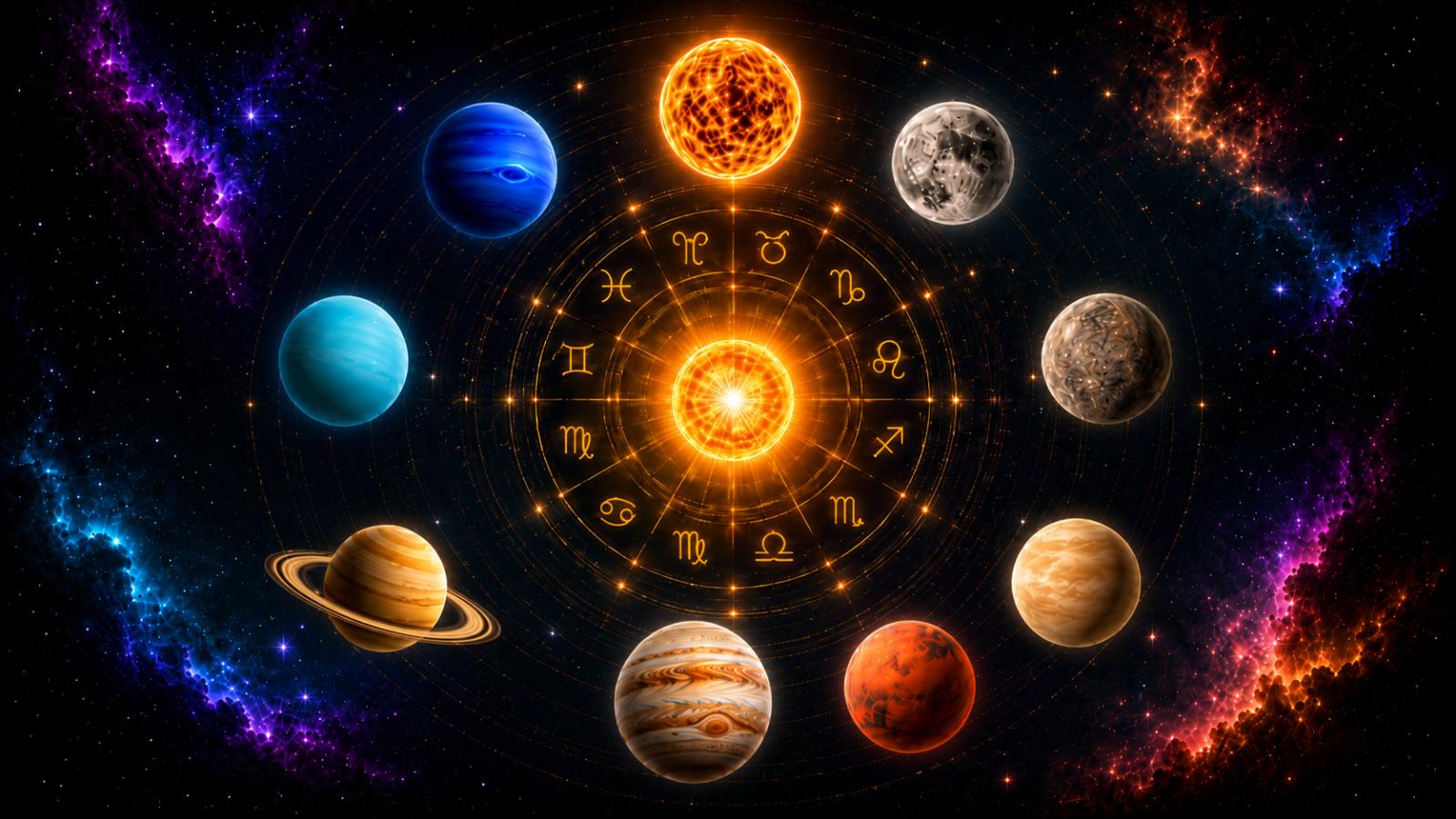
Meaning of the Nine Planets in Vedic Astrology
In Vedic astrology, the nine grahas—Surya, Chandra, Mangala, Budha, Guru, Shukra, Shani, Rahu and Ketu—represent different areas of life and personality. The word graha is often translated as “planet,” although Rahu and Ketu are lunar nodes rather than physical planets. No graha is interpreted alone. Its zodiac sign, house, strength and relationship with other grahas add important context. These meanings are traditional interpretations, not guaranteed predictions. Surya: Identity and Authority Surya, or the Sun, represents identity, confidence, vitality, purpose and leadership. It may show how a person develops self-respect, seeks recognition and handles responsibility. A balanced Surya may support clarity and confidence, while an unbalanced expression may appear as pride or a strong need for approval. Chandra: Mind and Emotions Chandra, or the Moon, represents the mind, emotions, habits, sensitivity and inner security. It may describe how a person reacts emotionally, gives or receives care and responds to changing situations. A balanced Chandra may support calmness and empathy, while a disturbed expression may bring worry or emotional fluctuation. Mangala: Courage and Action Mangala, or Mars, represents energy, courage, initiative, ambition and action. It may show how a person pursues goals, faces conflict and protects personal boundaries. Constructive Mangala may support bravery and determination, while poorly directed energy may appear as impatience, anger or impulsive behavior. Budha: Intelligence and Communication Budha, or Mercury, represents intelligence, speech, learning, logic and communication. It may influence how a person understands ideas, makes decisions and expresses thoughts. A balanced Budha may support clear communication and adaptability, while imbalance may appear as overthinking, inconsistency or indecision. Guru: Wisdom and Growth Guru, also called Brihaspati or Jupiter, represents wisdom, knowledge, growth, guidance and higher learning. It may show where a person seeks meaning, education and broader understanding. Constructive Guru may encourage optimism and sound judgment, while excess may lead to overconfidence or unrealistic expectations. Shukra: Love and Values Shukra, or Venus, represents love, attraction, relationships, beauty, comfort and personal values. It may describe how a person gives affection, seeks harmony and appreciates art or pleasure. A balanced Shukra may support warmth and diplomacy, while imbalance may create dependence on approval, comfort or material enjoyment. Shani: Discipline and Responsibility Shani, or Saturn, represents discipline, patience, duty, boundaries and long-term effort. It may point to areas where maturity and consistency are needed. Shani is not only associated with delay or difficulty; it may also support endurance, humility and lasting achievement through responsible action. Rahu: Desire and Ambition Rahu is the north lunar node. It represents desire, ambition, fascination, worldly experience and attraction toward unfamiliar paths. It may encourage innovation, boldness and exploration. When excessive, Rahu may be linked with confusion, obsession, dissatisfaction or unrealistic goals. Ketu: Detachment and Insight Ketu is the south lunar node. It represents detachment, inner awareness, spiritual interest and release from old patterns. It may show an area of natural familiarity that no longer brings full satisfaction. Constructive Ketu may support intuition and independence, while imbalance may appear as withdrawal or lack of direction. Why All Nine Grahas Matter Each graha represents a different function: Surya reflects identity, Chandra the mind, Mangala action, Budha communication, Guru wisdom, Shukra relationships, Shani responsibility, Rahu desire and Ketu detachment. No graha is completely good or bad. Its meaning depends on the complete horoscope, including its sign, house, strength, aspects and conjunctions. Readers seeking a personalized interpretation should consult a professional astrologer using accurate birth details.
Read More →
Birth Chart Reading for Beginners: Signs, Houses and Planets
Learning how to read a birth chart step by step can make astrology easier to understand. Instead of interpreting every symbol separately, beginners can follow a clear order: confirm the birth details, find the ascendant, identify the planets, review the houses and study the aspects. A birth chart, also called a natal chart, is a symbolic map of the sky calculated for a person’s birth date, exact birth time and birthplace. Astrologers use the complete chart to explore personality patterns, emotional tendencies, relationships and areas of personal development. Astrology is an interpretive tradition and has not been scientifically proven to predict specific events. It should not replace medical, legal, financial or mental health advice. 1. Confirm the Birth Date, Time and Location Begin by checking the information used to calculate the chart: Birth date Exact birth time Birth city and country The birth time is especially important because it helps determine the rising sign and the arrangement of the 12 houses. Even a difference in the recorded time may affect these parts of the chart. When an exact birth time is unavailable, some planetary placements may still be discussed, but the ascendant and house positions may be less certain. 2. Find the Rising Sign or Ascendant The rising sign, also called the ascendant, is the zodiac sign that was positioned on the eastern horizon at the calculated moment of birth. In traditional astrology, the ascendant is associated with outward behavior, first impressions and the way a person approaches new situations. It also marks the beginning of the first house and helps establish the remaining house placements. Because the rising sign changes throughout the day, an accurate birth time is essential for identifying it correctly. 3. Identify the Sun and Moon Signs Next, locate the Sun and Moon in the chart. The Sun is commonly connected with identity, purpose and personal direction. Its zodiac sign may describe how these qualities are expressed, while its house shows the area of life where they may become especially noticeable. The Moon is traditionally associated with emotions, habits, inner needs and instinctive responses. Its sign may describe a person’s emotional style, while its house connects those needs with a particular area of life. The Sun sign is only one part of the chart. Two people with the same Sun sign may have different Moon signs, ascendants, houses and planetary aspects. 4. Review the Planets, Signs and Houses After locating the Sun and Moon, identify the other planets and note the zodiac sign and house occupied by each one. A simple way to understand the chart is: Planet = what is being expressed Sign = how it may be expressed House = where it may appear For example, the planet represents a function or theme. The zodiac sign describes its style of expression, and the house connects it with an area such as family, work, relationships or personal growth. The zodiac signs are also grouped by elements and modes. The four elements are fire, earth, air and water. A mode is a style of expression, described as cardinal, fixed or mutable. Repeated elements or modes may become important when they appear across several placements. 5. Understand the 12 Houses A natal chart is divided into 12 houses. Each house represents a different area of experience. The houses may be connected with themes including: Identity and self-expression Personal resources Communication and learning Home and family Creativity Work and daily routines Relationships Shared resources Beliefs and higher learning Career and public life Friendships and communities Privacy and reflection A house without a planet is not necessarily unimportant. Its zodiac sign and ruling planet may still contribute to its interpretation. Beginners should avoid interpreting a house separately from the planets, signs and aspects connected with it. 6. Study the Planetary Aspects Aspects are the angles formed between planets in a birth chart. Astrologers interpret these relationships as showing how different planetary themes may cooperate, challenge or balance one another. When studying an aspect, consider: Which planets are connected The signs occupied by those planets The houses involved Whether the same theme appears elsewhere in the chart Some aspects are traditionally considered supportive, while others may suggest tension or adjustment. However, no single aspect should automatically be treated as entirely positive or negative. A balanced interpretation depends on the complete chart. 7. Look for Repeated Chart Patterns After reviewing the main placements, step back and look at the chart as a whole. Repeated patterns may include several planets in one sign, several planets in one house, a strong concentration of one element or multiple aspects involving the same planet. These patterns may provide more useful context than one isolated placement. Beginners should look for themes that appear more than once instead of drawing conclusions from a single sign, house or aspect. This whole-chart approach helps create a more balanced interpretation. 8. Consider Transits After Understanding the Natal Chart Transits describe the current movement of planets in relation to the natal chart. Astrologers compare present planetary positions with birth-chart placements to explore changing themes or periods of emphasis. Transits should be studied only after the natal chart has been understood. They should not be treated as guaranteed predictions or as proof that a particular event will occur. A responsible interpretation considers possibilities, personal circumstances and individual choices. A Simple Birth-Chart Reading Order Beginners can follow this sequence: Confirm the birth date, time and location. Find the rising sign or ascendant. Identify the Sun and Moon signs. Locate the planets by sign and house. Review the 12 houses. Study the major aspects. Look for repeated themes and patterns. Examine transits only after understanding the natal chart. Following the same order each time makes birth-chart reading clearer and reduces the risk of relying too heavily on one placement. Why the Complete Birth Chart Matters A natal chart contains several connected layers. The Sun, Moon and ascendant provide an important starting point, but the planets, houses and aspects add further context. Accurate birth details and a whole-chart approach are essential for a more personalized interpretation. An experienced astrologer can help connect the different chart patterns while considering the individual’s circumstances. For personalized guidance, use Ask an Astrologer to have your birth chart reviewed in context. Astrology can support reflection and self-exploration, but it should not replace qualified professional advice.
Read More →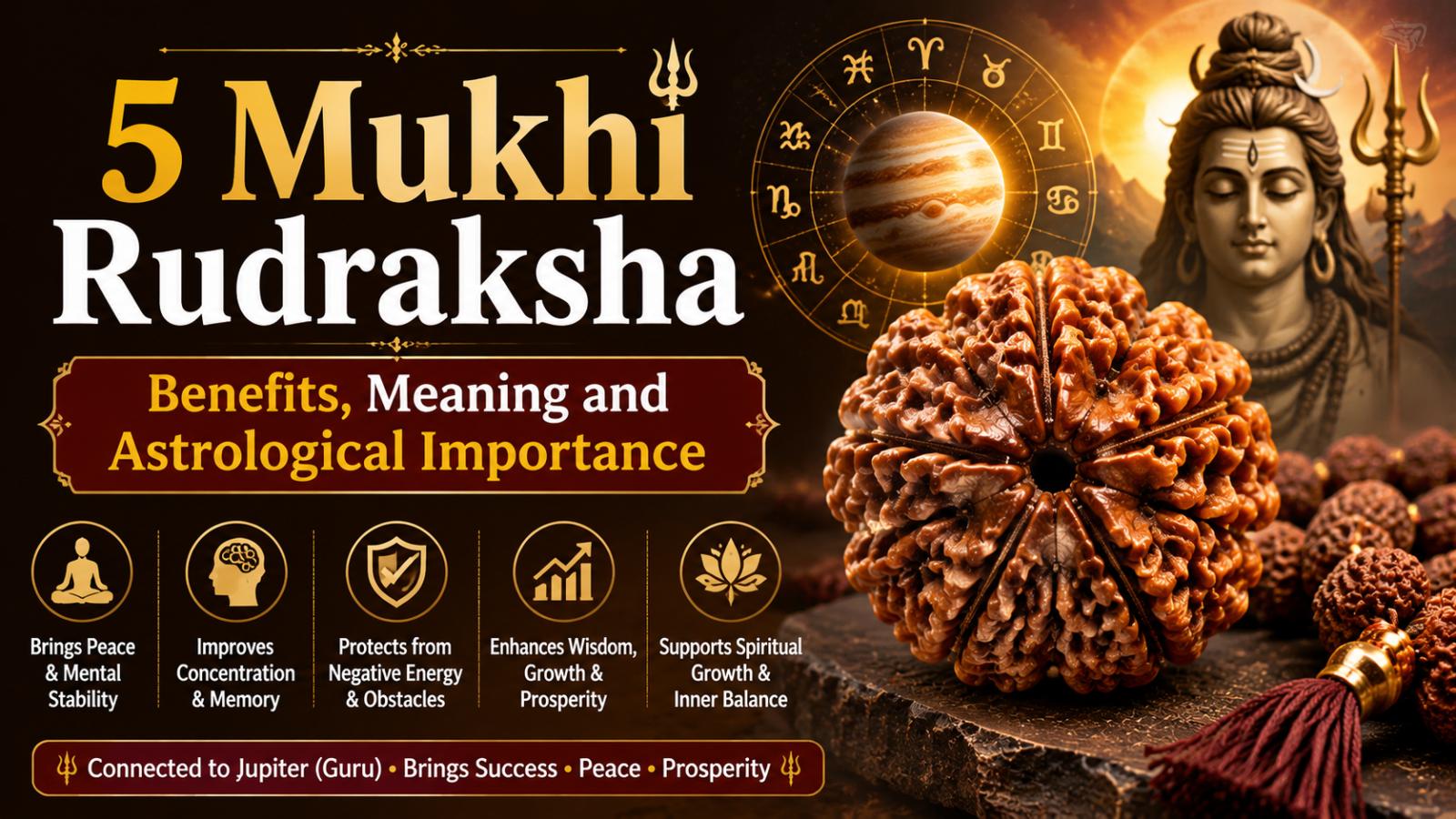
5 Mukhi Rudraksha Benefits, Meaning and Astrological Importance
The 5 Mukhi Rudraksha, also known as the Five Faced Rudraksha, is one of the most widely used and easily available Rudraksha beads. It symbolizes peace, prosperity, and overall success in life. This bead is commonly sourced from Nepal and is associated with Lord Shiva in the form of Kaal Agni Rudra. It is believed to carry strong protective and purifying energies that help the wearer maintain balance in life. Astrological Significance of 5 Mukhi Rudraksha In astrology, the 5 Mukhi Rudraksha is strongly linked with the planet Jupiter (Guru). Jupiter represents wisdom, knowledge, growth, and prosperity. When Jupiter is weak or negatively placed in a horoscope, it may lead to confusion, delays, or instability in decision-making. Wearing this Rudraksha is believed to strengthen Jupiter’s positive influence, improving clarity, discipline, and overall life direction. Spiritual Importance and Energy Benefits Spiritually, this bead is considered powerful in removing negative energies and mental distractions. It is often used by saints and spiritual seekers to improve focus and inner stability. The Rudraksha is also connected to the five elements of nature—earth, water, fire, air, and space—helping maintain harmony within the body and mind. It is suitable for anyone seeking spiritual growth, balance, and mental peace. Benefits of 5 Mukhi Rudraksha The 5 Mukhi Rudraksha is believed to protect the wearer from negative influences and unexpected difficulties. It helps reduce stress, fear, and anxiety while promoting emotional stability and calmness. It is also said to improve concentration, memory, and learning ability, making it beneficial for students and professionals. Regular wearing may support better sleep, mental clarity, and overall well-being. It is also associated with spiritual growth, self-awareness, and a disciplined mindset. How to Wear 5 Mukhi Rudraksha The most recommended day to wear the 5 Mukhi Rudraksha is Thursday. Before wearing, it is advised to sit facing north and chant the mantra “Om Hreem Namah” 108 times to activate its energy. It can be worn using a silk or wool thread or set in silver or gold. It is commonly worn as a pendant, although it can also be used as a bracelet. Maintaining purity and discipline while wearing it is important, and it should be avoided in impure environments such as funerals or washrooms.
Read More →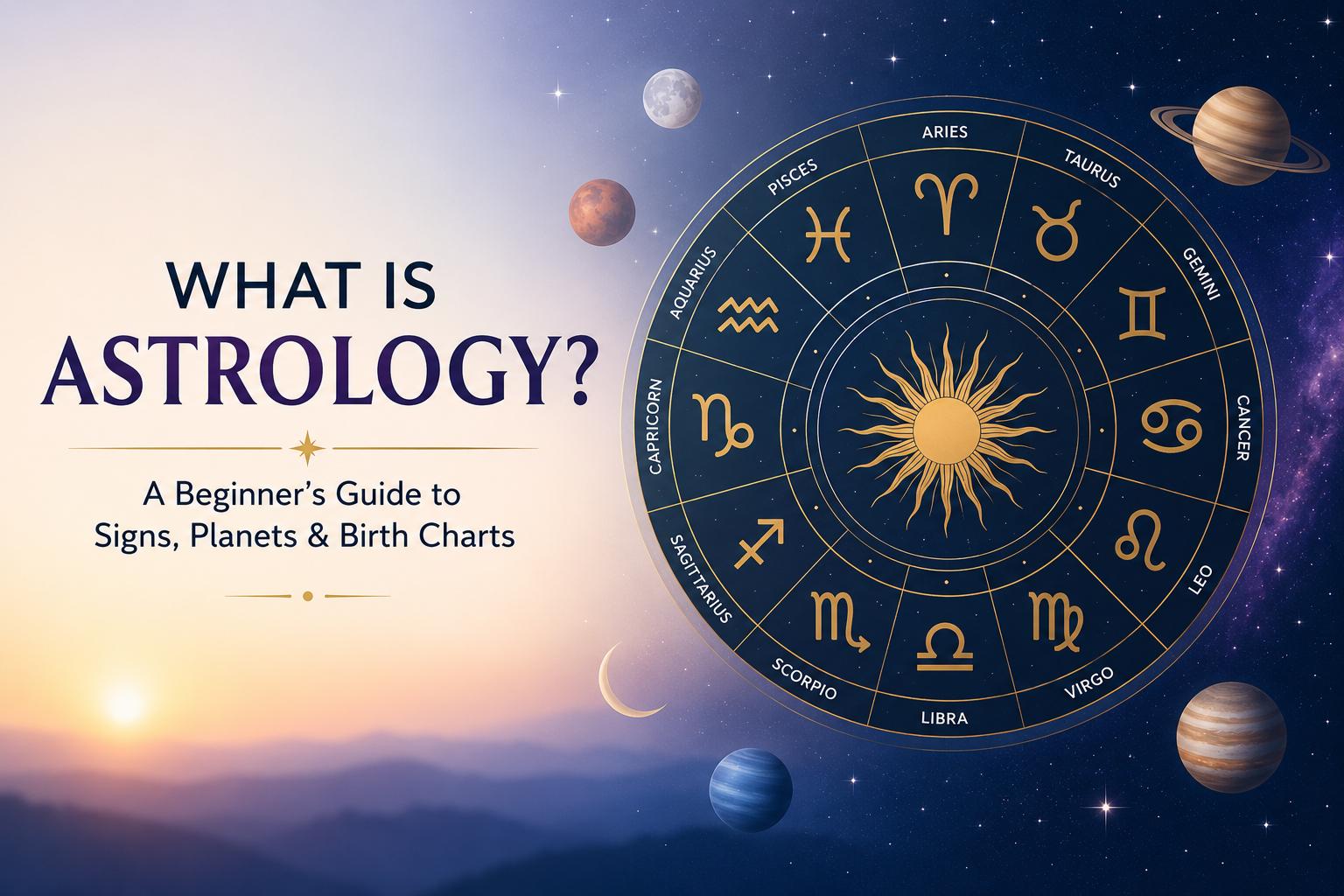
What is astrology? A beginners guide to signs, planets and birth charts
What is astrology? A beginner’s guide to signs, planets and birth charts explains a traditional system that interprets the symbolic positions of the Sun, Moon, planets and other celestial points. Astrologers use these placements to explore personality, emotions, relationships and recurring life themes. Astrology is not scientifically proven to predict events, so responsible readings should be treated as guidance rather than certainty. How a birth chart is created A birth chart, also called a natal chart, is calculated using a person’s exact birth date, birth time and birth location. These details help determine the rising sign, or ascendant, and the placement of planets across the 12 houses. The zodiac includes 12 signs, from Aries to Pisces. Each sign is associated with an element and a mode, which describe its traditional qualities and style of expression. Signs, planets and houses The Sun sign is commonly linked with identity and personal direction, while the Moon sign is associated with emotional needs and inner responses. The rising sign is often interpreted as the way a person approaches life and is perceived by others. Planets represent different functions, while the houses connect those functions with areas such as family, career, health, relationships and finances. Aspects, transits and personal guidance Aspects are the angles formed between planets and may show how different parts of a chart interact. Transits compare current planetary movements with the birth chart and are traditionally used to consider changing influences, opportunities and periods of reflection. Beginners can start with the Sun, Moon and rising signs before studying planets, houses, aspects and transits. Astrology should not replace medical, legal, financial or mental health advice. For personalized guidance, use Ask an Astrologer and provide accurate birth details for a complete chart interpretation.
Read More →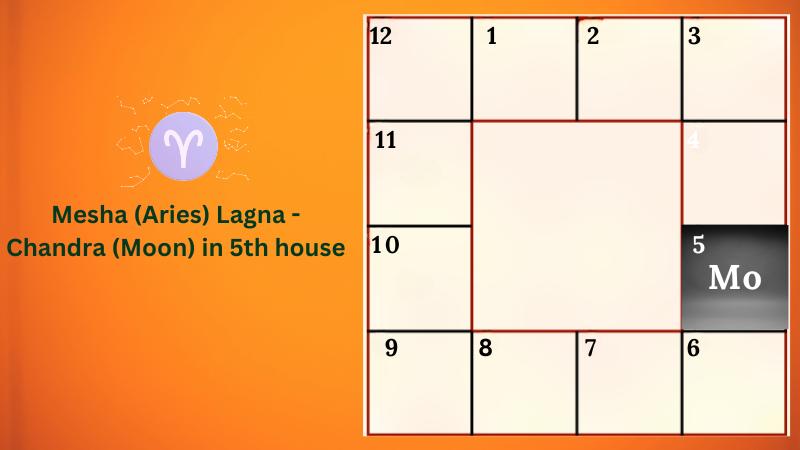
Astrology prediction for Mesha (Aries) Lagna - Chandra (Moon) in 5th house
To understand the effects of Moon in the 5th house in Leo for Aries Ascendant, it is important to consider the role of the Moon, the 5th house, and the Leo sign together. The Moon represents mind, emotions, mother, and inner stability. The 5th house represents intelligence, creativity, education, romance, children, and past-life merits. Leo is a fiery, royal, and authoritative sign ruled by the Sun, giving confidence, leadership, and pride. In this placement, the Moon also acts as the 4th lord placed in the 5th house, connecting emotional comfort with creativity, intelligence, and self-expression. Personality Traits The native is generally bold, confident, and emotionally expressive. There is natural courage and a strong personality with leadership qualities. The person may be kind and generous but also sensitive and emotionally reactive. Temper can rise quickly but usually cools down within a short time. The overall nature is dignified, attention-seeking, and expressive. Intelligence and Education This placement gives good intelligence, creativity, and learning ability. The native may be talented in arts, expression, or analytical thinking. However, mental focus may fluctuate, leading to inconsistency in completing certain subjects or interests. The person may have multiple interests but struggles with sustained concentration. Wealth and Career The native can achieve good wealth, status, and material comforts in life. There may be success in career and recognition from authority or leadership roles. However, professional life may not remain fully stable and can show ups and downs. Despite fluctuations, the person usually regains success through effort and determination. Mother and Emotional Life The mother may play a strong and influential role in the native’s life. She may come from a respected or authoritative background. Emotional bonding with mother is usually strong, and maternal influence may shape decision-making and emotional behavior. Spirituality and Children The native may show interest in religion, traditions, and spiritual practices. There is generally good fortune related to children, and they may grow up to be intelligent, kind, and well-mannered. The person may also maintain respect in society and have a dignified image. Health Indications There may be tendencies toward mental stress, emotional fluctuations, and digestive-related issues. Overthinking and emotional sensitivity can sometimes affect overall health. Maintaining emotional balance is important for stability and well-being.
Read More →
Vastu Shastra guide for home energy and prosperity
Vastu Shastra is an ancient Indian architectural science that focuses on designing spaces in harmony with natural energies. Rooted in Vedic wisdom, it explains how the layout, direction, and elements of a space can influence health, wealth, relationships, and overall well-being. The word “Vastu” means dwelling and “Shastra” means knowledge or science. Together, it represents the science of creating balanced living environments that support peace, productivity, and prosperity. What is Vastu Shastra? Vastu Shastra is based on the principle that every space carries energy. When this energy flows correctly, it creates positivity and balance in life. When it is blocked or misaligned, it may lead to stress, confusion, or imbalance. Ancient sages developed these principles after observing the effects of nature—sunlight, wind, earth, and magnetic fields—on human life. Benefits of Vastu Shastra Following Vastu principles can help improve different areas of life. It enhances positivity and mental peace, improves health and emotional balance, strengthens relationships and understanding, attracts wealth and financial growth, increases focus, productivity, and clarity, and brings stability and overall life balance. A Vastu-compliant space supports natural energy flow, helping individuals live more harmoniously. Importance of Directions in Vastu Directions play a key role in balancing energy in any space. Each direction is linked with specific elements and energies. East represents growth and new opportunities. West represents stability and fulfillment. North represents wealth and career growth. South represents strength and fame. Northeast represents spirituality and clarity. Southeast represents fire energy and transformation. Northwest represents movement and communication. Southwest represents stability and strength. Proper alignment ensures smoother energy flow and better life outcomes. Tools Used in Vastu Analysis Traditional tools include Vastu Compass for direction mapping, Vastu Charts for layout planning, dowsing rods for energy detection, Yantras for energy balancing, pyramids for removing energy blocks, and gemstones for energy alignment. Modern tools include Vastu software and mobile apps, digital floor plan analysis tools, energy measurement devices, AR-based visualization tools, and online Vastu calculators. These tools help identify and correct energy imbalances in modern spaces. Five Elements of Vastu Vastu is based on the balance of five natural elements. Earth represents stability and strength. Water represents calmness and flow. Fire represents energy and transformation. Air represents movement and communication. Space represents expansion and creativity. When these elements are balanced, they create a peaceful and productive environment. Vastu and Daily Life Impact Ignoring Vastu principles may not create immediate issues, but over time it can affect mood, productivity, and relationships. A poorly balanced space may lead to stress, confusion, and lack of focus. A Vastu-aligned environment supports mental clarity, emotional stability, and overall well-being. Connection Between Vastu and Astrology Vastu Shastra and astrology are deeply connected. Astrology studies planetary influences on individuals, while Vastu focuses on energy flow in spaces. When combined, both help align personal energy with environmental energy. Astrology can guide timing and direction choices, while Vastu ensures the space supports those energies effectively. Vastu Shastra is more than architectural guidance; it is a holistic approach to living in harmony with nature. By aligning your space with natural energies, directions, and elements, you can improve health, success, peace, and prosperity. A well-balanced environment ultimately helps create a balanced life.
Read More →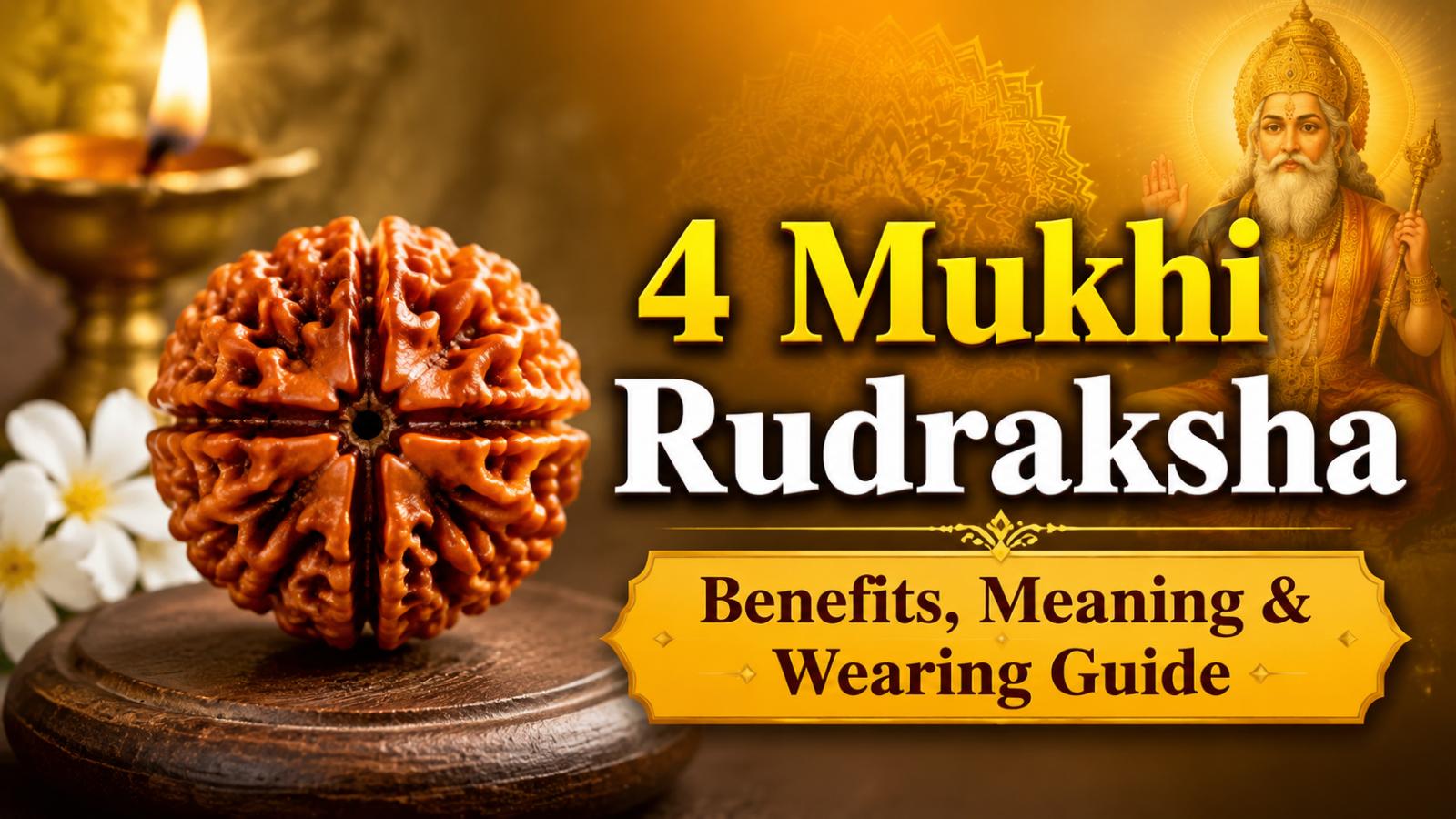
4 Mukhi Rudraksha benefits meaning and wearing rules
The 4 Mukhi Rudraksha (Four Faced Rudraksha) is a sacred spiritual bead that holds deep significance in Vedic tradition and Hindu astrology. It is easily identified by the presence of four natural lines (mukhis) running from top to bottom on its surface. These lines are considered divine markings that define its spiritual energy and authenticity. Spiritual Significance The 4 Mukhi Rudraksha is associated with Lord Brihaspati (Jupiter), who is regarded as the guru and teacher of the Devas in Hindu mythology. Brihaspati represents wisdom, knowledge, speech, learning, discipline, and higher intellect. Because of this connection, the bead is believed to carry strong energies of education, clarity, and communication. It is also linked with Lord Brahma, the creator of the universe, symbolizing creation, intellect, and expansion of knowledge. This dual association makes the 4 Mukhi Rudraksha a powerful bead for intellectual and personal development. Core Meaning and Energy The primary energy of this Rudraksha revolves around mental clarity and expression. It is believed to remove confusion, ignorance, and mental blockages. People who struggle with expressing their thoughts clearly or who lack confidence in communication are often advised to consider this bead. It is also believed to enhance memory, analytical thinking, creativity, and learning ability, making it especially popular among students, teachers, writers, journalists, and researchers. Astrological Importance In Vedic astrology, the 4 Mukhi Rudraksha is strongly connected to the planet Jupiter (Guru Graha). Jupiter is considered the planet of wisdom, prosperity, expansion, and moral guidance. A weak or negatively placed Jupiter in a horoscope is traditionally believed to cause issues such as: lack of confidence poor communication skills confusion in decision-making slow academic growth hesitation in expressing ideas Wearing this Rudraksha is believed to strengthen Jupiter’s positive influence, improving intellect, speech, and personal growth. Spiritual and Psychological Benefits The 4 Mukhi Rudraksha is believed to offer multiple benefits on mental and spiritual levels: It helps in improving self-confidence and personality development, allowing individuals to speak more clearly and assertively. It is also associated with removing fear of public speaking and social hesitation. The bead is said to enhance memory retention and learning capacity, making it useful for students preparing for exams or professionals in knowledge-based fields. Spiritually, it is linked to the Vishuddha Chakra (throat chakra), which governs communication and expression. When this energy center is balanced, a person becomes more expressive, honest, and confident in speech. It is also believed to reduce mental dullness, confusion, and indecisiveness, helping the wearer make more logical and balanced decisions. Physical and Practical Associations (Traditional Belief) Traditional beliefs associate this Rudraksha with support for throat-related issues, respiratory balance, and speech clarity. However, these are spiritual beliefs only and not a substitute for medical treatment. Who Should Wear It The 4 Mukhi Rudraksha is generally recommended for: students and learners teachers and educators writers, journalists, and speakers individuals with low confidence in communication people struggling with clarity of thought or expression professionals needing strong verbal and analytical skills However, astrologers often suggest analyzing a person’s horoscope before wearing it, as the effect may vary depending on individual planetary positions. How It Should Be Worn Traditionally, the bead is worn on a Thursday morning, which is associated with Jupiter energy. The wearer is advised to take a bath, wear clean clothes, and sit facing north while chanting the mantra “Om Hreem Namah” 108 times before wearing it. It is usually worn as a mala, bracelet, or pendant using silk, wool, gold, or silver threading. Respect and discipline in usage are considered important for maintaining its spiritual energy. Important Caution Because Rudraksha is considered a spiritually powerful object, it is advised not to wear it casually without understanding its suitability. Many traditions recommend consulting an experienced astrologer before use to ensure it aligns with one’s energy and life path. Conclusion The 4 Mukhi Rudraksha is widely regarded as a bead of knowledge, communication, confidence, and intellectual growth. Its association with Jupiter and throat chakra makes it especially valuable for improving expression and learning ability. While it holds strong spiritual importance, its benefits should be seen as supportive rather than a replacement for real-world effort, education, or professional guidance.
Read More →