Ramayana, Alpha And Varanasi Put Fresh Epic Spins Before Audiences
Indian cinema is preparing for a major box office test as Ramayana, Alpha and Varanasi bring new interpretations of the Ramayana to mainstream audiences. The three films approach the epic in different ways, but all face the same challenge: how far can filmmakers go while reworking a story that many viewers regard with deep reverence?
The upcoming slate places some of the country’s biggest stars and filmmakers around themes linked to Rama, Sita, Ravana and the larger moral universe of the epic. Nitesh Tiwari’s two-part Ramayana stars Ranbir Kapoor as Lord Rama and Yash as Ravana, with the film expected to rely heavily on large-scale visual effects and music by Hans Zimmer and AR Rahman. YRF’s Alpha, starring Alia Bhatt, uses Ramayana imagery inside a spy-action format, presenting a modern Sita figure who says she has come to burn Lanka herself. SS Rajamouli’s Varanasi, led by Mahesh Babu, places Ramayana-inspired material within a larger sci-fi action story that reportedly moves across yugas and continents.
Ramayana Films Face High Expectations And Online Scrutiny
The biggest risk for these films is not only financial but emotional. Earlier experiments with the epic have shown that audiences may reject projects that appear to alter the spirit of Ramayana or treat its characters too casually. Adipurush faced criticism for its writing, dialogues and visual effects, despite being based on one of India’s most familiar stories. Singham Again used the broad structure of Ramayana inside a modern cop-universe action film, but its box office performance showed that star power and franchise value alone may not be enough when the epic is used as a narrative framework.
That history makes the response to the new films important. Ramayana has already drawn debate over casting, visual tone and the depiction of Ravana as a layered antagonist rather than a simple villain. The film’s reported scale raises expectations further, because a project built around Lord Rama must satisfy both spectacle-driven moviegoers and viewers who expect cultural sensitivity. Alpha faces a different kind of challenge. Its trailer-style positioning of an assassin named Sita has generated attention, but also criticism from users who feel the reference may offend religious sentiment. For a spy thriller, the Ramayana connection could become either a strong promotional hook or a point of controversy.
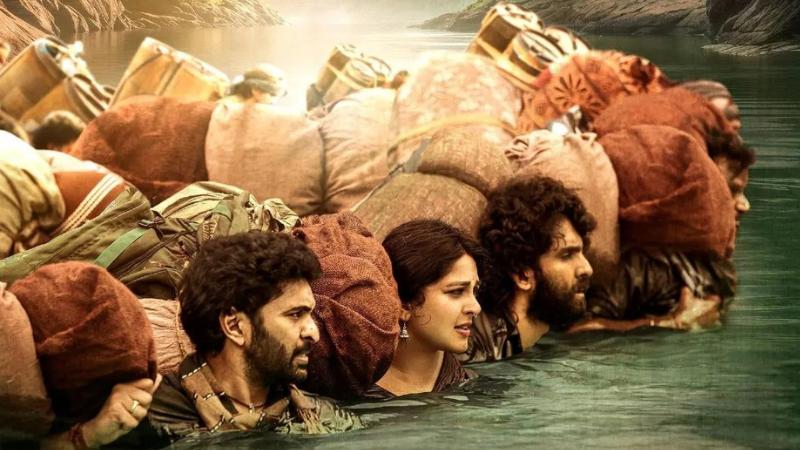
Varanasi appears to be taking the most expansive route. Rajamouli’s film is expected to mix mythology, time travel, action and global spectacle, with Mahesh Babu connected to both Rudhra and Lord Rama elements in the story. The director’s reputation after RRR gives the project strong visibility, but the film will still need to prove that its mythological portions serve the story instead of feeling like a gimmick.
Box Office Will Test How Much Reinvention Works
The larger question is whether Indian audiences want fresh Ramayana-inspired cinema or a more traditional retelling. Ramanand Sagar’s television Ramayana remains the most widely remembered screen version because it treated the epic with devotional simplicity. That legacy continues to influence how viewers judge newer versions. Any film borrowing from the epic must balance creativity with restraint, especially when characters such as Rama, Sita and Ravana are involved.
For Ramayana, Alpha and Varanasi, the opportunity is enormous. Each film has a major star cast, strong production backing and built-in curiosity. But the risk is equally high. Viewers may accept new settings, advanced visual effects and modern storytelling only if the emotional core of the epic remains intact. The story of Rama continues to inspire generations, but recent box office results show that reverence cannot be replaced by scale alone. These films will now test whether Bollywood and Indian cinema can modernize the Ramayana without losing the faith and feeling that make it timeless.