Plot
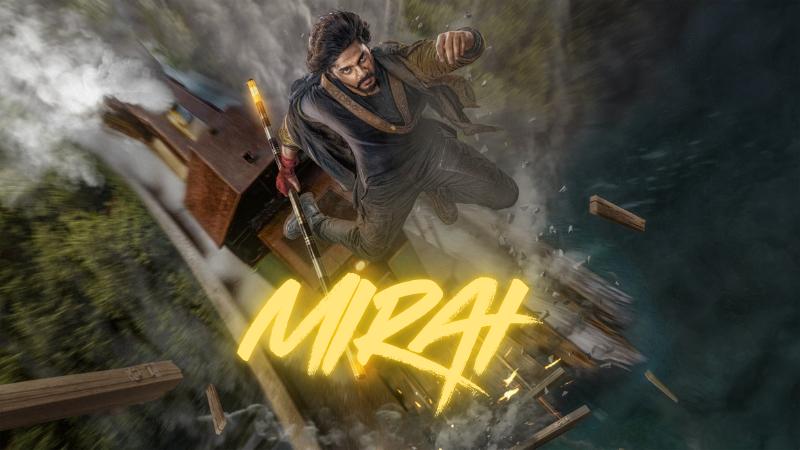
The story of Mirai is inspired by Emperor Ashoka’s secret “Nine Unknown Men” society. After the Kalinga war, Ashoka disperses nine powers into scriptures, entrusted to warriors across generations. In 2000, Mahabir Lama aka Black Sword (Manchu Manoj) sets out to collect all nine scriptures to achieve immortality. He succeeds in collecting eight but needs the ninth Amaragrandham. The link between Vedha (Teja Sajja), Amaragrandham, and why Vibha (Ritika Nayak) believes Vedha is destined to stop Mahabir forms the core of this superhero fantasy. Ambika (Shriya Saran) plays a pivotal role as Vedha’s mother, with the narrative unraveling ancient secrets, mystical powers, and battles of good versus evil.
Overview
Following the blockbuster success of Hanu-Man, Teja Sajja returns with Mirai, directed by Karthik Gattamneni. The film blends mythology, fantasy, and modern superhero elements. With strong visual effects, grand action sequences, and emotional depth, the film manages to carve its own space despite a few shortcomings in pacing and editing. The People Media Factory production is designed as a franchise starter, giving audiences a mix of adventure, drama, and spectacle.
Performances
- Teja Sajja: Confident as Vedha, he shines in action, transformation sequences, and emotional moments. He is growing into a dependable superhero star.
- Manchu Manoj: Steals the show as the ferocious antagonist. His screen presence, menacing look, and dialogue delivery elevate the film.
- Ritika Nayak: Does justice to her limited role but lacks scope for standout performance.
- Shriya Saran: Adds depth and gravitas as Ambika, Vedha’s mother.
- Jagapathi Babu & Jayaram: Solid support in crucial roles.
- Getup Srinu, Venkatesh Maha, Kishore Tirumala: Provide humor, though sometimes forced.
Technical Aspects
- Direction & Writing: Karthik Gattamneni excels in bringing a mythological fantasy alive while avoiding overcomplicated storytelling. His vision as writer, director, and cinematographer ensures cohesion.
- Visual Effects: Limited budget but surprisingly effective, especially in creating the giant eagle.
- Production Values: People Media Factory deserves credit for backing ambitious content after Eagle.
Music
Gowra Hari’s background score is a highlight. From the Himalayas pre-interval block with the giant eagle to the Jaithraya song montage, his music enhances the film’s emotional and adrenaline moments. The makers wisely excluded “Vibe Vundi Baby” to maintain narrative flow.
Editing
A. Sreekar Prasad could have trimmed at least 20 minutes of the first half. Unnecessary comedy, stretched romantic sequences, and filler moments slowed the film. Tighter pacing would have helped.
Positives
- Five brilliantly executed major blocks
- Powerful background score
- Engaging mythological story backdrop
- Teja Sajja’s confident performance
- Manchu Manoj’s antagonist role
- Strong dialogues
- Solid visual effects for its budget
Negatives
- Slow pacing in the first half
- Forced and unnecessary comedy
- Overuse of AI visuals in some scenes
- Deja vu moments resembling Hanu-Man
Analysis
Mirai is a strong attempt at building an Indian superhero franchise with roots in mythology. The film avoids becoming overly complex while offering fantasy entertainment that appeals to children and families. The balance of spectacle, myth, and emotion works well. Despite a sluggish first half and overuse of comedy, the film recovers with powerful blocks in the second half. Karthik Gattamneni proves that vision and storytelling can compensate for a limited budget, making Mirai a worthwhile theatrical experience.
Bottomline: Divine Blockbuster
Rating: 3.25/5