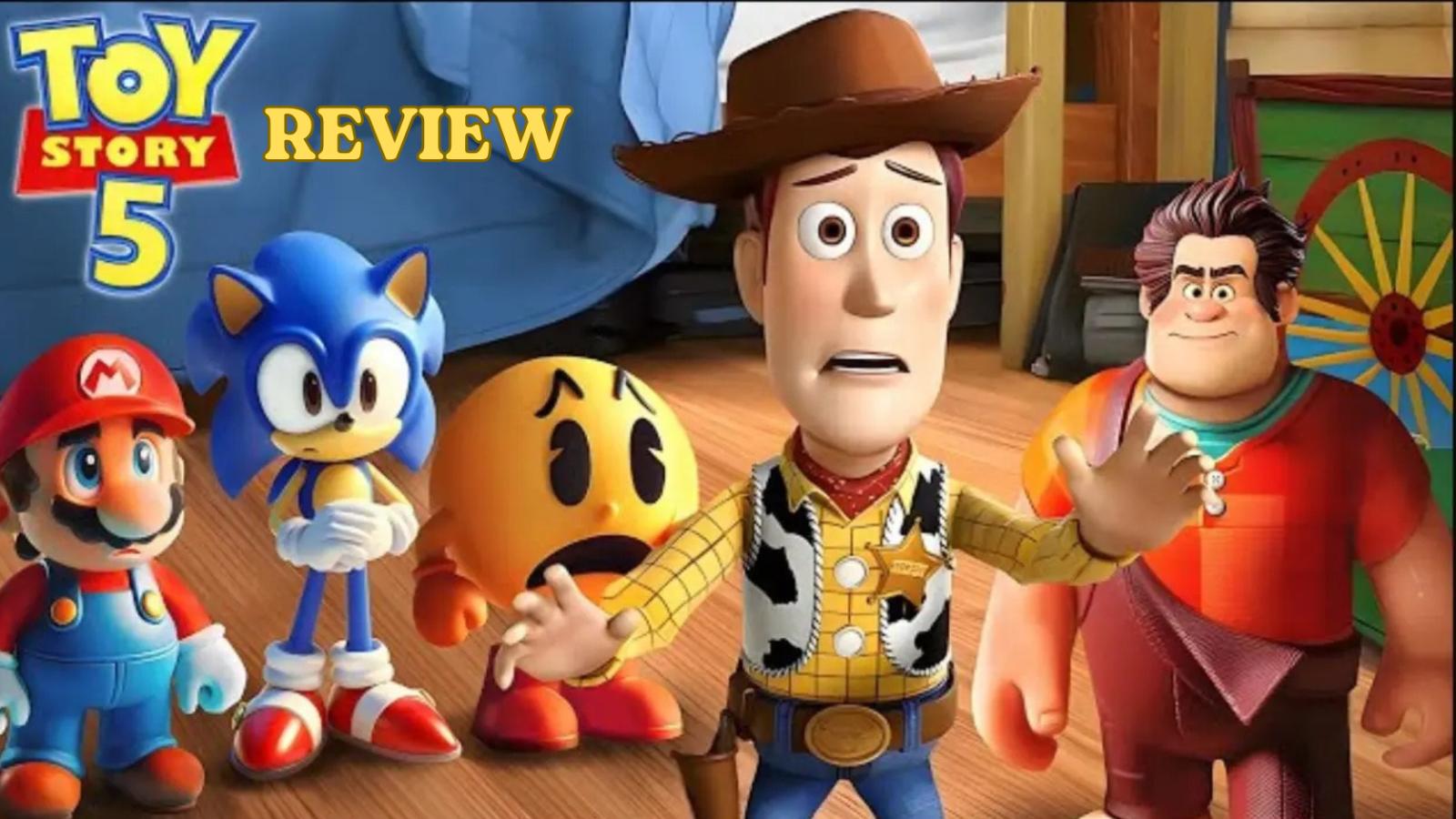
Plot
Toy Story 5 follows Bonnie as she becomes deeply attached to Lilypad, a child-friendly smart device that begins to dominate her attention. Jessie, Woody, Buzz and the other toys suddenly face a new kind of threat. This time, they are not being replaced by another toy or forgotten because of age. They are being pushed aside by technology. As Jessie steps into a stronger leadership role, the toys must understand how to stay relevant in a world where screens are becoming a bigger part of childhood.
Overview
Toy Story 5 is a thoughtful sequel that brings Pixar’s beloved franchise into the iPad generation. The film looks at how children’s playtime has changed in a world of smart devices, apps and constant digital distraction. While the story does not feel as emotionally powerful as Toy Story 3 or as elegant as Toy Story 4, it still finds a timely reason to continue the franchise. The film works best when it focuses on Jessie’s fear of being replaced and the shrinking space between boredom and imagination.
Performances
The voice performances remain one of the film’s biggest strengths. Joan Cusack gets more space as Jessie, and her performance carries the emotional weight of the story. Jessie’s anxiety, leadership and vulnerability give the sequel its strongest moments. Tom Hanks as Woody and Tim Allen as Buzz Lightyear continue to bring warmth and familiarity, though their roles are not as central this time. The supporting voices add humour and energy, but a few characters do not get enough development.
Technical Aspects
Pixar once again delivers excellent animation. The visual detailing is rich, polished and emotionally expressive. The film uses small gestures very effectively, whether it is a toy waiting silently, a child ignoring a favourite plaything, or a room filled with objects that once mattered more. The digital world is presented without turning the film into a loud tech spectacle. The animation supports both comedy and emotion, making the story visually engaging for children and adults.
Music
The music supports the emotional and adventurous tone of the film. The background score helps create nostalgia while also giving the new tech-driven conflict a fresh mood. It does not overpower the story, but it strengthens Jessie’s emotional moments and the toys’ anxiety about losing their place in Bonnie’s life. The music works better in quieter scenes than in the action portions.
Editing
The editing keeps the film moving at a family-friendly pace. The action scenes are quick and energetic, while the emotional portions are given enough breathing space. However, the film occasionally circles familiar Toy Story themes such as purpose, belonging and fear of abandonment. Some subplots could have been sharper, and a few supporting characters feel more functional than necessary. A tighter middle portion would have made the film stronger.
Positives
- Timely theme about children and technology
- Jessie gets a strong emotional arc
- Pixar’s animation quality remains excellent
- Humour works well for family audiences
- Woody and Buzz bring nostalgic value
- The film avoids a harsh anti-technology message
- Quiet emotional moments leave impact
Negatives
- Not as powerful as earlier franchise highs
- Some themes feel familiar
- Few supporting characters are underused
- Message becomes slightly neat at times
- The fifth-film fatigue is visible in parts
- Story could have taken more risks
Analysis
Toy Story 5 works because it understands a modern parenting concern without turning it into a lecture. The film does not say technology is evil. Instead, it asks what happens when children no longer need toys to imagine worlds, because screens are already giving them endless ready-made stimulation. This idea gives the film relevance and separates it from earlier Toy Story conflicts.
The smartest decision is making Jessie the emotional centre. Her fear of losing Bonnie’s attention mirrors Woody’s insecurity from the first film, but the reason feels new. The enemy is not another toy or a villain with a plan. The real rival is distraction. That makes the film more relatable for today’s families.
Still, Toy Story 5 has a clear limitation. The franchise has already delivered more than one emotional farewell, so the film sometimes struggles to justify its existence. The emotional beats are familiar, and the story does not reach the heartbreaking depth of Toy Story 3. But the film still has enough honesty, humour and warmth to work. Overall, Toy Story 5 is a relevant, emotional and visually rich sequel. It may not be Pixar’s most inventive film, but it proves that the Toy Story world still has meaning when it reflects the changing shape of childhood.
Bottomline: Relevant sequel
Rating: 3.5/5