Plot
The throne of Mirzapur remains the ultimate prize, carrying influence across Purvanchal and potentially into national politics. Guddu and Munna are once again positioned as impulsive rivals driven by ambition, insecurity and a desire to earn their fathers’ approval.
Guddu continues to depend on physical strength, while his younger brother Bablu provides intelligence and strategic thinking. Jeetendra Kumar replaces Vikrant Massey as Bablu in this parallel narrative.
As Kaleen Bhaiya protects his authority, new adversaries enter the battle and existing relationships become increasingly complicated. Ravi Kishan appears as a stylish antagonist whose violent personality is balanced by an unexpected romantic side. Bloodshed, romance, family conflict and political ambition eventually converge in a crowd-pleasing climax.
Overview
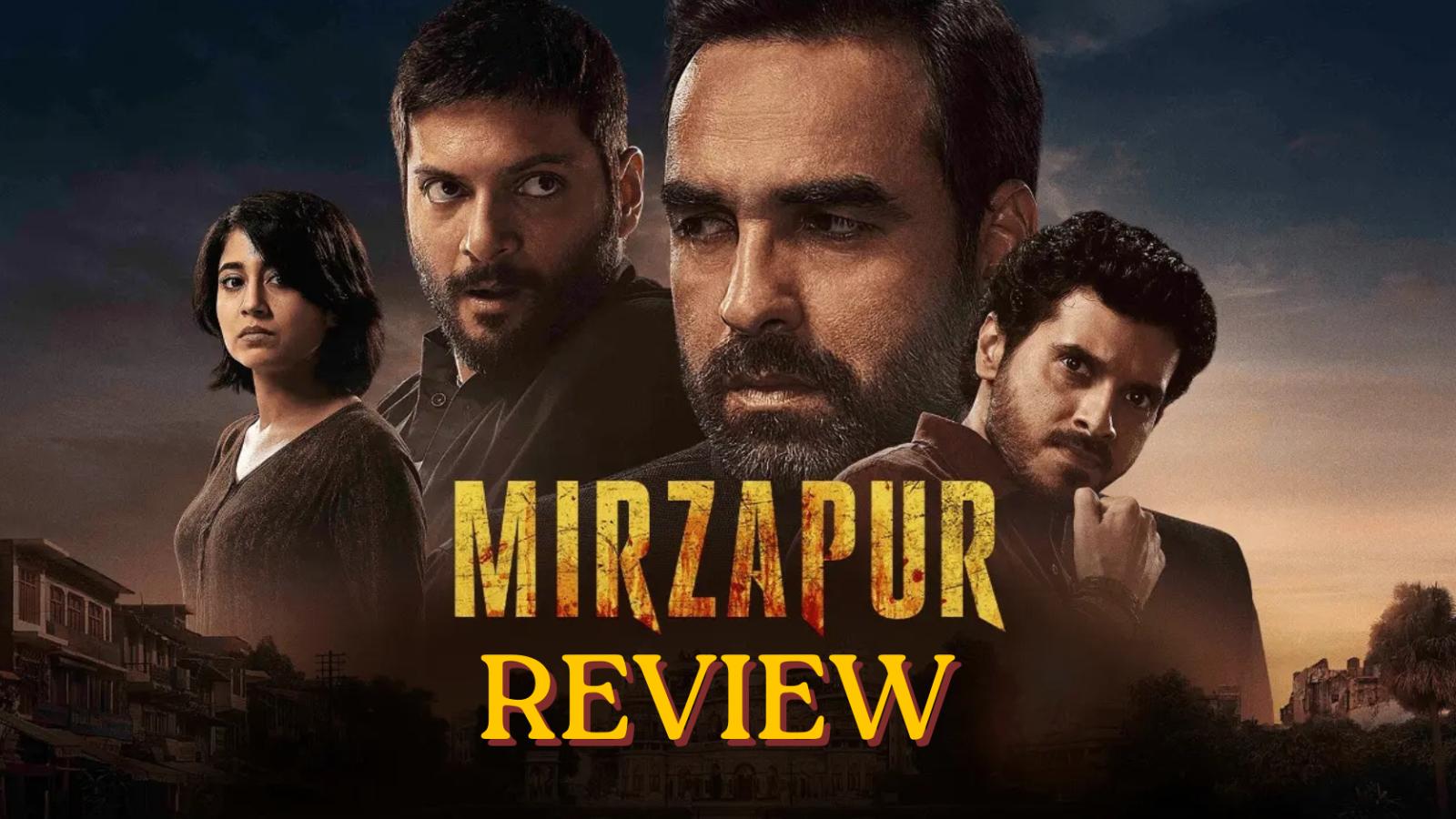
Mirzapur: The Movie transfers the franchise’s guns, betrayals, profane dialogue and power struggles from streaming to theatres. Written by Puneet Krishna and directed by Gurmeet Singh, the film presents a parallel story unfolding alongside the events of the first season rather than continuing after Season 3.
This approach brings back Munna, Bablu and Sweety without disturbing the streaming series’ established timeline. The film understands what fans expect and delivers violence, humour, swagger and nostalgia, but its attempt to accommodate too many characters and storylines results in a runtime exceeding three hours. The film was released theatrically on Friday, September 4, 2026.
Performances
Pankaj Tripathi remains effortlessly commanding as Kaleen Bhaiya. His controlled expressions, pauses and subtle head movements convey more danger than lengthy dialogue could deliver.
Ali Fazal returns to Guddu’s muscular and impulsive persona with conviction. Divyendu Sharma immediately recaptures Munna’s unpredictable energy, making their rivalry one of the film’s strongest components.
Jeetendra Kumar gives Bablu a calm and intelligent presence. While comparisons with Vikrant Massey are inevitable, he develops his own interpretation rather than simply imitating the original performance.
Ravi Kishan is a major attraction as the new antagonist. He combines menace, humour and romance, bringing fresh energy whenever the crowded narrative begins to slow down.
Rasika Dugal benefits from a more substantial arc as Beena, who receives greater agency than she had in several parts of the series. However, Shriya Pilgaonkar, Shweta Tripathi Sharma and Harshita Gaur are given limited screen time.
Technical Aspects
Director Gurmeet Singh retains the franchise’s raw visual identity while increasing the scale for theatres. The action sequences are forceful, the humour largely works and the Rajasthan portions provide some of the film’s most striking imagery.
The dialogue stays faithful to Mirzapur’s aggressive, street-level style. Familiar verbal exchanges, threats and dark comedy should satisfy established fans, while the climax is designed to generate applause inside theatres.
The main technical weakness is narrative structure. Material that may have worked across several streaming episodes is compressed into one film without enough simplification. Several subplots compete for attention, preventing the central conflict from developing with consistent urgency.
Music
The soundtrack matches the film’s swagger and pulpy atmosphere. Rap numbers complement the action and reinforce the characters’ intimidating screen presence.
The return of Vaaroon adds nostalgia, while Sanson Ki Mala introduces a softer emotional quality near the ending. The songs are used effectively, although they cannot fully compensate for the slow stretches created by the lengthy narrative.
Editing
Editing is the film’s biggest weakness. At more than three hours, the narrative repeatedly loses momentum because it tries to give nearly every character, conflict and relationship a separate moment.
Several sequences could have been shortened or removed without damaging the central story. A late car chase feels particularly forced and extends the film when it should be moving decisively towards the climax.
A tighter cut focusing primarily on Guddu, Munna and Kaleen Bhaiya could have produced a faster and more impactful theatrical experience.
Positives
- Pankaj Tripathi’s commanding portrayal of Kaleen Bhaiya
- Strong Guddu and Munna rivalry
- Ravi Kishan’s entertaining antagonist
- Rasika Dugal’s improved character arc
- Punchy action and effective humour
- Nostalgic characters, music and dialogue
- Visually appealing Rajasthan sequences
- Crowd-pleasing climax
Negatives
- Excessive three-hour-plus runtime
- Too many characters and parallel storylines
- Uneven narrative pacing
- Forced sequences, including the late car chase
- Limited importance given to several female characters
- Streaming-style storytelling that feels stretched in theatres
Analysis
Mirzapur: The Movie works best as a theatrical celebration for viewers already invested in the franchise. Its familiar characters, violent power games and irreverent humour create several entertaining moments, while the return of Munna, Bablu and Sweety supplies strong nostalgic value.
However, the filmmakers appear reluctant to leave any character or subplot behind. That affection for the Mirzapur universe becomes an obstacle, turning what could have been a sharp crime entertainer into an overextended experience.
Fans may enjoy the familiar bhaukaal and forgive the indulgence. New viewers could struggle with the crowded relationships and sprawling structure. The film succeeds as fan service, but a shorter runtime would have made its theatrical transition far more effective.
Bottomline: Nostalgic Bhaukaal
Rating: 3/5