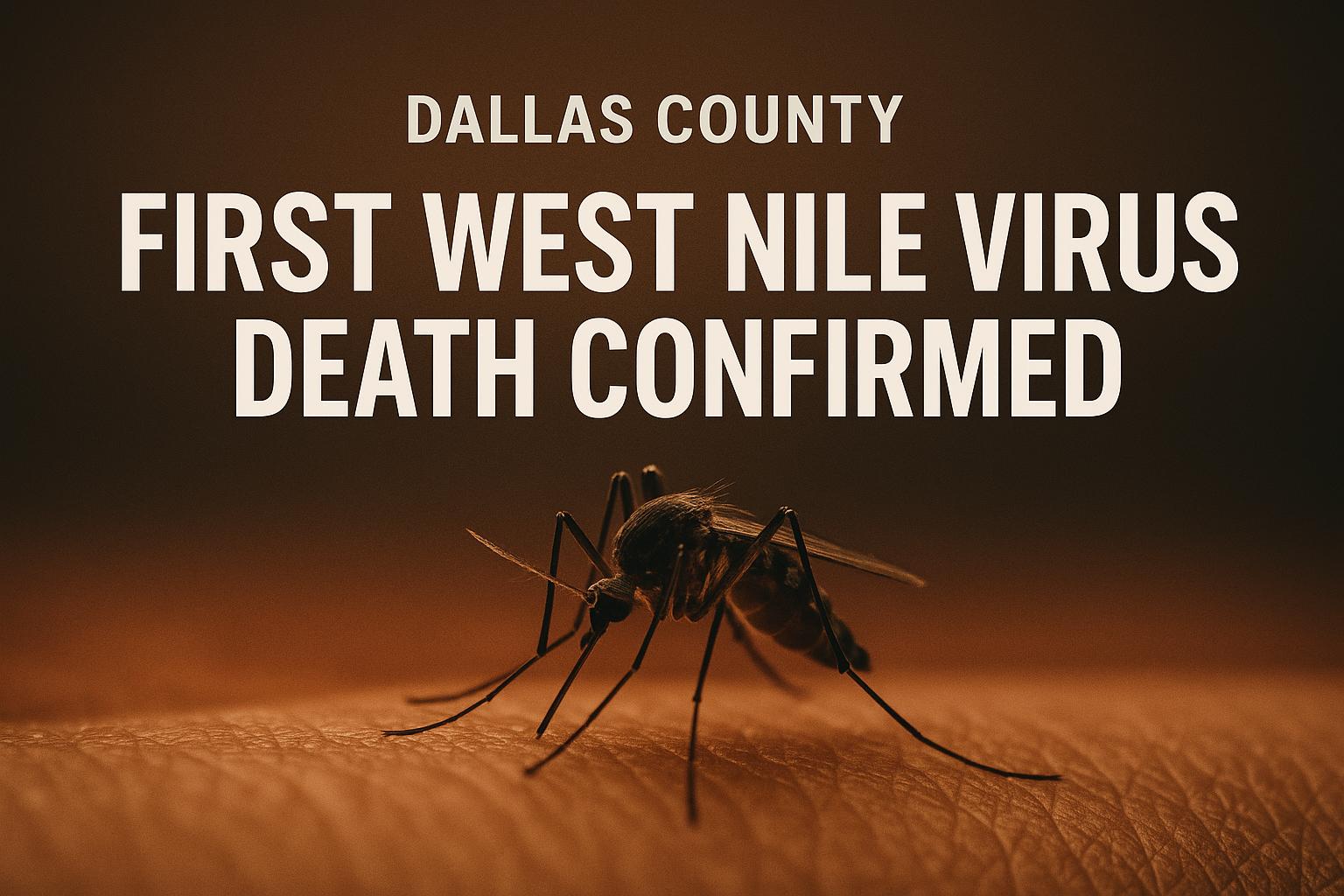
Dallas County, Texas — Health officials have confirmed the first death related to the West Nile Virus (WNV) in the 2025 season, marking a sobering reminder of ongoing mosquito risks across North Texas. The Dallas County Health and Human Services (DCHHS) announced that the victim was a man in his seventies who suffered from underlying medical conditions and had been diagnosed with the neuroinvasive form of the disease, known as West Nile Neuroinvasive Disease (WNND). This severe form affects the brain and nervous system and can be fatal in vulnerable individuals.
According to DCHHS, no further details about the patient will be disclosed to protect his family’s privacy. So far, Dallas County has reported eight human cases of West Nile Virus this year and identified 245 mosquito traps testing positive for the virus. Health authorities continue to monitor mosquito activity closely, with surveillance and testing running from April through mid-November each year.
Dr. Philip Huang, Director of DCHHS, expressed deep concern about the ongoing spread of the virus, noting that while temperatures are expected to cool in the coming weeks, the threat of mosquito bites remains. “We are very saddened to report our first confirmed WNV death this season,” Dr. Huang stated. “Cooler temperatures are coming, but mosquitoes are still a threat. We urge everyone to continue doing everything they can to avoid mosquito bites and stay safe from West Nile Virus.”
The department emphasized that prevention is still the most effective defense against infection. Even a single bite from an infected mosquito can transmit the virus, which can lead to flu-like symptoms such as fever, headaches, body aches, nausea, and fatigue. In severe cases like WNND, inflammation of the brain or spinal cord can occur, resulting in paralysis, seizures, or death, especially among older adults and people with weakened immune systems.
Health officials are reminding residents to follow the four Ds — simple but effective steps that can greatly reduce the risk of infection.
First, use insect repellent containing DEET or other EPA-approved ingredients whenever spending time outdoors. These repellents provide a barrier against mosquito bites when used correctly according to label directions.
Second, dress in long, loose-fitting, light-colored clothing, which makes it harder for mosquitoes to bite through fabric and helps reduce exposure.
Third, drain standing water around homes, gardens, or workplaces, as even small amounts can serve as breeding grounds for mosquitoes. Items like buckets, birdbaths, flowerpots, and gutters should be checked regularly.
Lastly, limit outdoor activity from dusk to dawn, when mosquitoes are most active and more likely to bite.
Public health workers continue to carry out mosquito control operations throughout Dallas County, treating known breeding sites and setting traps to track mosquito populations. Residents are encouraged to report areas with heavy mosquito activity to help officials identify problem zones and apply appropriate treatments.
Dallas County has faced recurring West Nile Virus cases in recent years, with fluctuations depending on seasonal conditions and rainfall patterns. The confirmation of this year’s first fatality highlights the continuing public health challenge posed by mosquito-borne diseases, even as awareness and preventive efforts increase.
Officials urge everyone, especially those over 60 or with existing health issues, to take the threat seriously. The virus can remain active until temperatures drop significantly below the threshold that supports mosquito life cycles. Until then, county health officers stress that collective community action — from individual precautions to public cooperation — remains the key to reducing risk.
As Dallas County moves deeper into the late mosquito season, authorities hope ongoing prevention and education efforts will prevent additional cases and save lives. While the first death of the year is a tragic milestone, officials believe that with continued vigilance, residents can help slow the spread of the West Nile Virus and protect the health of the community throughout the remaining season.