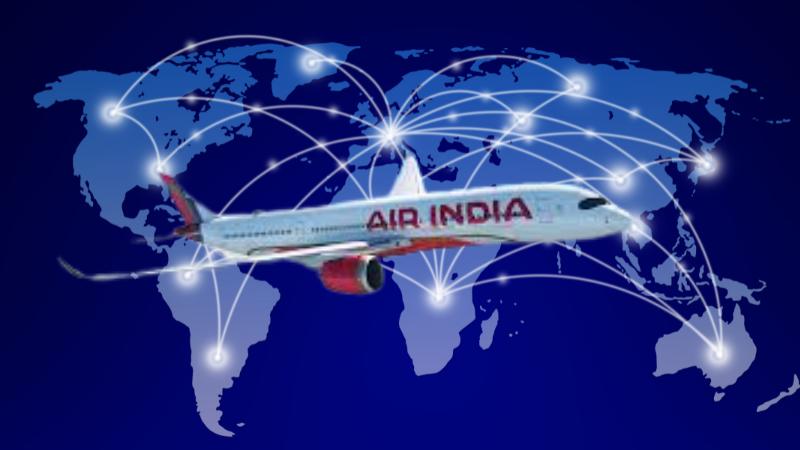
Air India is actively considering introducing domestic technical stops for its North America-bound flights from Delhi to manage the rising operational costs brought on by the ongoing closure of Pakistan’s airspace. According to people familiar with the developments, the airline may route some of its services through Indian cities such as Mumbai or Ahmedabad instead of making technical halts in Europe, which have proven to be significantly more expensive.
The Tata Group-owned carrier currently operates 71 flights per week to North American destinations, of which 54 originate from the national capital. These destinations include major US cities such as New York, Chicago, San Francisco, Washington, and Newark, along with Canadian cities Toronto and Vancouver. With the airspace ban forcing longer routes, Air India has temporarily added refueling stops in European cities like Vienna and Copenhagen. These stops, while operationally necessary, have also meant greater expenditure on fuel, international landing charges, parking fees, and crew costs.
The latest rerouting comes in response to Pakistan’s decision on April 24 to close its airspace to Indian carriers following India’s retaliatory measures after the Pahalgam terror attack. This restriction has led to longer flying hours, increased fuel consumption, reduced payload capacity, and challenges linked to crew flying duty time limitation (FDTL) norms. North America-bound flights from Delhi now bypass Pakistani airspace and instead take longer routes over the Arabian Sea, causing delays and higher operating costs.
Air India’s CEO Campbell Wilson, in a communication to staff, acknowledged that the airline has temporarily adjusted its European and US networks. He noted that while technical stops have been added due to the restricted airspace, the company is making steady progress in identifying alternative solutions that would eventually help reduce overseas tech-stops and bring back more non-stop operations. Though he did not provide specific details, sources confirmed that routing flights through domestic cities is one of the major solutions under active consideration.
The domestic stopover strategy could significantly lower costs. Landing and fuel expenses at Indian airports are substantially lower than in Europe, and this change would help manage crew flying hours more efficiently. Under India’s Directorate General of Civil Aviation (DGCA) norms, a single set of pilots can only fly continuously for up to eight hours. With longer flight durations due to rerouting, airlines need additional crew or a mid-way halt to remain compliant with FDTL rules. If a flight includes a landing en route, regulatory permissions allow the airline to extend the crew’s duty time slightly.
In the case of ultra-long-haul flights that last over 14 hours, airlines are already required to have two sets of crew. But the extra one to two hours added to existing 16-hour flights have pushed costs even higher. A senior industry expert recently estimated that just 1.5 additional hours per North America flight can increase expenses by nearly ₹29 lakh per flight. This figure includes costs associated with a technical stop such as refueling, ground handling, and airport charges.
On April 28, the Civil Aviation Ministry said it was assessing the fallout of the Pakistan airspace closure and is working with domestic airlines to find viable solutions. Airlines, including Air India and others, have submitted reports to the ministry outlining the impact on flight operations and requesting support. The ministry is also considering how the situation may affect passenger fares, as rising operational costs are eventually passed on to consumers.
Air India has reportedly projected an additional financial burden of around USD 600 million if the current airspace closure continues for a year. The carrier has approached the government with suggestions for potential financial assistance to manage these extraordinary expenses. Internal assessments based on the number of international flights affected and their increased duration show that Indian airlines collectively could incur over ₹306 crore in monthly additional operational costs due to these disruptions.
India, on its part, has also taken reciprocal action by barring Pakistani carriers from using its airspace following the April 22 terror attack in Pahalgam that killed over two dozen people, including several tourists. This tit-for-tat response has further complicated the geopolitical and operational landscape for aviation in the region, leaving airlines scrambling for workarounds that can balance security, compliance, and cost efficiency.
As the situation evolves, Air India’s move to shift technical halts from Europe to within India could offer a practical, cost-effective solution in the short term. If successful, this strategy might set a precedent for how Indian carriers manage long-haul operations in a dynamically changing geopolitical context.