Edit
World's Largest Digital Telescope Captures Millions of Galaxies in Groundbreaking Bay Area Space Images
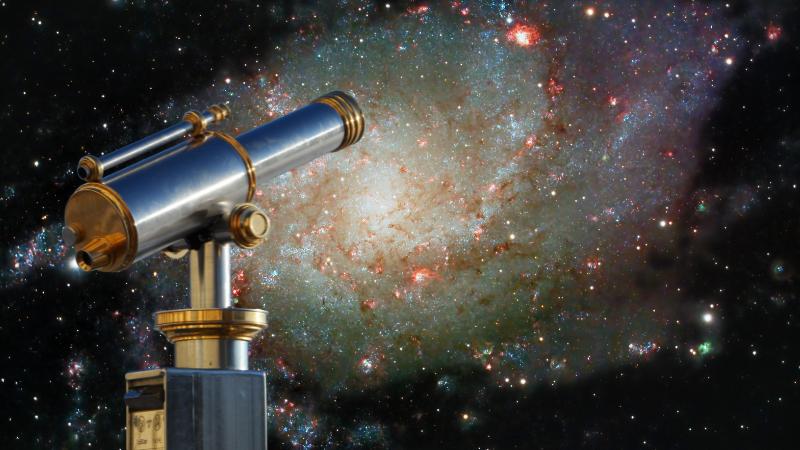
This advanced 3,200-megapixel digital camera is designed to scan the sky every 40 seconds, capturing ultra-high-resolution, ultra-wide images that offer an unmatched view into the cosmos. The observatory’s mission is to conduct a deep, decade-long sky survey to better understand the universe and its evolution, all while creating the most comprehensive visual record of the night sky ever attempted.
Phil Marshall, Deputy Director of Operations at the observatory, expressed immense excitement at finally seeing the project deliver results after years of planning. According to Marshall, seeing the first images was like witnessing a dream come to life. He emphasized that while this moment is a major milestone, it's only the beginning of an ambitious scientific journey that aims to investigate everything from dark matter to galaxy formation.
Each image captured by the observatory’s camera reveals millions of galaxies in exquisite detail, enabling researchers to simultaneously see wide regions of the sky and delve into the depths of cosmic structures. This dual capability represents a significant advancement over previous instruments that were often limited to either broad overviews or in-depth focus, but rarely both.
The images offer an opportunity to explore how galaxies evolve, how they are shaped over time, and what their structure reveals about the forces of the universe. From the fringes of nearby galaxies to the most distant star systems, the observatory’s view captures it all in extraordinary clarity.
Scientists leading the project highlighted the value of combining vast sky coverage with the ability to observe deep into the universe. The result is a sweeping visual database that will offer insights into the formation of galaxies, the behavior of stars, and the history of cosmic expansion. With this new tool, researchers can also track the changes occurring in space—from the motion of asteroids in our own solar system to the explosive deaths of stars in faraway galaxies.
The observatory’s technology will allow astrophysicists to examine variable stars, exploding supernovae, and other dynamic cosmic phenomena with unmatched accuracy. All of the data will be digitally stored, allowing for endless querying and analysis in ways never before possible. This digital archive will be a foundational resource for space science for years to come.
Every night, the observatory will continue to scan the sky, capturing new data that contributes to a 10-year visual timelapse of the universe. In its first year alone, the observatory is expected to generate more optical data than all other previous observatories combined, marking a dramatic shift in the scale and depth of astronomical observation.
The telescope, part of a joint scientific initiative, is a culmination of years of engineering, collaboration, and cutting-edge innovation. Built in California and operated at a carefully selected site in Chile, the observatory benefits from high-altitude, clear skies, and advanced technical support that make such detailed sky mapping possible.
Reflecting on the images, Marshall noted how humbling it is to see the sheer volume of stars and galaxies in every frame. Each visible galaxy contains billions of stars, and each image captured represents a staggering amount of cosmic history and structure. According to him, these visuals offer a profound reminder of the vastness of the universe and humanity’s small, yet meaningful, place within it.
The observatory’s mission is more than just scientific; it’s philosophical, inviting anyone who sees the images to reflect on their place in the cosmos. With its long-term survey underway, it will not only fuel discoveries about the universe’s structure and origins but will also spark public curiosity and inspire future generations of astronomers.
This digital window into space marks a turning point in how we view and understand the universe, and it's only just the beginning.