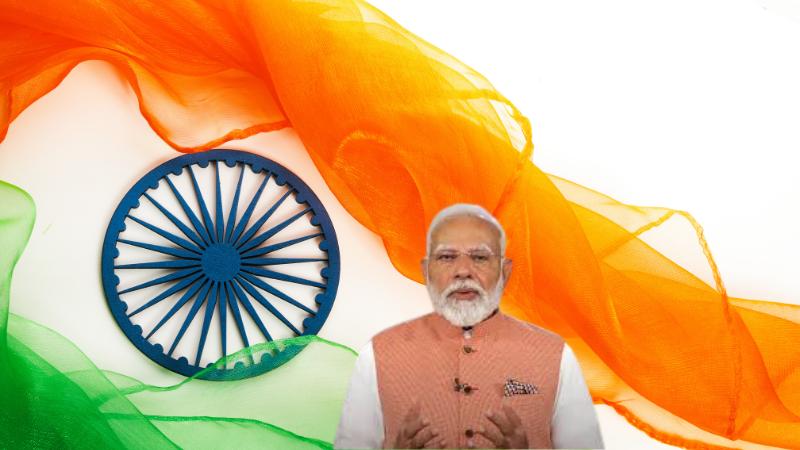
Indian markets rallied on Monday following Prime Minister Narendra Modi’s announcement of sweeping tax reforms aimed at boosting domestic consumption and supporting growth. The Nifty 50 index climbed by 1%, while the BSE Sensex advanced 0.84%. The rupee also gained strength as the US dollar fell 0.18% against it. The rally reflected optimism that the tax overhaul would provide relief to households and industries at a time when India faces steep tariffs from the United States and rising geopolitical pressures linked to energy imports from Russia.
The centerpiece of Modi’s announcement was a major restructuring of the Goods and Services Tax (GST) regime. Under the new plan, India will shift to a simplified two-rate structure of 5% and 18%, replacing the earlier four-slab system that imposed 12% and 28% levies on various items. The government highlighted that the changes are designed to simplify compliance, reduce tax burdens, and modernize the GST framework in ways that encourage growth and investment. Businesses, particularly micro, small, and medium enterprises (MSMEs), are expected to benefit from lower tax rates, rationalized categories, faster refunds, and technology-driven processes such as pre-filled tax returns.
The reforms come at a critical moment for India’s economy, which has been under pressure due to Washington’s imposition of new tariffs. The US has announced additional duties of 25% on Indian imports, bringing total tariffs up to 50% by the end of the month. These moves are partly tied to New Delhi’s continued purchases of Russian crude, which remain a contentious issue in global trade discussions. Yet despite external headwinds, analysts suggest that India’s domestic consumption strength could help offset tariff-related challenges.
The auto sector emerged as one of the biggest beneficiaries of the new tax policy. After a sluggish performance in recent years, passenger vehicle sales in India grew only 4.2% in 2024, marking the slowest pace in four years. However, optimism returned to the market following the reforms. Auto stocks surged during Monday’s trading session, with Maruti Suzuki India rising 8.75% and Hyundai Motor India gaining 8.15%. Investors expect that lower tax rates and rising consumer confidence will help revive demand in the automobile sector, which plays a central role in India’s industrial and employment landscape.
The changes are also viewed as supportive for housing, logistics, and consumer goods industries, as lower levies on essential goods and rationalized rates could spur broader demand. Industry bodies have emphasized that easing compliance for smaller enterprises will free up resources, encourage investment, and enhance efficiency. By leveraging digital technologies, the government aims to ensure faster refund cycles, reducing liquidity challenges for businesses and promoting smoother operations.
India’s Reserve Bank has forecast economic growth of 6.5% for the 2025-2026 fiscal year. The new tax regime is expected to provide a much-needed boost to this outlook by stimulating domestic demand, which has been subdued in recent quarters. Experts argue that India’s economy is heavily consumption-driven, with exports playing a smaller role compared to other major economies. In fact, domestic consumption accounted for 61.4% of India’s GDP in the 2024-2025 fiscal year. With the new policies encouraging spending, the government hopes to generate momentum across industries and restore consumer confidence.
Reports also highlight the evolving patterns in consumer behavior. Urban households are increasingly shifting toward discretionary and luxury spending, while stable inflation levels are improving purchasing power. Retail inflation in India has dropped significantly from 4.31% in January to 1.55% in July, marking the lowest level since 2017. This decline has created a more favorable environment for consumption growth and lending. Alongside low real wage growth and rising personal loans, this has created conditions where private consumption can expand faster than the broader economy. Forecasts suggest that private final consumption will grow at an annual rate of 6.9% through March 2026, outpacing overall GDP growth of 6.3%.
The reforms, therefore, represent a significant turning point for India’s economic narrative. By focusing on reducing tax complexity and empowering consumers and businesses, the Modi government is aiming to solidify India’s position as a consumption-led economy resilient to global trade headwinds. While uncertainties remain due to geopolitical tensions and US tariff pressures, the promise of stronger domestic demand and sectoral revival has restored confidence among investors. For many, the market rally signaled not just a short-term reaction, but an endorsement of the structural potential in India’s growth story under the revamped GST system.