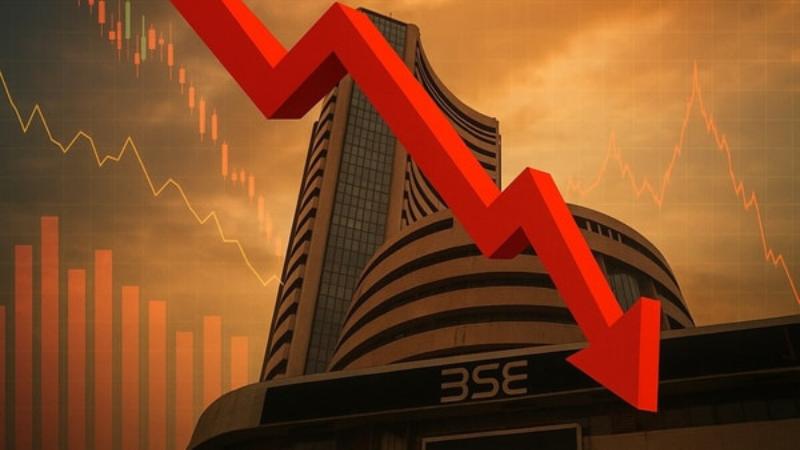
plunging close to one percent amid rising global uncertainty and mounting trade-related concerns. The S&P BSE Sensex fell by more than 700 points during afternoon trade to hover around the 84,300 mark, while the NSE Nifty50 slipped over 225 points to trade near 25,915. Weak sentiment spread across sectors, dragging frontline stocks as well as the broader market lower, reflecting heightened investor caution.
Market participants attributed the decline to a combination of weak global cues, persistent foreign fund outflows, and fresh fears surrounding possible US trade action against India. Selling pressure intensified in heavyweight stocks, while IT and metal shares remained among the worst performers. Analysts said the sharp fall reflects a risk-off mood among investors as uncertainty around global trade policy continues to grow.
A major trigger behind the market downturn was renewed concern over potential US tariffs on Indian goods. Reports suggesting that the US could raise tariffs on India by a steep margin unsettled Dalal Street, especially after US President Donald Trump cleared a bipartisan sanctions bill aimed at countries purchasing Russian oil. The proposed legislation is expected to give Washington greater leverage over nations such as India, China, and Brazil, increasing fears of trade disruption.
The US has already imposed tariffs of up to 50 percent on certain Indian exports, with a significant portion linked to India’s imports of discounted Russian crude oil. Fresh speculation that these tariffs could be increased further led investors to cut risk exposure, particularly in export-oriented sectors like information technology and metals. The absence of a concrete US–India trade agreement has added to uncertainty, despite multiple discussions between Trump and Indian Prime Minister Narendra Modi. Conflicting statements from the US administration in recent days have further clouded the outlook, raising doubts over whether trade tensions will ease anytime soon.
Continued selling by foreign institutional investors played a significant role in dragging the market lower. Provisional data showed that foreign investors sold Indian equities worth over ₹1,500 crore during the session, extending a trend of sustained outflows seen over the past year. Market experts noted that while domestic economic fundamentals remain relatively strong, persistent FII selling has capped any meaningful recovery in equities.
Heavyweight stocks across banking, FMCG, auto, and energy sectors contributed to the Sensex decline, with several blue-chip names trading firmly in the red. IT stocks faced sharp losses as concerns over US trade policy and currency volatility weighed on the sector. The Nifty IT index slipped around 1.5 percent, with major players posting declines of over two percent. Metal stocks were hit even harder, with the Nifty Metal index plunging nearly three percent amid fears of weaker global demand and higher trade barriers.
Experts believe the near-term direction of the market will depend on clarity around US trade policy, developments related to tariffs, and whether foreign investors slow down their selling. Until there is greater certainty on these fronts, volatility is expected to remain high, keeping investors on edge and markets under pressure.
Note: This article is for informative and educational purposes only, this is not financial advice.