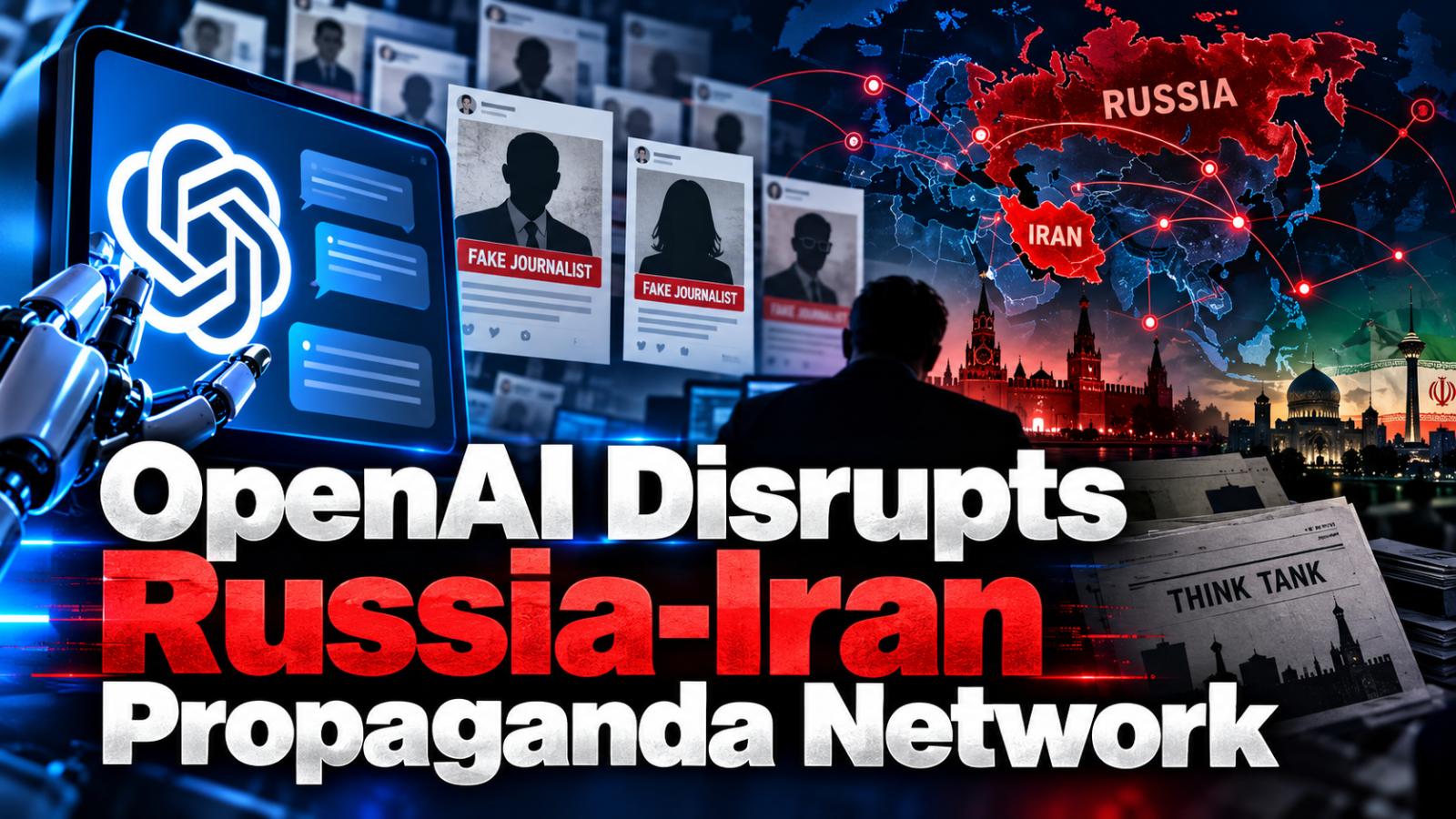
AI influence ops linked to Russia and Iran used ChatGPT to support fake journalists, a false-front think tank and geopolitical propaganda. OpenAI says it banned the accounts after identifying deceptive personas, planted articles, social comments and anti-Ukraine messaging across online platforms.
OpenAI disrupts Russia and Iran influence operations using ChatGPT
OpenAI says it has disrupted two covert influence operations originating from Russia and Iran after discovering that ChatGPT accounts were being used to support deceptive online identities and organisations designed to push geopolitical messaging.
The company said the campaigns combined generative AI with traditional influence tactics rather than relying on AI alone. ChatGPT was used for tasks including refining articles, creating social media comments, preparing internal reports and helping operators maintain convincing false identities.
The cases illustrate a growing challenge for technology platforms: AI can reduce the time, language barriers and editorial work required to run sophisticated influence campaigns, allowing operators to present propaganda through apparently legitimate journalists, research organisations and media channels.
Russia IO
The Russia-origin operation focused heavily on geopolitical narratives, including material designed to damage Ukraine’s reputation and support pro-Russian messaging.
OpenAI said the network used a purported research organisation as a false front, creating the appearance of an independent think tank while concealing the real operators behind it. The campaign also relied on fabricated material and online messaging intended to influence audiences beyond Russia.
The use of an apparently legitimate research platform is significant because such organisations can give political narratives greater credibility than anonymous social media accounts.
Iran IO
The Iran-origin operation followed a different strategy. Operators used ChatGPT to refine long-form articles, editorial pitches and social media comments relating largely to the US-Iran conflict.
OpenAI said the campaign became more active after fighting between the United States and Iran intensified. The earliest article connected to the operation was identified in July 2025, while activity continued into October 2026.
The campaign attempted to place material through established online publications rather than relying only on accounts controlled directly by the operators.
Fake IDs
One of the personas identified by OpenAI was Ervin B. Hoskins, who presented himself online as an American freelance writer.
Accounts using the identity appeared across multiple social platforms. Transparency information associated with the profiles reportedly indicated connections to Iran despite the persona presenting itself as Western.
Using realistic biographies, professional-looking profiles and multiple social accounts can make fabricated identities more difficult for editors and readers to recognise.
False front
Both operations demonstrate why false-front entities are becoming an important concern in online influence campaigns. Instead of publishing propaganda under an obvious political banner, operators can build journalists, research groups or media brands that appear independent.
That approach allows political messaging to enter ordinary news and social-media ecosystems while concealing its source. AI can strengthen the technique by improving language, producing large volumes of content and helping maintain consistent personas.
AI propaganda
OpenAI said it banned the ChatGPT accounts associated with the operations after identifying their activities.
The incidents do not mean AI automatically makes propaganda successful. Audience reach still depends on distribution, credibility and whether established publications or users amplify the material. However, the cases show how generative AI can make deceptive influence work faster, cheaper and more polished.
For news organisations and social platforms, the challenge is increasingly about verifying who is behind content, not simply determining whether the writing itself was produced by AI.