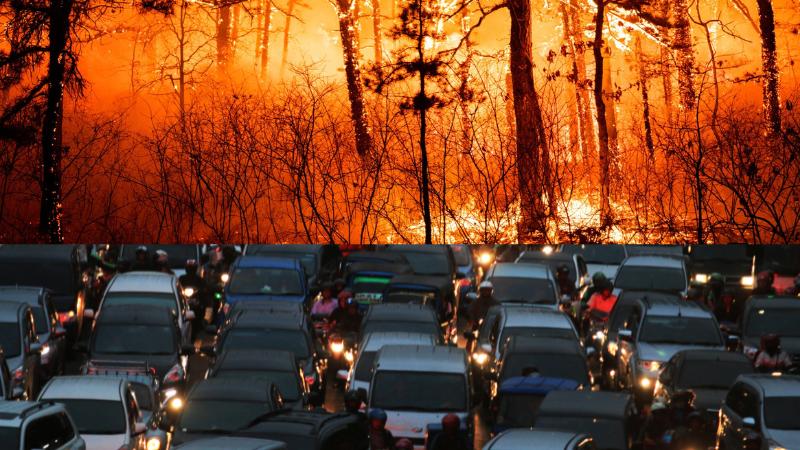
Authorities reported that approximately 3,000 residents have been instructed to evacuate the affected areas to ensure public safety. The wildfire, which remains only 10% contained as of Tuesday night, has led to the diversion of traffic on one of New Jersey’s major highways, the Garden State Parkway. The Parkway, which serves as a vital transportation corridor running north and south through the state, saw southbound traffic rerouted at Exit 80 and northbound at Exit 63, leading to significant delays and frustration for travelers caught in the congestion.
With 1,320 structures currently at risk, fire officials have been working tirelessly to protect homes and assess the extent of potential damage. Emergency services are actively coordinating with local law enforcement and other agencies to mitigate the spread and ensure the safety of residents. While no injuries or fatalities have been reported thus far, the situation remains fluid and dangerous, especially given the dry conditions plaguing the region. The affected region in southern Ocean County has been experiencing unusually dry to drought-level conditions, according to recent data from the U.S. Drought Monitor. These environmental factors, combined with seasonal wind patterns, have escalated the wildfire threat, contributing to the fire’s rapid expansion. The New Jersey Forest Fire Service has categorized the area as having a “high” fire risk, a warning that has unfortunately materialized into an active crisis.
Residents like Jake Willis, who found themselves caught in the traffic chaos, expressed the distress many are facing. Describing the situation as chaotic, Willis reported being stuck in traffic for over three hours, a sentiment echoed by many others navigating the impacted routes. The cause of the wildfire remains under investigation, and officials have not yet determined how the fire began. Crews continue to battle the flames from both the ground and air, attempting to curb the fire’s growth and bring it under control. Aerial support and containment efforts are ongoing, and authorities have urged the public to avoid the area to allow emergency services to operate effectively.
As the wildfire continues to burn, the focus remains on public safety, containment, and minimizing damage to structures and the environment. Local shelters have been set up to support displaced residents, and updates are being provided regularly through official channels. Those in nearby communities are advised to stay alert, follow evacuation instructions if issued, and remain informed through local authorities. This developing emergency highlights the growing risk of wildfires in areas not traditionally considered high-risk. It also underscores the critical role of preparedness, coordination, and environmental monitoring in responding to natural disasters. As firefighting teams work around the clock, communities across Ocean County and beyond watch and wait, hoping for containment and relief from the devastating blaze.