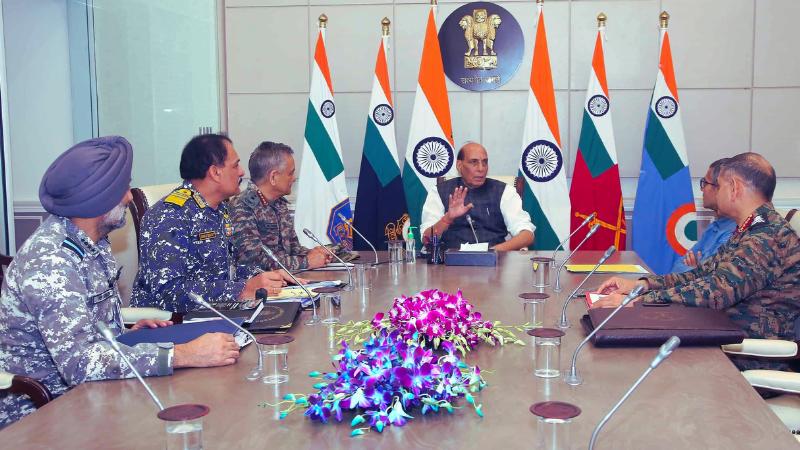
Amid ongoing military operations and heightened national security concerns, the Ministry of Defence (MoD) has issued a strong directive prohibiting live coverage and real-time reporting of military actions across media outlets and social media platforms. The move comes after a wave of misinformation and unverified updates surfaced online, some falsely claiming India had declared war on Pakistan.
Several high-profile and verified social media accounts contributed to widespread confusion Thursday night by sensationalizing military strikes and circulating dramatic but unconfirmed narratives. The Defence Ministry clarified that while India continues to take decisive military action against hostile forces, including air defence systems and terror infrastructure across the border, no official war declaration has been made.
In its statement, the Defence Ministry emphasized that unregulated real-time information risks compromising ongoing military missions, revealing troop movements, and endangering lives of soldiers on the ground. The statement reminded media outlets and individuals of critical moments in Indian history such as the Kargil War, the 26/11 Mumbai attacks, and the Kandahar hijacking where premature or careless reporting seriously jeopardized national security and mission outcomes.
Referring to Clause 6(1)(p) of the Cable Television Networks (Amendment) Rules, 2021, the ministry reiterated that:
“Only periodic briefings by officially designated personnel are authorized during military, counter-terror, or national defence operations. Real-time or speculative coverage is strictly prohibited.” This legal clause empowers the Ministry to regulate broadcast conduct during national emergencies, especially where misinformation or sensationalism could inflame tensions or disrupt strategy.
The advisory comes in the wake of India's Operation Sindoor, a major anti-terror strike on May 7 targeting terror camps in Pakistan and Pakistan-occupied Kashmir (PoK). The strike was a retaliation to the Pahalgam terror attack, which left 26 civilians dead, and has since triggered escalating hostilities between the two nations.
With air defence systems activated, missile and drone threats neutralized, and frontline troops on high alert, the ministry underlined that national security and soldier safety must take precedence over news ratings or social media engagement. “This is a time for restraint, not sensationalism. All platforms whether institutional media or individual influencers must act with caution and responsibility,” the Defence Ministry stated.
Officials also confirmed that designated press briefings would continue at scheduled intervals to ensure transparent and factual communication from authorized sources. Media watchdogs and cybersecurity teams have also been put on alert to track and report accounts spreading false or provocative information during the sensitive period of military engagement.
As border tensions persist and defence operations evolve, the Ministry’s firm message is clear: information control is a matter of national defence, and violations intentional or otherwise could have serious consequences. The general public is encouraged to rely only on verified sources, avoid forwarding unconfirmed reports, and refrain from engaging in or amplifying military-related speculation online. The directive is not just a warning it’s a call for collective responsibility as India navigates one of the most sensitive military stand-offs in recent years.