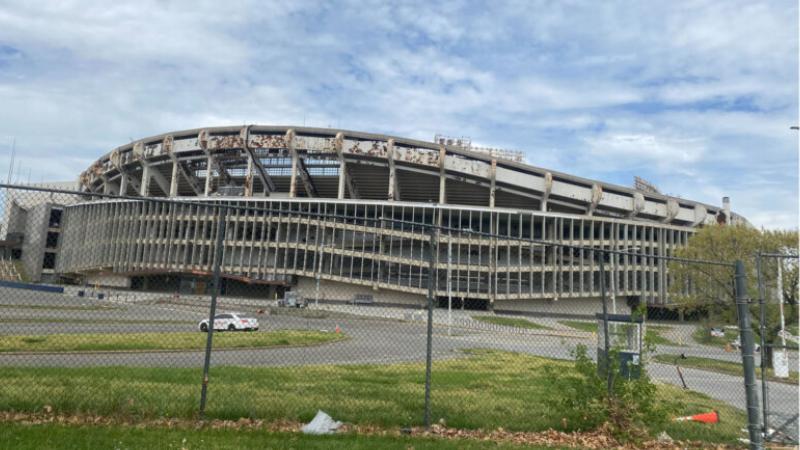
WASHINGTON — The long-debated return of the Washington Commanders to the RFK Stadium site in Washington, D.C., appears to be one step closer to reality. DC Council Chair Phil Mendelson has reportedly reached an agreement with the Commanders on a revised stadium deal, according to sources familiar with the negotiations. The details of the amended terms remain undisclosed, but Mendelson is expected to bring the agreement before the Council for a vote shortly after public hearings scheduled for July 29 and 30.
While the Commanders organization has remained silent on the finalized changes, Ward 7 Councilmember Wendell Felder, whose district includes the RFK site, confirmed that discussions are still active. His brief statement, "We are in ongoing negotiations," reflects the sensitive nature of the current deliberations. Previously, both Mendelson and several councilmembers had voiced concerns over the proposed $1.1 billion price tag, cautioning against potential hidden financial burdens for the District.
Mayor Muriel Bowser, however, has shown unwavering support for the stadium project. Speaking at the Fort Davis Community Center in Ward 7, Bowser stressed the importance of pushing the deal forward without further delays. She acknowledged that negotiation adjustments are a natural part of large-scale economic development and made it clear that unnecessary stalling was unacceptable. “In every economic development deal, there are adjustments to terms. Every one of them — I’ve been doing this for 15 years,” Bowser remarked, urging swift legislative action. “If something needs to be changed, let’s change it. Let’s change it and vote.”
Local community members, especially those residing in Ward 7, have also weighed in with concerns and expectations. Among the top priorities voiced by residents are adequate parking provisions and an effective traffic management plan surrounding the RFK site. A recent report by a national consulting firm highlighted parking shortages and insufficient transportation infrastructure as significant red flags. These findings echo what many Ward 7 residents have feared—that the current infrastructure may not be prepared to handle the demands of a major stadium event schedule.
In response, Bowser has pledged a comprehensive traffic and public safety strategy. “We will look at RFK in a similar way — and make sure we have the right number of police, the right amount of public works support including tow enforcement, and the right number of traffic guards,” she assured. Her promise of a well-coordinated, robust transportation and enforcement effort is intended to quell concerns as planning moves forward.
However, the path to finalizing the stadium deal is still layered with political and logistical complications. Several councilmembers indicated that as of Wednesday night, they had not yet reviewed the updated agreement. With Mendelson expected to address the media soon, more specifics may emerge within the coming days.
Another twist in the saga came on July 15, when the exclusivity clause that tied the stadium deal to Washington, D.C., officially expired. This development has opened the door for neighboring states Maryland and Virginia to re-enter the conversation and potentially offer alternative locations for the Commanders’ new home. While D.C. remains the team’s most iconic site, the loss of exclusivity adds new competitive pressure.
Further complicating matters is a recent council-commissioned report identifying potential risks involved with returning the team to RFK. The report cites uncertainties regarding site maintenance, long-term safety planning, and financial sustainability. Despite these concerns, Bowser remains committed. Her support persists regardless of controversies, including a recent remark tied to former President Donald Trump, who reportedly threatened to block the deal unless the team reverts to its former name, a name widely criticized as racially insensitive to Native Americans.
When asked whether such a name change would affect her support, Bowser’s response was definitive: “No, it wouldn’t.” Her position marks a notable departure from previous hesitations she expressed when the team originally retired its controversial name. At a recent event, Bowser stressed the importance of moving forward with the stadium deal, not just for sports, but for economic growth. She cited job creation, business opportunities, and increased tax revenue as compelling reasons to finalize the agreement.
“What I’m concerned about is we haven’t done our part and so we need to complete our part so that the team can get to work so that local businesses can get hired so that we can start earning the tax revenue that will come when we deliver the Commanders stadium,” she said, pressing the council to act swiftly.
As the council prepares for public hearings, stakeholders across the city are watching closely. The outcome of the vote could reshape not only the future of RFK but also the political landscape in the District. With community concerns mounting, political divisions sharpening, and regional competition intensifying, the decision in the coming weeks will have lasting consequences for the city and its relationship with one of its most storied franchises.