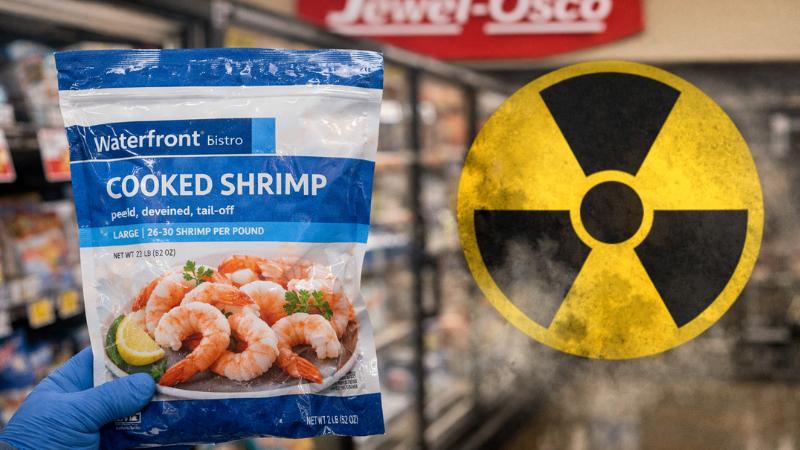
Frozen shrimp sold at Jewel-Osco grocery stores in Illinois are being recalled following a federal investigation that raised concerns about possible contamination during handling and storage, according to the U.S. Food and Drug Administration. Federal officials said the affected shrimp may have been packaged, prepared, or held under insanitary conditions and could potentially contain trace amounts of radioactive material.
The recall was issued Friday by Direct Source Seafood LLC, a Bellevue, Washington-based distributor, and affects more than 83,800 bags of frozen shrimp sold nationwide through multiple retail chains. In Illinois, the products were sold exclusively at Jewel-Osco locations in two-pound packages under the Waterfront Bistro brand. The shrimp was distributed to stores beginning in late June 2025.
The FDA said the recall is part of an ongoing investigation into contamination discovered in shipping containers and frozen shrimp products manufactured in Indonesia by PT Bahari Makmur Sejati, also known as BMS Foods. Shrimp linked to the same manufacturer has already been recalled from several major grocery chains across dozens of states as the investigation expanded.
Health officials said the concern centers on potential contamination with Cesium-137, a man-made radioactive isotope that can enter the food supply through environmental exposure or industrial sources. Long-term ingestion of food contaminated with low levels of Cesium-137 may increase the risk of cancer, according to public health experts. However, regulators emphasized that the overall health risk associated with the recalled shrimp is considered low.
The FDA said no illnesses or adverse health effects have been reported in connection with the recalled products to date. Consumers who purchased the shrimp are advised not to consume it and to either dispose of the product or return it to the place of purchase for a full refund.
According to federal officials, U.S. Customs and Border Protection initially detected possible radioactive contamination earlier this year while screening shipping containers that arrived at ports in Los Angeles, Houston, Miami, and Savannah, Georgia. The agency notified the FDA, which subsequently tested packaged shrimp and confirmed the presence of Cesium-137 in one sample.
The level of radioactivity detected was approximately 68 becquerels per kilogram, a unit used to measure radioactive decay. That figure is well below the FDA’s established threshold of 1,200 becquerels per kilogram, which would prompt protective health actions. Experts said the finding does not pose an immediate public health threat but warrants further investigation to determine the source of the contamination.
Radiation specialists noted that while Cesium-137 can still be detected in the environment from historic nuclear weapons testing or major nuclear accidents, such as Fukushima or Chernobyl, typical levels found in seafood are significantly lower. Routine testing of shrimp from the Pacific Ocean usually shows concentrations roughly 100 times lower than those identified in the affected BMS products, according to industry data.
Officials said the unusual concentration highlights the importance of tracing the origin of the contamination and ensuring transparency with consumers. The FDA said it will continue working with federal partners and international suppliers as the investigation proceeds and will provide updates if additional products are affected.