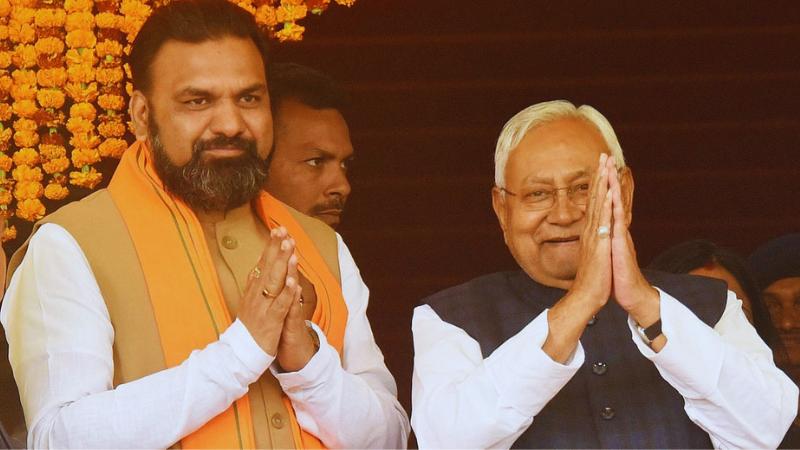
Nitish Kumar's tenure as Bihar's Chief Minister is nearing its end, with sources indicating that he is set to resign on April 14, 2026. This follows his successful election to the Rajya Sabha on March 17, 2026. The NDA legislative party will convene on April 14 to elect a new leader, and current deputy chief minister Samrat Chaudhary is seen as the likely successor to Kumar. Chaudhary has already traveled to New Delhi to meet with BJP central leadership regarding the leadership change.
Kumar’s decision to shift to New Delhi, where he will take his Rajya Sabha oath on April 9, signals a significant political transition. Having led Bihar for over two decades, Kumar’s move to the Rajya Sabha aligns with his long-held ambition to be a member of both the Bihar Legislature and the Indian Parliament. However, his decision to step down as the state’s CM has raised eyebrows. Critics, including RJD's Tejashwi Yadav, argue that Kumar was pressured into making this move by BJP, with some suggesting that this shift could diminish JD(U)’s regional influence.
While the JD(U) has maintained that the shift will not affect the party’s political strength, political analysts predict that Kumar’s reduced role could marginalize his influence in Bihar’s future political landscape. As Samrat Chaudhary stands poised to take the reins, the political dynamics in Bihar are set to undergo a significant transformation, with the BJP’s influence expected to grow stronger in the state’s governance.