Edit
Operation Sindoor: India Hits Pakistani Terror Bases in PoK at 9 different locations - Latest News
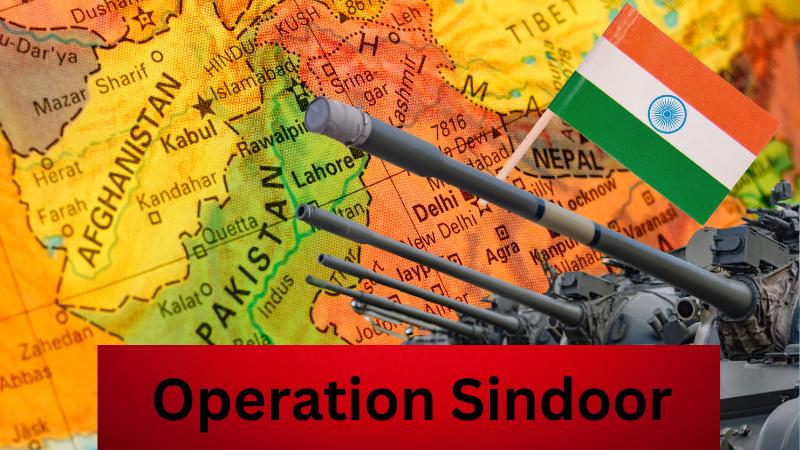
In a calibrated military offensive launched in response to the Pahalgam terror attack that killed 26 people, India executed targeted air strikes under the codename Operation Sindoor. Conducted late Wednesday night, the operation struck nine key terror installations across Pakistan and Pakistan-occupied Kashmir (PoK), focusing on eliminating infrastructure linked to the Jaish-e-Mohammed (JeM) and Lashkar-e-Taiba (LeT).
Sources revealed that four targets were located within Pakistan — including Bahawalpur, Muridke, and Sialkot — while five others were in PoK, such as Kotli and Muzaffarabad. The Jaish headquarters in Bahawalpur and LeT’s command center in Muridke, both long associated with extremist leadership like Masood Azhar and Hafiz Saeed respectively, were among the primary targets. These locations have historically played a pivotal role in planning and executing attacks on Indian soil.
Indian intelligence had been monitoring these sites for months, and the strikes were executed using advanced loitering munitions capable of identifying and neutralizing high-value targets with surgical precision. Military sources confirmed that all nine objectives were successfully neutralized. The Indian Air Force, Army, and Navy coordinated the operation jointly, with assets and personnel fully mobilized over several days. The strikes were launched from Indian territory, with real-time oversight reportedly provided by Prime Minister Narendra Modi throughout the night.
In retaliation, Pakistan initiated heavy cross-border shelling across the Line of Control (LoC), resulting in the death of three civilians in Jammu and Kashmir. Indian military units responded swiftly to suppress the incoming fire and prevent further escalation. Security has since been tightened across the region, with heightened alert levels maintained across forward bases and civilian installations.
The Indian government described the operation as a proportionate and justified response aimed at dismantling terror infrastructure without provoking a broader military conflict. Officials emphasized that the strikes were carefully planned to avoid civilian areas and Pakistani military sites, reaffirming India’s commitment to targeted counter-terrorism within the boundaries of international law.
As a precaution, all commercial flights at Srinagar airport were suspended, and international carriers rerouted to avoid Pakistani airspace, reflecting growing concerns over regional instability. Aviation tracking services showed a significant reduction in aircraft movement over western Pakistan in the aftermath of the strikes.
Pakistan’s Prime Minister Shehbaz Sharif confirmed that Indian missiles had struck multiple sites, naming Bahawalpur, Kotli, and Muzaffarabad among the impacted areas. The Pakistani military accused India of targeting a mosque and religious school in Bahawalpur, although these claims have not been independently verified.
Unconfirmed reports also indicated strikes in Gulpur, Bhimber, Chak Amru, and the Ahmed East region of Bahawalpur. These areas have long been flagged by Indian intelligence for harboring militant training camps. The Indian Ministry of Defence, while withholding operational specifics, stressed that the attacks were guided by precise intelligence aimed at eliminating terror leadership responsible for the Pahalgam massacre, which claimed the lives of 25 Indian nationals and one Nepali citizen.
Strategic discussions had been ongoing at the highest levels of the Indian government, with top military and intelligence officials briefing the Prime Minister on various response scenarios. The eventual strike reflected India’s renewed determination to reestablish deterrence and respond assertively to cross-border terrorism.
Operation Sindoor may signify a broader shift in India’s counter-terror strategy, emphasizing targeted action over passive deterrence. Analysts view the move as a response to eroding deterrent credibility and rising domestic pressure for a strong reaction following continued terror incidents.
As the situation remains fluid, both India and Pakistan appear to be recalibrating their postures. India’s message, however, is unequivocal: any future acts of terrorism will face swift, precise, and proportionate retaliation. Diplomatic channels remain active behind the scenes as the global community urges restraint, even as both sides prepare for possible escalations.
India’s security establishment remains on high alert, with defense planning circles now focusing on long-term structural counter-terror mechanisms, border fortification, and upgraded surveillance. Operation Sindoor, while a short-term military response, may well mark the beginning of a more aggressive doctrine in India’s counter-terror playbook.
Sources revealed that four targets were located within Pakistan — including Bahawalpur, Muridke, and Sialkot — while five others were in PoK, such as Kotli and Muzaffarabad. The Jaish headquarters in Bahawalpur and LeT’s command center in Muridke, both long associated with extremist leadership like Masood Azhar and Hafiz Saeed respectively, were among the primary targets. These locations have historically played a pivotal role in planning and executing attacks on Indian soil.
Indian intelligence had been monitoring these sites for months, and the strikes were executed using advanced loitering munitions capable of identifying and neutralizing high-value targets with surgical precision. Military sources confirmed that all nine objectives were successfully neutralized. The Indian Air Force, Army, and Navy coordinated the operation jointly, with assets and personnel fully mobilized over several days. The strikes were launched from Indian territory, with real-time oversight reportedly provided by Prime Minister Narendra Modi throughout the night.
In retaliation, Pakistan initiated heavy cross-border shelling across the Line of Control (LoC), resulting in the death of three civilians in Jammu and Kashmir. Indian military units responded swiftly to suppress the incoming fire and prevent further escalation. Security has since been tightened across the region, with heightened alert levels maintained across forward bases and civilian installations.
The Indian government described the operation as a proportionate and justified response aimed at dismantling terror infrastructure without provoking a broader military conflict. Officials emphasized that the strikes were carefully planned to avoid civilian areas and Pakistani military sites, reaffirming India’s commitment to targeted counter-terrorism within the boundaries of international law.
As a precaution, all commercial flights at Srinagar airport were suspended, and international carriers rerouted to avoid Pakistani airspace, reflecting growing concerns over regional instability. Aviation tracking services showed a significant reduction in aircraft movement over western Pakistan in the aftermath of the strikes.
Pakistan’s Prime Minister Shehbaz Sharif confirmed that Indian missiles had struck multiple sites, naming Bahawalpur, Kotli, and Muzaffarabad among the impacted areas. The Pakistani military accused India of targeting a mosque and religious school in Bahawalpur, although these claims have not been independently verified.
Unconfirmed reports also indicated strikes in Gulpur, Bhimber, Chak Amru, and the Ahmed East region of Bahawalpur. These areas have long been flagged by Indian intelligence for harboring militant training camps. The Indian Ministry of Defence, while withholding operational specifics, stressed that the attacks were guided by precise intelligence aimed at eliminating terror leadership responsible for the Pahalgam massacre, which claimed the lives of 25 Indian nationals and one Nepali citizen.
Strategic discussions had been ongoing at the highest levels of the Indian government, with top military and intelligence officials briefing the Prime Minister on various response scenarios. The eventual strike reflected India’s renewed determination to reestablish deterrence and respond assertively to cross-border terrorism.
Operation Sindoor may signify a broader shift in India’s counter-terror strategy, emphasizing targeted action over passive deterrence. Analysts view the move as a response to eroding deterrent credibility and rising domestic pressure for a strong reaction following continued terror incidents.
As the situation remains fluid, both India and Pakistan appear to be recalibrating their postures. India’s message, however, is unequivocal: any future acts of terrorism will face swift, precise, and proportionate retaliation. Diplomatic channels remain active behind the scenes as the global community urges restraint, even as both sides prepare for possible escalations.
India’s security establishment remains on high alert, with defense planning circles now focusing on long-term structural counter-terror mechanisms, border fortification, and upgraded surveillance. Operation Sindoor, while a short-term military response, may well mark the beginning of a more aggressive doctrine in India’s counter-terror playbook.