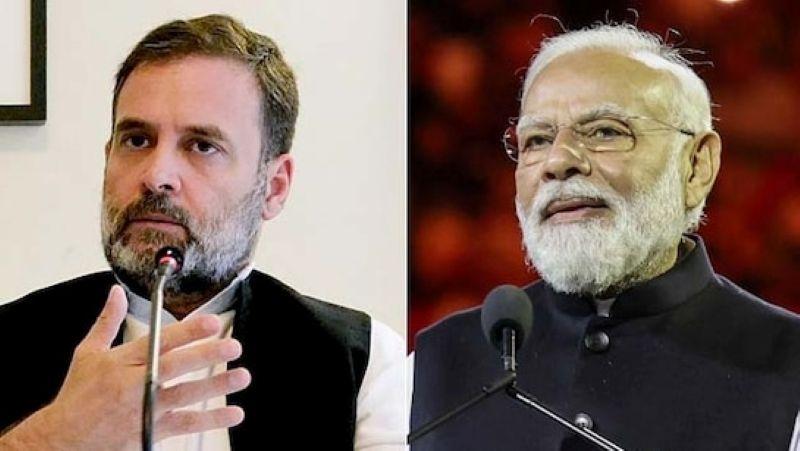
In a politically charged development following the recent ceasefire between India and Pakistan, Congress leader Rahul Gandhi has written a formal letter to Prime Minister Narendra Modi, urging the government to immediately convene a special session of Parliament. The demand, which echoes a larger Opposition consensus, comes in light of Operation Sindoor and the tragic terror attack in Pahalgam. Gandhi notably pointed out that the ceasefire was first publicly declared by US President Donald Trump before either India or Pakistan made formal announcements.
In his letter, Gandhi emphasized the urgency of discussing these critical national security issues in Parliament. He wrote, “I reiterate the unanimous request of the Opposition to convene a special session of Parliament immediately. It is crucial for the people and their representatives to discuss the Pahalgam terror attack, Operation Sindoor and today’s ceasefire, first announced by US President Trump. This will also be an opportunity to demonstrate our collective resolve to meet the challenges ahead.”
Congress President Mallikarjun Kharge, who also serves as the Leader of the Opposition in the Rajya Sabha, supported Gandhi’s request with a similar letter to the Prime Minister. He referenced previous communications made on April 28, 2025, where both Opposition leaders had already called for a session after the Pahalgam incident. “In view of latest developments, the Leader of Opposition Lok Sabha has already written to you again conveying the unanimous request of all Opposition parties,” Kharge stated, reaffirming the need to debate the ceasefire, the terror attack, and Operation Sindoor on the floor of both Houses of Parliament.
The backdrop to these calls for a special session is the sudden announcement made by US President Donald Trump, who on his Truth Social platform declared, “After a long night of talks mediated by the United States, I am pleased to announce that India and Pakistan have agreed to a FULL AND IMMEDIATE CEASEFIRE.” The announcement came amid rising military tensions following the Pahalgam terror attack that claimed 26 lives, which had been followed by retaliatory Indian airstrikes under Operation Sindoor targeting Pakistan and Pakistan-Occupied Kashmir (PoK). Shortly after Trump’s post, US Secretary of State Marco Rubio and Vice President JD Vance confirmed their involvement in mediating the ceasefire, stating that they had been in direct communication with leaders in both countries. They congratulated both sides on choosing diplomacy over further escalation.
India’s official confirmation came approximately thirty minutes after the US announcement. Foreign Secretary Vikram Misri revealed that the Director Generals of Military Operations (DGMOs) from India and Pakistan had spoken and agreed to halt all military actions on land, air, and sea starting from 5:00 PM IST on Saturday. He also informed that further dialogue between the DGMOs is scheduled for May 12 at noon, indicating ongoing diplomatic engagement at the military level.
Despite the ceasefire agreement, key Indian officials, including Prime Minister Modi, have remained silent on the US mediation angle. External Affairs Minister Dr. S. Jaishankar issued a statement reaffirming India’s stance on counter-terrorism, stating that India remains firm and uncompromising in its opposition to terrorism in all its forms. However, no Indian government communication so far has acknowledged or detailed the terms of the US-brokered ceasefire agreement.
Pakistan, on the other hand, has openly credited the United States for facilitating the ceasefire. Prime Minister Shehbaz Sharif and other Pakistani leaders took to social media to express gratitude towards US President Trump, showcasing their willingness to publicize third-party mediation in the bilateral conflict.
The US President’s follow-up comments this morning, offering to mediate a resolution to the Kashmir issue, are expected to stir diplomatic sensitivity in New Delhi. India has consistently opposed third-party involvement in the Kashmir matter, reiterating that it is a strictly bilateral issue and an integral part of the country. A formal response from India to Trump’s mediation offer is still awaited. The call for a special parliamentary session also underlines the Opposition’s attempt to hold the government accountable for its handling of the security situation and international diplomacy. Both Gandhi and Kharge have stressed that Parliament is the appropriate platform to bring transparency, discuss policy decisions, and ensure that the people’s representatives are part of major national developments. The government had earlier conducted all-party meetings in the wake of the Pahalgam attack and the subsequent airstrikes under Operation Sindoor. However, Prime Minister Modi did not attend these meetings. Despite his absence, the Opposition had extended unconditional support for any retaliatory action to avenge the deaths of civilians.
Now, with the ceasefire in effect and an international actor prominently involved in its negotiation, the pressure mounts on the Modi government to not only clarify the nature of the deal but also involve Parliament in shaping the national security discourse. The coming days will be crucial as the Opposition continues to push for accountability and transparency on matters that deeply concern national integrity and public trust. Will Prime Minister Modi respond to the joint request for a special session? Will the Indian government formally comment on US President Trump’s role in the ceasefire or the renewed offer to mediate on Kashmir? These unanswered questions continue to fuel public interest and political debate.
In his letter, Gandhi emphasized the urgency of discussing these critical national security issues in Parliament. He wrote, “I reiterate the unanimous request of the Opposition to convene a special session of Parliament immediately. It is crucial for the people and their representatives to discuss the Pahalgam terror attack, Operation Sindoor and today’s ceasefire, first announced by US President Trump. This will also be an opportunity to demonstrate our collective resolve to meet the challenges ahead.”
Congress President Mallikarjun Kharge, who also serves as the Leader of the Opposition in the Rajya Sabha, supported Gandhi’s request with a similar letter to the Prime Minister. He referenced previous communications made on April 28, 2025, where both Opposition leaders had already called for a session after the Pahalgam incident. “In view of latest developments, the Leader of Opposition Lok Sabha has already written to you again conveying the unanimous request of all Opposition parties,” Kharge stated, reaffirming the need to debate the ceasefire, the terror attack, and Operation Sindoor on the floor of both Houses of Parliament.
The backdrop to these calls for a special session is the sudden announcement made by US President Donald Trump, who on his Truth Social platform declared, “After a long night of talks mediated by the United States, I am pleased to announce that India and Pakistan have agreed to a FULL AND IMMEDIATE CEASEFIRE.” The announcement came amid rising military tensions following the Pahalgam terror attack that claimed 26 lives, which had been followed by retaliatory Indian airstrikes under Operation Sindoor targeting Pakistan and Pakistan-Occupied Kashmir (PoK). Shortly after Trump’s post, US Secretary of State Marco Rubio and Vice President JD Vance confirmed their involvement in mediating the ceasefire, stating that they had been in direct communication with leaders in both countries. They congratulated both sides on choosing diplomacy over further escalation.
India’s official confirmation came approximately thirty minutes after the US announcement. Foreign Secretary Vikram Misri revealed that the Director Generals of Military Operations (DGMOs) from India and Pakistan had spoken and agreed to halt all military actions on land, air, and sea starting from 5:00 PM IST on Saturday. He also informed that further dialogue between the DGMOs is scheduled for May 12 at noon, indicating ongoing diplomatic engagement at the military level.
Despite the ceasefire agreement, key Indian officials, including Prime Minister Modi, have remained silent on the US mediation angle. External Affairs Minister Dr. S. Jaishankar issued a statement reaffirming India’s stance on counter-terrorism, stating that India remains firm and uncompromising in its opposition to terrorism in all its forms. However, no Indian government communication so far has acknowledged or detailed the terms of the US-brokered ceasefire agreement.
Pakistan, on the other hand, has openly credited the United States for facilitating the ceasefire. Prime Minister Shehbaz Sharif and other Pakistani leaders took to social media to express gratitude towards US President Trump, showcasing their willingness to publicize third-party mediation in the bilateral conflict.
The US President’s follow-up comments this morning, offering to mediate a resolution to the Kashmir issue, are expected to stir diplomatic sensitivity in New Delhi. India has consistently opposed third-party involvement in the Kashmir matter, reiterating that it is a strictly bilateral issue and an integral part of the country. A formal response from India to Trump’s mediation offer is still awaited. The call for a special parliamentary session also underlines the Opposition’s attempt to hold the government accountable for its handling of the security situation and international diplomacy. Both Gandhi and Kharge have stressed that Parliament is the appropriate platform to bring transparency, discuss policy decisions, and ensure that the people’s representatives are part of major national developments. The government had earlier conducted all-party meetings in the wake of the Pahalgam attack and the subsequent airstrikes under Operation Sindoor. However, Prime Minister Modi did not attend these meetings. Despite his absence, the Opposition had extended unconditional support for any retaliatory action to avenge the deaths of civilians.
Now, with the ceasefire in effect and an international actor prominently involved in its negotiation, the pressure mounts on the Modi government to not only clarify the nature of the deal but also involve Parliament in shaping the national security discourse. The coming days will be crucial as the Opposition continues to push for accountability and transparency on matters that deeply concern national integrity and public trust. Will Prime Minister Modi respond to the joint request for a special session? Will the Indian government formally comment on US President Trump’s role in the ceasefire or the renewed offer to mediate on Kashmir? These unanswered questions continue to fuel public interest and political debate.