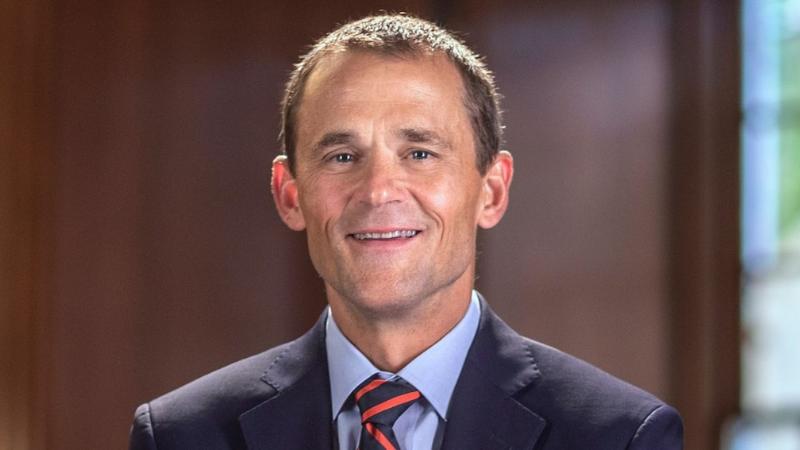
James E. Ryan, the president of the University of Virginia, announced his resignation on Friday following growing pressure from the Trump administration’s Justice Department over the university's diversity, equity, and inclusion (DEI) initiatives. According to individuals familiar with the matter, Ryan called a meeting with senior leadership and informed them of his decision to step down. The Justice Department had reportedly insisted on his resignation as part of an ultimatum to resolve an ongoing investigation into the university's adherence to federal guidance requiring the dismantling of DEI programs.
In a heartfelt letter addressed to the university community, Ryan expressed sorrow and explained the reasoning behind his departure. He wrote that while he was personally willing to fight for the values he holds dear, he could not in good conscience allow his decision to jeopardize the livelihoods of university employees, researchers, and students. Ryan made it clear that standing alone against the federal government would be futile and potentially harmful to the broader UVA community. His resignation marks a turning point not only for the institution but for higher education in general, as the debate over the role of diversity programming in public universities intensifies under renewed political scrutiny.
The controversy follows a vote by the university's governing Board of Visitors in March to disband its DEI office in compliance with federal mandates tied to continued eligibility for funding. Virginia Governor Glenn Youngkin supported the board’s decision, calling it a victory for "common sense" and reaffirming his administration's belief in equal opportunity over identity-focused programming. However, the Justice Department issued a formal warning to the university in June, signaling dissatisfaction with the university’s pace of compliance and asserting the need for immediate action.
Although the university and the Justice Department have not issued official comments on the matter, Ryan’s resignation has prompted significant public debate. Prominent voices from Virginia's political and academic landscape have come forward in support of Ryan. Senators Mark Warner and Tim Kaine issued a joint statement condemning the federal government’s intervention, labeling it a serious blow to the state’s academic independence and the reputation of its flagship institution. They praised Ryan for his leadership and integrity, describing his presidency as transformative for the university.
Ryan has led the University of Virginia since 2018 and is credited with significant strides in academic excellence, athletics, and student success. During his tenure, the university improved its national rankings and saw a notable increase in the number of prestigious awards received by its students, including Rhodes Scholarships. At a board meeting earlier this month, Robert D. Hardie, a long-serving member of the Board of Visitors, publicly praised Ryan’s achievements and noted his pivotal role in elevating the institution’s national profile.
Education policy experts are raising alarms over what they describe as unprecedented federal interference in the leadership decisions of a public university. Peter McDonough, vice president and general counsel of the American Council on Education, questioned the legal foundation for such pressure from the executive branch, noting that federal law explicitly limits direct control over educational institutions. He warned that Ryan’s resignation could set a troubling precedent, compelling universities to align their leadership choices with prevailing political agendas rather than academic values or institutional independence.
Armand Alacbay, a senior executive at the American Council of Trustees and Alumni, echoed those concerns, describing the development as a moment of serious governmental overreach. He emphasized that governance decisions, including those involving university leadership, should remain the exclusive responsibility of boards of trustees or visitors. He warned that allowing federal pressure to dictate administrative decisions undermines the fundamental autonomy of higher education institutions and threatens the quality and future direction of academia.
With Ryan’s resignation accepted by the university’s board, he becomes the ninth president in the institution’s history, dating back to 1905, to vacate the office. The decision closes a significant chapter in the history of the University of Virginia and leaves questions about the future direction of DEI programming and academic governance not only in Virginia but across the country. The impact of this episode will likely reverberate throughout the national higher education community as universities assess the balance between federal compliance and institutional autonomy amid an increasingly polarized political environment.