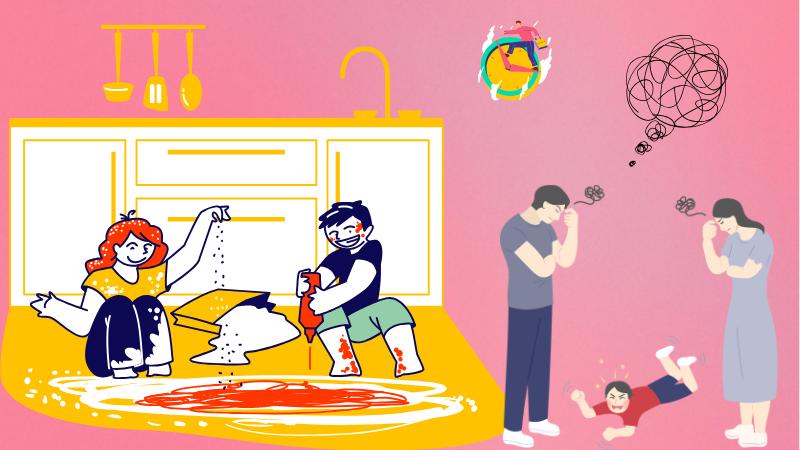
In the modern world, many adults in their thirties are stepping into parenthood carrying the invisible baggage of their own upbringing. Particularly among those raised as only children, there is a recurring pattern that’s hard to ignore: a deep-rooted reliance on others for handling even the most basic of daily responsibilities. While being a single child doesn't automatically mean someone will struggle as a parent, an absence of self-sufficiency and life skills during upbringing can manifest more sharply when faced with the demands of raising children—especially two or more.
Many of these adults, despite being capable of earning, building families, and taking on professional roles, often remain emotionally and practically dependent on others. In numerous households today, it’s not unusual to find grown individuals who still rely on their parents or spouses to manage simple tasks. Someone else feeds them, packs their office bags, organizes their laundry, or even handles tasks like cleaning their lunchbox. These may seem like minor examples, but collectively, they highlight a bigger concern—the avoidance of personal responsibility.
Once this person becomes a parent, the real challenge begins. Children, especially in their early years, require consistent care, attention, structure, and emotional presence. The shift from being cared for to becoming a caregiver can feel like a sudden jolt, and for someone who hasn't cultivated independence, the strain is real. Juggling two children, a home, and possibly a job becomes overwhelming not because life has become objectively harder—but because foundational self-management skills were never built.
The concern isn’t just logistical, it’s emotional. A parent constantly feeling exhausted, reactive, or burdened sends subtle messages to their children. Kids learn from what they observe more than what they're told. If a child sees their parent dread basic routines or react emotionally to simple responsibilities, they internalize the idea that life’s daily rhythm is a source of stress. Over time, children may begin to mimic this by avoiding school, shying away from discipline, or resisting routine—all because they associate responsibility with distress.
But it’s important to acknowledge that this isn’t always the individual's fault alone. The structure of modern families, especially in urban nuclear settings, has shifted drastically. Joint families and community upbringing, which once naturally taught children how to share, take initiative, and help around the house, are becoming less common. Many parents of single children, driven by love and the desire to provide, may have over-indulged them, unintentionally depriving them of critical life skills. In many cases, today’s adults were never expected to do things for themselves—not because they were lazy, but because no one demanded it.
That said, we can't forever remain products of our upbringing. Life offers us repeated opportunities to evolve, and parenting is perhaps the greatest of all. Raising a child—let alone two—requires stepping up, letting go of old habits, and becoming emotionally and practically equipped. Fulfillment doesn’t come only from grand achievements; it’s found in small acts of responsibility that build consistency, trust, and love within a household.
It’s time we redefine how we view everyday tasks. Cooking for oneself, cleaning up, organizing one’s schedule, or packing a child’s school bag aren’t inferior or burdensome jobs. They are expressions of care, structure, and dignity. When parents take pride in small responsibilities, children learn that life is not a burden, but a journey made smoother by self-awareness and shared effort.
If you find yourself feeling constantly overwhelmed, it might not be your circumstances—it might be the old habits you haven’t yet outgrown. Start small. Take responsibility for your own routine. Acknowledge the invisible labor of others who’ve supported you. Engage more actively in your child’s daily life, not as an obligation, but as a conscious act of love.
Parenting does not demand perfection—it demands participation. When you show up for yourself, you’re far better prepared to show up for your children. The earlier you step into your own life, the more joyfully you can help shape theirs.