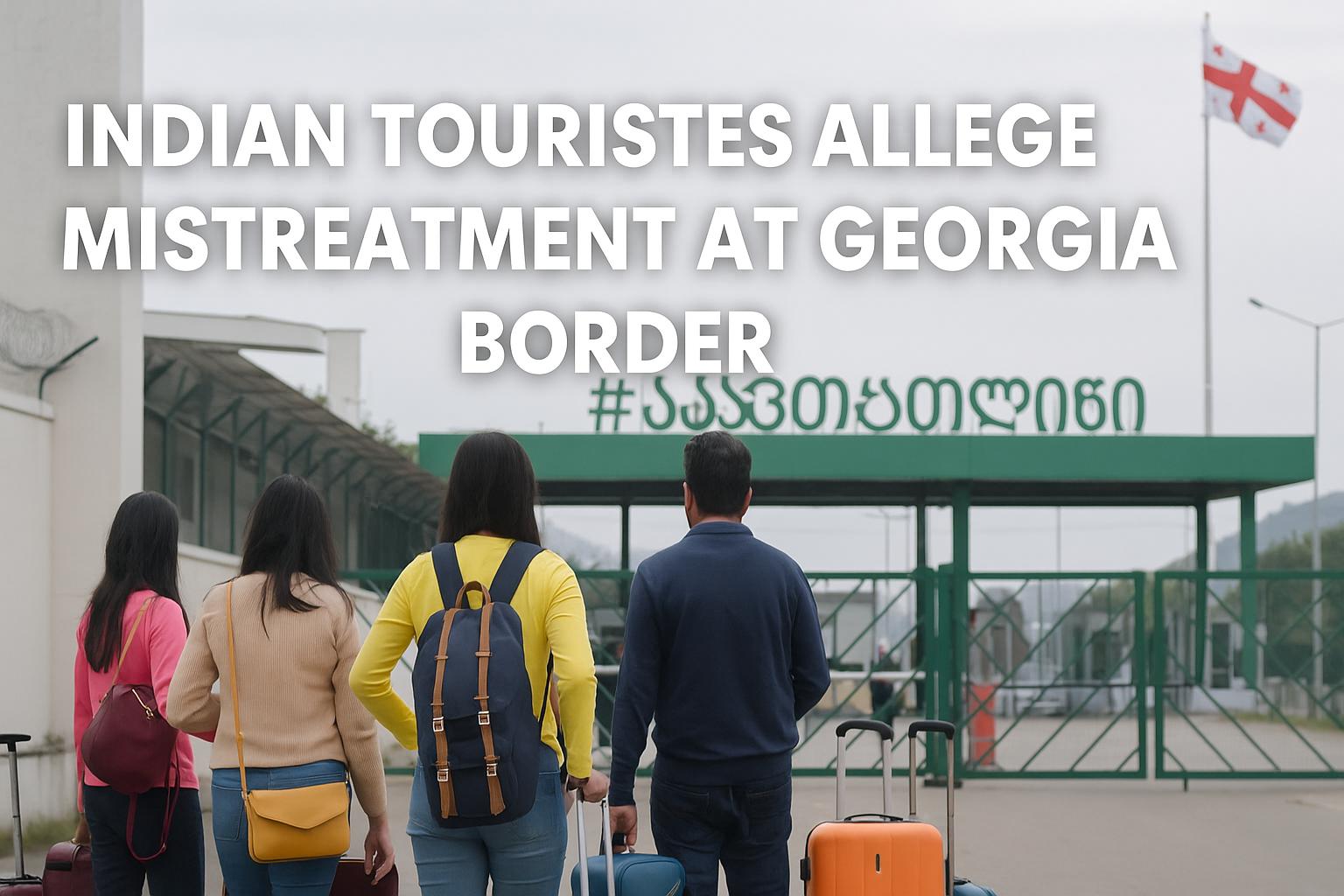
A fresh controversy has erupted after a woman accused border officials in Georgia of subjecting a group of 56 Indian tourists to what she described as “the most inhuman treatment” while they attempted to cross into Armenia. The incident allegedly took place at Sadakhlo, one of the most important crossing points on the Georgia-Armenia border, and has since drawn criticism and sparked heated debate among travellers and social media users.
According to the complainant, the Indian tourists were forced to wait for long hours in freezing temperatures, seated outside without shelter, food, or even access to basic washroom facilities. She further claimed that border officials confiscated all their passports and denied them access to any communication, isolating them entirely. In her account, she described the experience as degrading, alleging that the travellers were made to sit on the footpath “like cattle” while officials filmed them as though they were criminals, yet prevented the Indians from recording their own ordeal.
Another serious allegation raised was that the officials dismissed the visas carried by the Indian tourists as invalid, without properly verifying the documents. The complainant alleged that the rejection was arbitrary and that authorities showed no willingness to examine the paperwork thoroughly. She lamented that such treatment highlighted the disdain with which Indians were being treated at the border, calling it shameful and unacceptable.
The account received a wave of responses online, some of which were sympathetic while others were critical. Several users condemned the alleged behaviour of Georgian border authorities, with some calling for a complete boycott of Georgia as a tourist destination. One commenter described Georgia as rife with scams and racism, claiming it was not worth visiting, while another user recalled a personal experience of being treated with suspicion when travelling to the country.
However, the reactions were not unanimously in support of the complainant. Some voices on social media suggested that Indian tourists should also reflect on their civic sense and behaviour abroad, with one user remarking that respect must be earned. Another questioned why Indians continued to travel to Georgia despite recurring reports of hostile treatment towards them, suggesting that travellers should avoid destinations known for creating difficulties for visitors.
Adding to the seriousness of the allegations, another Indian traveller shared his past experience, recalling that during his 2019 trip to Georgia from Russia, he too felt like he was being looked at as a criminal upon arrival. According to him, such treatment has not been a one-off occurrence but part of a pattern that Indian visitors have faced for years.
The broader concern raised by these allegations is the treatment of Indian citizens abroad and the safeguards available to them when they face harassment or discriminatory practices. Georgia has been trying to build its image as a travel destination in recent years, but accusations like these risk tarnishing its reputation among potential visitors from India, one of the fastest-growing outbound tourism markets in the world.
Calls for boycotting Georgia highlight the frustration and anger among Indian tourists who feel that their rights and dignity were violated. Without a proper response from Georgian authorities, the trust deficit may deepen, discouraging Indian travellers from considering the country as a safe and welcoming destination. In the age of social media, such incidents quickly gain international attention, making it imperative for both governments and tourism boards to address the concerns raised and prevent similar situations from repeating.
The incident at Sadakhlo, if true, underscores the importance of fair treatment and respect for international travellers. Confiscating passports, denying basic human needs like food and washrooms, and humiliating tourists are practices that run contrary to international norms of hospitality and border management. For India, the case also raises questions about diplomatic engagement and the need for stronger assurances from countries where Indian tourists have faced recurring challenges.
As the story continues to generate debate, it reflects the fragile nature of international tourism in a globalised era. Trust, dignity, and fairness remain at the core of the travel experience, and any country that disregards these values risks damaging its standing in the global tourism sector. Until clearer facts emerge and accountability is established, Indian travellers may think twice before choosing Georgia as their next destination.