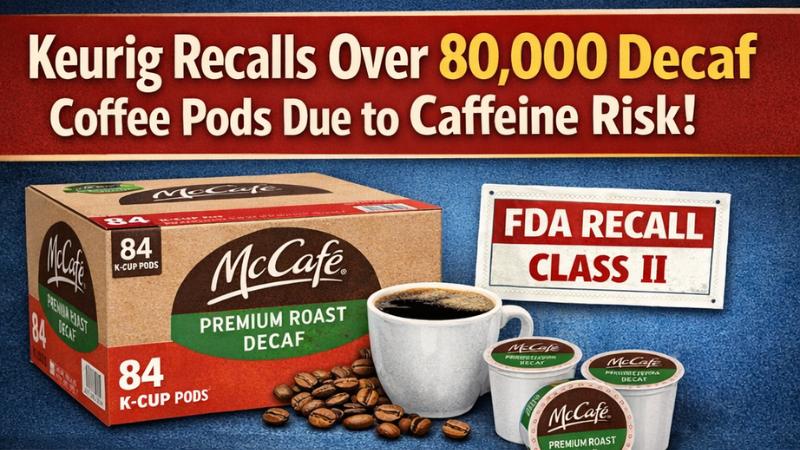
Keurig has issued a voluntary recall of more than 80,000 decaf coffee pods after discovering that the products may contain caffeine. The recall applies specifically to K-Cup pods labeled as McCafe Premium Roast Decaf Coffee, with a best-by date of November 17, 2026, and a UPC code of 043000073438. Consumers who purchased these pods are advised to check their inventory, as the product may not meet its labeled decaf specifications.
The recall was initially announced on December 6, 2025, and was updated in January 2026 as a Class II recall. Class II recalls indicate situations where exposure to the affected product could cause temporary or reversible adverse health effects. On the FDA’s three-level recall scale, Class II ranks as the second-highest, with Class I representing the most serious potential hazards.
Approximately 960 cartons of the affected K-Cup pods, each containing 84 pods, were included in the recall. The pods were sold exclusively through online retail channels, and the company has confirmed that all recalled products were removed from sale following the initial notice. Consumers were reportedly notified directly in mid-December regarding the potential caffeine issue.
This recall is particularly relevant for individuals who avoid caffeine due to health concerns, sensitivity, or medical reasons. Since decaf coffee is intended to contain minimal or no caffeine, the presence of caffeine in these pods could cause unintended stimulation, jitteriness, or temporary adverse effects. While no serious injuries have been reported, consumers are urged to avoid consuming any affected pods.
The company emphasized its commitment to safety and quality, noting that the recall was voluntary and proactive. This step reflects an effort to protect consumers and maintain trust while addressing a labeling issue in the production process. Steps are being taken to prevent similar issues in the future, including enhanced quality control measures and batch verification.
Consumers who purchased the recalled pods are encouraged to return them or seek guidance for reimbursement or replacement. Authorities advise checking product labels, UPC codes, and best-by dates to ensure that potentially affected products are identified and removed.
This recall serves as a reminder of the importance of vigilance regarding food and beverage products. With tens of thousands of pods involved, the company’s prompt response underscores the priority of consumer safety and adherence to product standards. Families, coffee drinkers seeking decaf options, and those sensitive to caffeine are encouraged to follow the recall instructions carefully.
By taking these steps, consumers can avoid unintended exposure to caffeine in decaf products while companies work to maintain the highest standards of quality and safety in widely distributed consumer goods. The proactive approach highlights the significance of quality control, consumer communication, and timely action when product labeling issues arise.
The recall was initially announced on December 6, 2025, and was updated in January 2026 as a Class II recall. Class II recalls indicate situations where exposure to the affected product could cause temporary or reversible adverse health effects. On the FDA’s three-level recall scale, Class II ranks as the second-highest, with Class I representing the most serious potential hazards.
Approximately 960 cartons of the affected K-Cup pods, each containing 84 pods, were included in the recall. The pods were sold exclusively through online retail channels, and the company has confirmed that all recalled products were removed from sale following the initial notice. Consumers were reportedly notified directly in mid-December regarding the potential caffeine issue.
This recall is particularly relevant for individuals who avoid caffeine due to health concerns, sensitivity, or medical reasons. Since decaf coffee is intended to contain minimal or no caffeine, the presence of caffeine in these pods could cause unintended stimulation, jitteriness, or temporary adverse effects. While no serious injuries have been reported, consumers are urged to avoid consuming any affected pods.
The company emphasized its commitment to safety and quality, noting that the recall was voluntary and proactive. This step reflects an effort to protect consumers and maintain trust while addressing a labeling issue in the production process. Steps are being taken to prevent similar issues in the future, including enhanced quality control measures and batch verification.
Consumers who purchased the recalled pods are encouraged to return them or seek guidance for reimbursement or replacement. Authorities advise checking product labels, UPC codes, and best-by dates to ensure that potentially affected products are identified and removed.
This recall serves as a reminder of the importance of vigilance regarding food and beverage products. With tens of thousands of pods involved, the company’s prompt response underscores the priority of consumer safety and adherence to product standards. Families, coffee drinkers seeking decaf options, and those sensitive to caffeine are encouraged to follow the recall instructions carefully.
By taking these steps, consumers can avoid unintended exposure to caffeine in decaf products while companies work to maintain the highest standards of quality and safety in widely distributed consumer goods. The proactive approach highlights the significance of quality control, consumer communication, and timely action when product labeling issues arise.