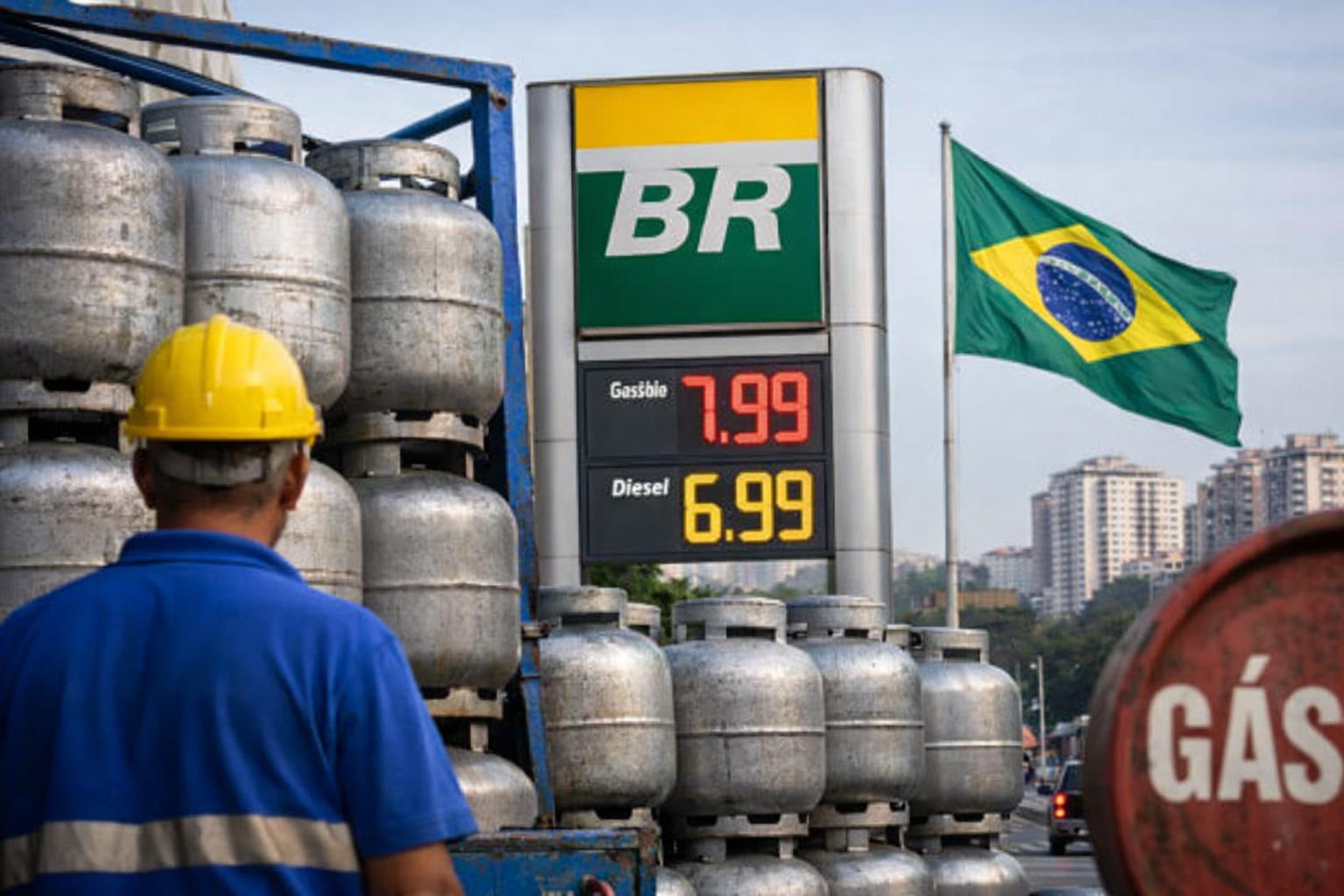
The initiative, known as “People’s Gas,” was launched by President Luiz Inacio Lula da Silva in November 2025 as a central component of his energy policy, aiming to provide free liquefied petroleum gas (LPG) to approximately 50 million Brazilians. However, recent increases in LPG prices have strained the program’s financial structure and raised alarms among distributors and resellers.
The price spike follows heightened global instability, including conflict involving the United States, Israel, and Iran, which has disrupted energy markets and driven up fuel costs worldwide. In Brazil, a recent auction conducted by state-run Petrobras resulted in LPG prices reaching premiums as high as twice the company’s reference levels. In response, Lula pledged to annul the auction.
On Monday, April 6, 2026, the Brazilian government announced a 330 million real subsidy to support LPG imports, aiming to offset rising costs and stabilize supply. Despite this measure, uncertainty remains about whether it will adequately address the financial pressures faced by distributors and retailers.
Resellers report that LPG purchased at elevated prices has already entered the distribution chain, forcing them to absorb higher costs. Under current program rules, however, they are not permitted to pass those increases on to consumers. Industry representatives warn that the narrow profit margins are unsustainable, with some resellers considering withdrawal from the program.
José Luiz Rocha, head of the national gas resellers association, said many participants are struggling to remain viable. He noted that discussions with the government are ongoing regarding possible pricing adjustments, though no resolution has been announced.
Analysts say short-term delays in price adjustments are typical, but the current level of volatility is unusual. Marcelo Colomer, an energy expert at a leading Brazilian university, suggested that authorities may need to implement emergency mechanisms to stabilize pricing and protect the program.
Additional cost pressures, including higher diesel prices affecting transportation of gas cylinders, have further compounded the issue. Smaller resellers, particularly in remote regions, say they are increasingly unable to cover operational costs.
If participation declines significantly, experts warn that access to subsidized cooking gas could be disrupted, potentially creating a broader economic and political challenge for the government as the election approaches.