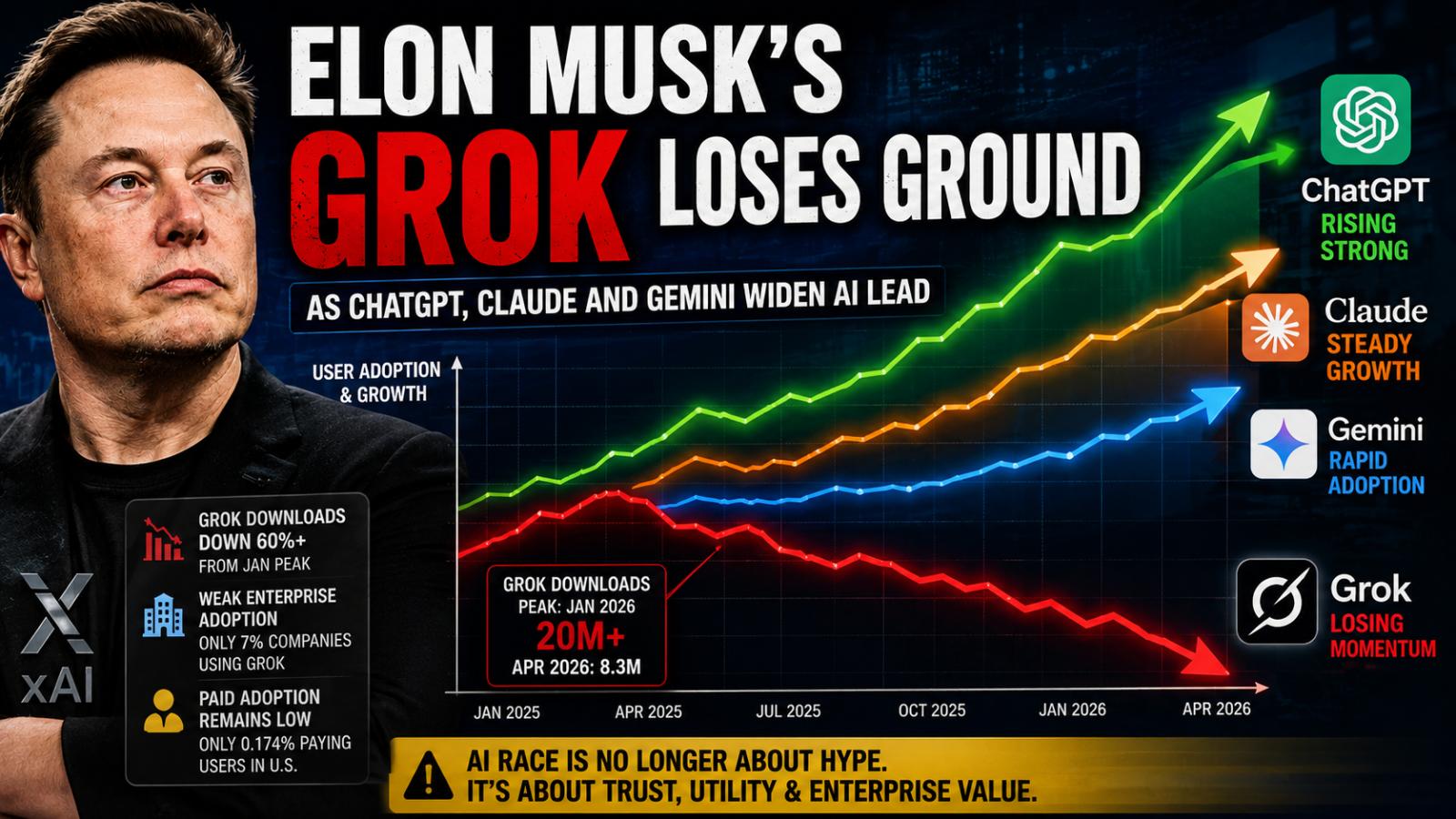
Grok AI is losing momentum as ChatGPT, Claude and Gemini gain stronger adoption among consumers, paying users and enterprise teams, according to industry data cited in recent market reports.
The slowdown highlights a major shift in the AI race: viral attention is no longer enough. Users and businesses are increasingly choosing AI tools that offer reliability, workplace integration and consistent productivity value.
Downloads Drop After Viral Surge
Analytics firm AppMagic reported that Grok downloads fell to about 8.3 million in April 2026, down from more than 20 million in January 2026. The earlier spike was partly driven by image-generation features that quickly spread online.
But controversy followed. Reports of explicit deepfake-style images involving celebrities and public figures triggered scrutiny from regulators and child safety advocates. Concerns also grew over altered images involving minors, prompting temporary restrictions in some countries.
xAI later reduced access to parts of Grok’s image tools. The backlash kept Grok in public conversation, but market researchers say it did not translate into lasting growth or stronger subscription demand.
ChatGPT and Claude Lead Paid AI Use
Recon Analytics reported that paid Grok adoption remained nearly flat. In its survey of more than 260,000 American AI users and workers during the second quarter of 2026, only 0.174 percent said they paid for Grok, compared with more than 6 percent for ChatGPT.
Enterprise adoption also appears limited. Enterprise Technology Research found that only 7 percent of surveyed companies were actively using Grok and planned to continue, while Claude and Gemini showed stronger traction across workplace AI teams.
Musk’s xAI Faces a Tougher Market
The AI market is now being shaped by paid users, business adoption and computing power. Reports in early May 2026 said SpaceX signed an agreement to provide Anthropic with large-scale computing resources near Memphis, underscoring how infrastructure has become central to the AI race.
For Grok, the challenge is clear: attention helped it break through, but sustained growth now depends on trust, utility and enterprise confidence.