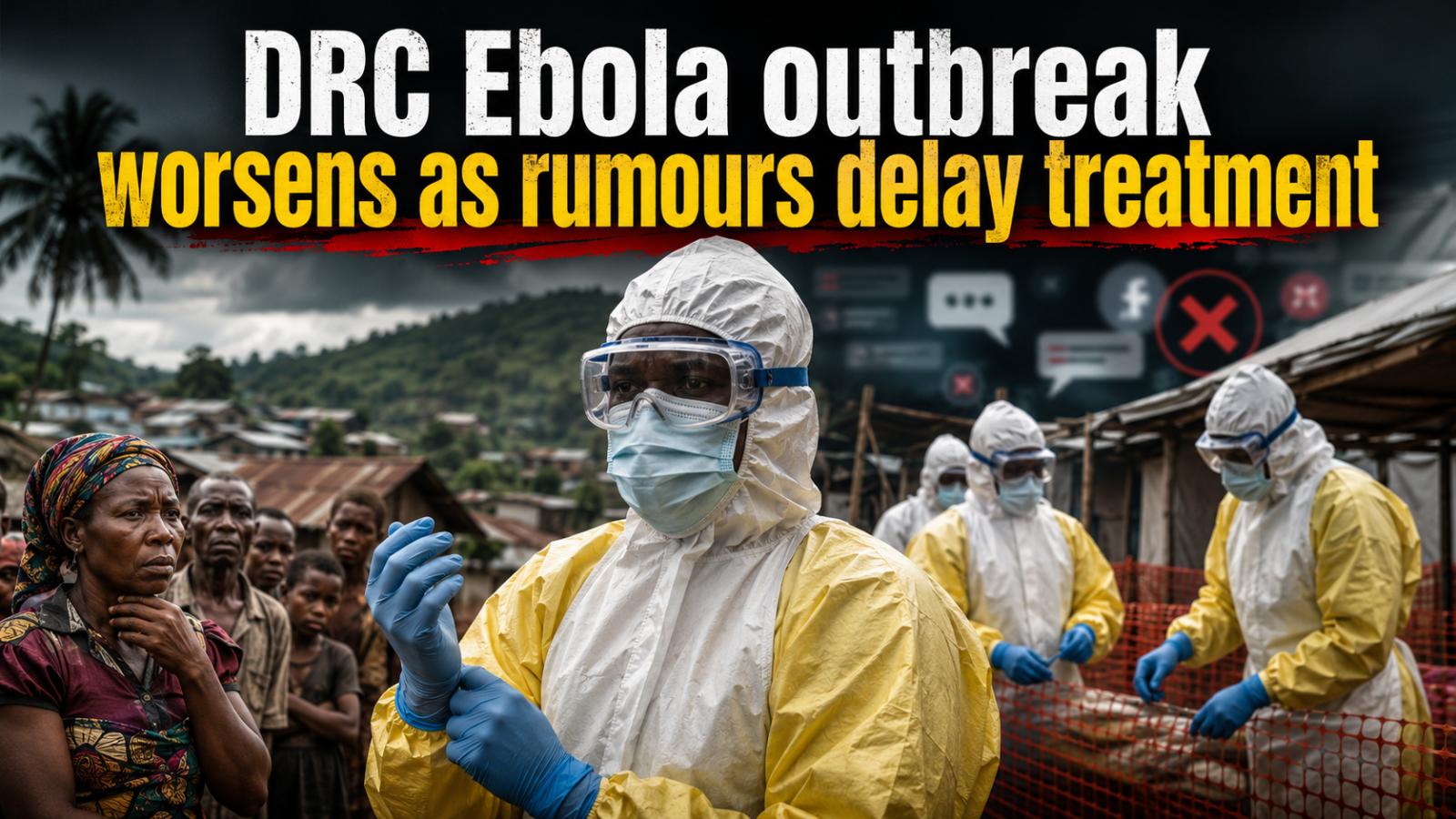
The Ebola outbreak in the Democratic Republic of Congo is becoming harder to manage as false rumours spread through communities and social media. Health teams are already dealing with a deadly virus, but misinformation is now creating another serious challenge. Many families are delaying hospital visits because they fear that medical centres are unsafe or that treatment itself may cause infection.
Several misleading claims have circulated in affected areas, including allegations that Ebola is not real, that foreign medicine spreads the disease, or that authorities are using the crisis to attract money and international aid. These claims are dangerous because Ebola requires early treatment, strict contact tracing and safe handling of bodies to prevent further transmission.
False claims slow treatment and contact tracing
Health workers say misinformation is pushing some families to hide sick relatives or avoid reporting symptoms. When infected people are not treated early, the risk of the virus spreading to caregivers, neighbours and relatives increases sharply. Contact tracing also becomes weaker when people refuse to share information about who may have been exposed.
This is a major concern because Ebola spreads through direct contact with the bodily fluids of infected people and through unsafe burial practices. Even a short delay in treatment can allow the virus to move quietly through families and communities. Public health officials warn that fear, silence and denial can turn a local outbreak into a wider emergency.
Health workers face growing risks
The spread of rumours has also placed doctors, burial teams and aid workers at risk. In some areas, response teams have faced threats while trying to move patients, trace contacts or conduct safe burials. Reports of vehicles being attacked and medical facilities being targeted show how quickly fear can turn into violence.
Burial workers have also faced suspicion from families who believe false claims about bodies being misused. Health experts say there is no evidence behind such rumours, but they reflect a deeper problem of mistrust between communities and institutions. When health teams cannot work safely, the entire outbreak response becomes slower and less effective.
Trust is key to stopping the outbreak
Public health experts say the response must go beyond medical treatment. Communities need clear, repeated and locally trusted information about Ebola symptoms, treatment, safe burial and contact tracing. Messages from distant officials may not be enough in areas where distrust is already high.
Local leaders, survivors, traditional healers, faith figures and community health ambassadors can play a crucial role in rebuilding confidence. When people hear information in their own language from people they trust, they are more likely to seek help early and cooperate with health teams.
The DRC Ebola outbreak shows that fighting the virus also means fighting fear. Without stronger community trust, misinformation could continue to delay care, endanger health workers and make the outbreak harder to control.