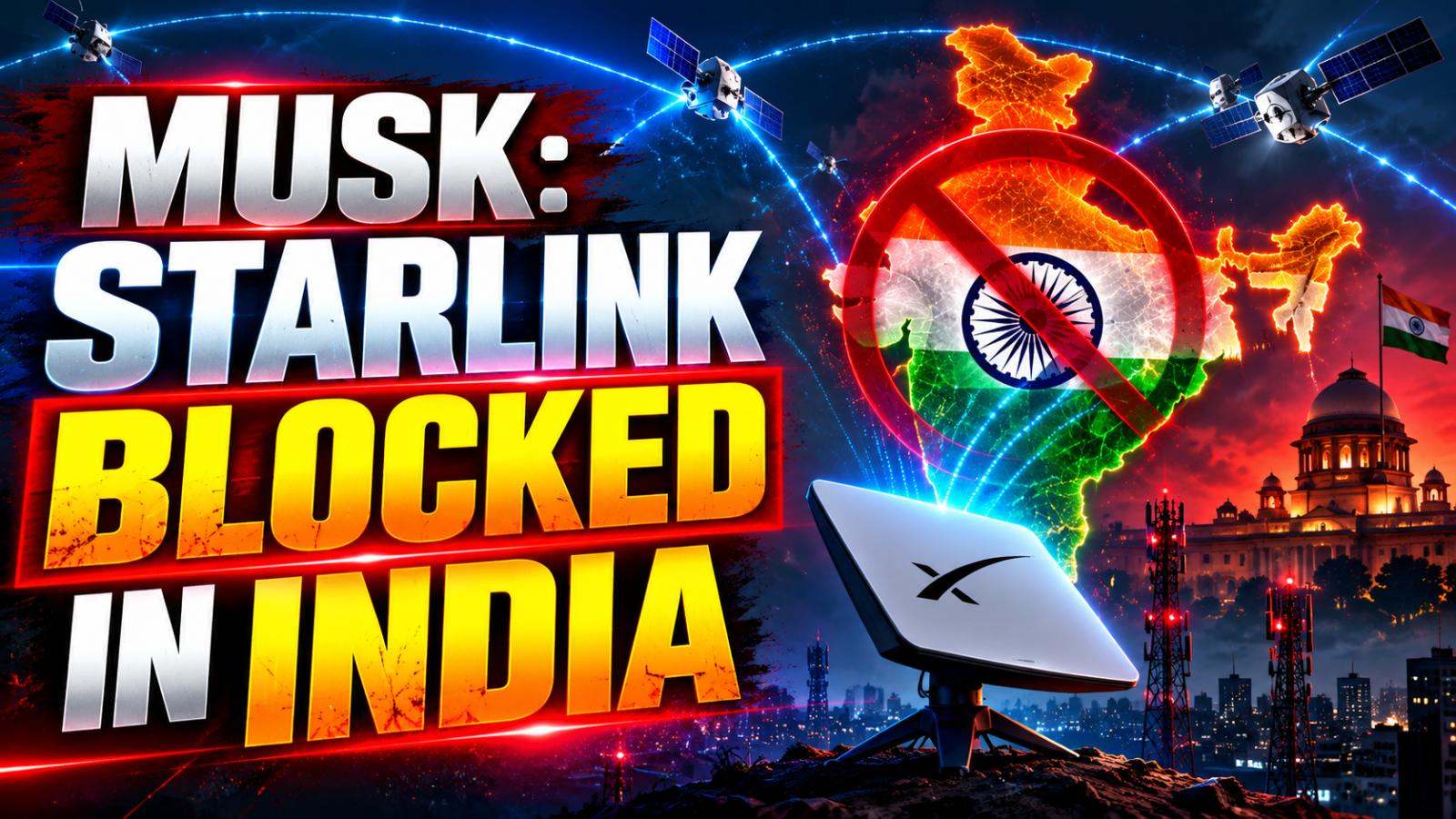
The Starlink India launch has returned to focus after Elon Musk claimed unnamed oligarchs are blocking the satellite service. SpaceX says its Indian infrastructure is ready, but commercial operations still depend on spectrum, security and other government clearances.
Musk claim puts Starlink delay back in spotlight
Elon Musk has accused unnamed business interests of blocking Starlink’s entry into India to protect what he described as a “monopolistic chokehold” over consumers, escalating the debate around the satellite internet provider’s delayed commercial launch.
Musk made the allegation on X while responding to a post claiming that 11,256 listed Indian villages still lacked 4G coverage as of May 2026. He did not identify the companies or individuals he was accusing and provided no evidence establishing that private rivals were responsible for regulatory delays. His comments should therefore be treated as an allegation rather than an established explanation for the stalled launch.
India clearance
Starlink already holds a licence to provide satellite communication services in India, but that does not automatically allow it to begin commercial operations. The company still requires remaining government approvals, including security-related clearances and spectrum assignment.
Indian authorities have repeatedly stressed that satellite operators must comply with the same national security framework before services can begin. The government’s caution reflects the strategic nature of satellite networks, which can operate independently of conventional terrestrial telecom infrastructure.
Rural internet
Musk’s comments focused heavily on rural connectivity, an area Starlink has long presented as one of its strongest use cases. Satellite broadband can reach regions where laying fibre or building conventional mobile towers may be slow or commercially difficult.
The reported figure of more than 11,000 villages without 4G coverage highlights the remaining connectivity gap despite India’s rapid telecom expansion. However, Starlink would not replace conventional mobile networks; it would serve as an additional option for remote households, businesses, institutions and emergency connectivity.
Gateway sites
Starlink says it has already built much of the infrastructure needed to start operations in India. At India Mobile Congress 2026, SpaceX executive Lauren Dreyer said the company had established 20 gateway sites with hundreds of antennas and created India-specific security controls.
Dreyer also said Indian user data would remain within India and that the company had spent about five years working with regulators, telecom operators and industry partners. Starlink’s position is that it is operationally ready and is now waiting for the remaining approvals.
Security and spectrum
The key obstacles are now regulatory rather than technical. Starlink and other satellite communication providers require spectrum allocation and compliance with security conditions before commercial services can begin.
The Indian government has so far avoided publicly blaming any private telecom company for the delay. That distinction matters because Musk’s allegation suggests deliberate obstruction by competitors, while the official process continues to focus on licensing, security and spectrum rules.
Starlink India launch
The dispute comes at a sensitive moment for India’s satellite broadband market. Starlink is competing in a sector that also includes Bharti-backed Eutelsat OneWeb and Jio Satellite Communications, making the regulatory framework important for all operators.
For Starlink, the next decisive development will not be another public exchange but formal government approval. Until spectrum and security requirements are cleared, Musk’s company may be ready technically, but it cannot legally begin full commercial service across India.