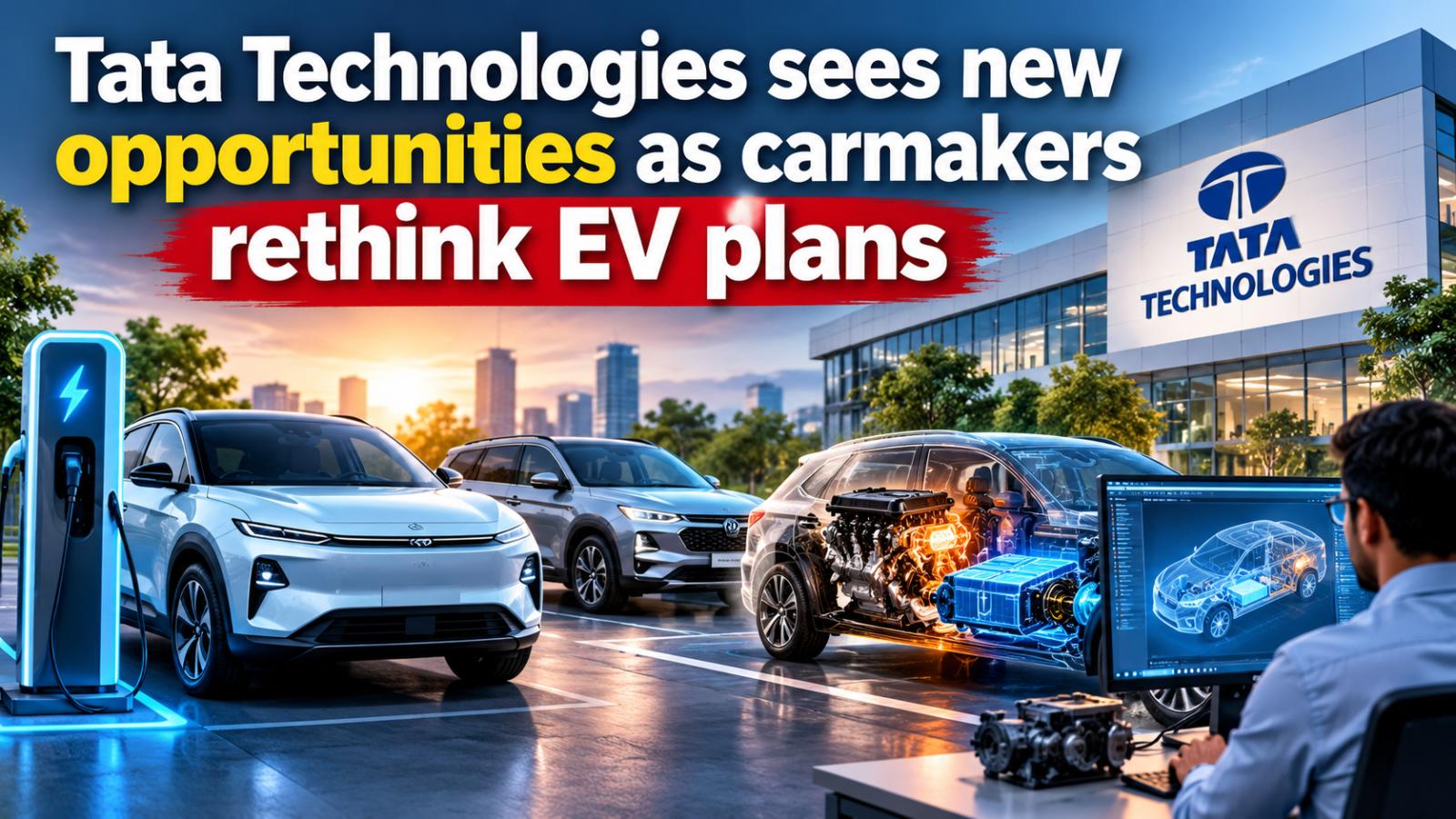
Tata Technologies is identifying fresh business opportunities as global automobile manufacturers reconsider their electric vehicle strategies and explore alternative powertrain technologies. With electric vehicle adoption progressing more slowly than some manufacturers initially anticipated, the engineering services company expects increasing demand for flexible vehicle platforms that can accommodate electric, hybrid and internal combustion engine (ICE) technologies.
During Tata Technologies' Q2FY27 earnings call on October 14, Chief Executive Officer and Managing Director Warren Harris discussed how changing industry priorities could benefit engineering service providers.
Harris explained that several automakers had invested heavily in dedicated battery electric vehicle (BEV) platforms five to six years ago. However, changing consumer preferences and evolving market conditions are encouraging manufacturers to reconsider their approach and introduce additional propulsion options.
The company believes its expertise in automotive engineering and vehicle platform development can help manufacturers respond to these changes.
Hybrid and ICE vehicle platforms create new engineering opportunities
Tata Technologies sees growing potential in helping automakers modify vehicle platforms originally designed for electric vehicles to accommodate internal combustion engines and hybrid powertrains.
According to Harris, slowing EV adoption in certain markets has encouraged manufacturers to expand their propulsion options rather than depend entirely on battery-electric vehicles.
This changing approach could create additional engineering assignments involving vehicle architecture, powertrain integration and platform modifications.
The company aims to use its existing technical capabilities to help automakers develop flexible automotive platforms suitable for different technologies and customer requirements.
Harris did not identify specific automobile manufacturers or regional markets pursuing these strategies. However, he indicated that changing powertrain requirements could provide new opportunities for engineering service companies.
The development highlights how automakers are increasingly balancing their long-term electrification plans with immediate customer demand, vehicle affordability and market conditions.
Engineering outsourcing and AI-assisted vehicle development drive growth
Alongside powertrain diversification, Tata Technologies is expanding its focus on engineering outsourcing and complete vehicle development programmes.
Harris explained that Chinese automobile manufacturers have established new standards for innovation, competitive pricing and faster product development. These developments are pushing Western automakers to reconsider how they design and manufacture vehicles.
The company expects original equipment manufacturers (OEMs) to concentrate more on activities that distinguish their brands while outsourcing a larger share of engineering and product development responsibilities.
Rather than handling individual engineering assignments, Tata Technologies wants to take responsibility for complete vehicle development programmes, from initial design and engineering to production readiness.
During the September quarter, the company secured five major deals, including a $138 million programme involving the development of two vehicles for a European luxury automobile manufacturer.
The project is expected to continue for approximately two-and-a-half years and is gradually entering its execution phase.
Artificial intelligence is also becoming an important part of Tata Technologies' business strategy.
The company revealed that nearly 1,000 employees are involved in developing and deploying AI agents across engineering and business operations. These technologies are intended to improve productivity, reduce development time and streamline internal processes.
Tata Technologies has also maintained its expectation of strong double-digit consolidated revenue growth for FY27.
However, the company has not disclosed how much additional revenue could come specifically from hybrid-related engineering opportunities. It has also not announced any new contract directly associated with this emerging segment.
As global automakers reassess their electric vehicle investments and explore diversified propulsion technologies, Tata Technologies is positioning itself to benefit from changing engineering requirements.
Its growing emphasis on flexible vehicle platforms, complete vehicle development, engineering outsourcing and artificial intelligence could support future business expansion as the automotive industry continues to evolve.