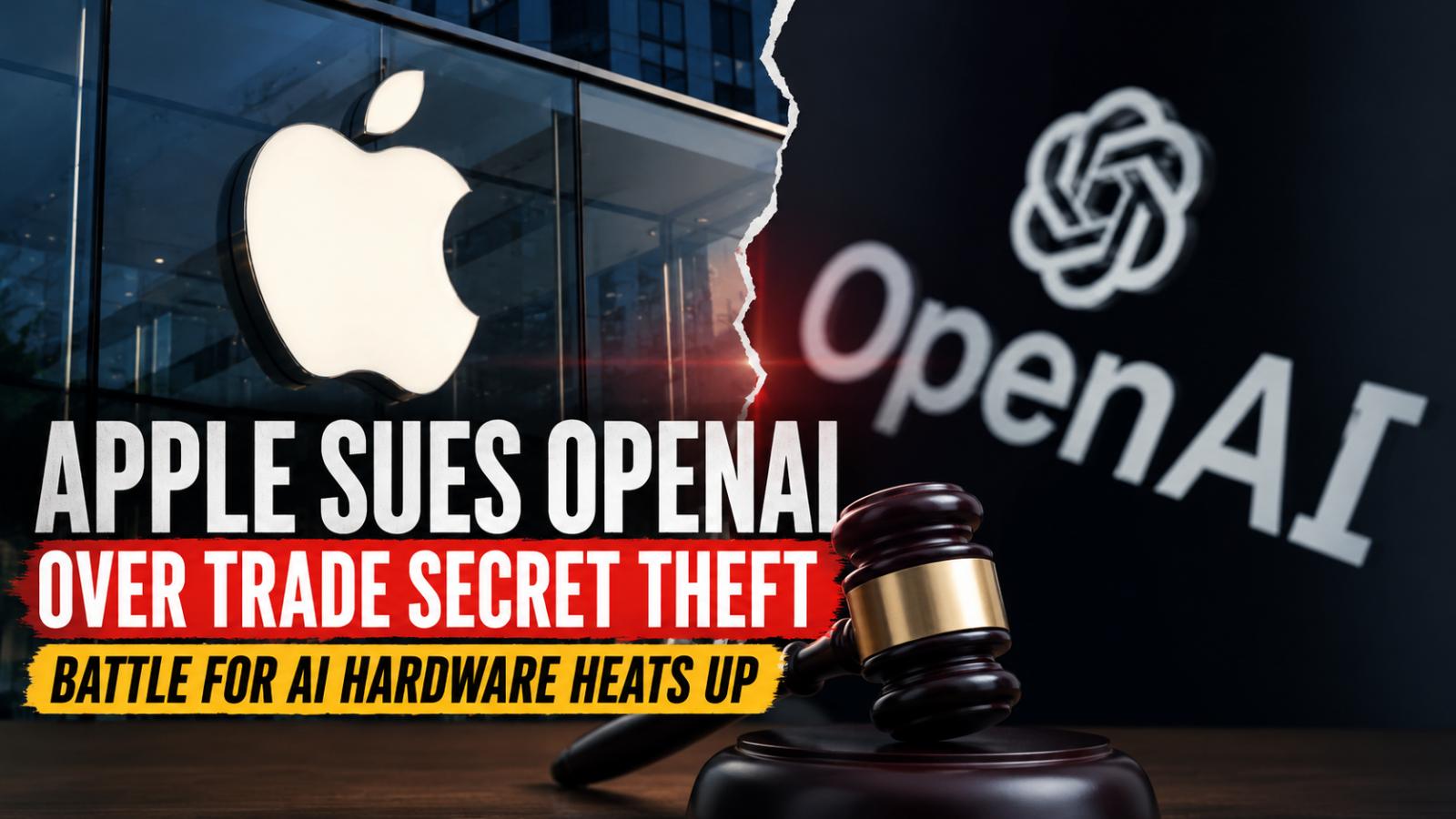
Apple has filed a lawsuit against OpenAI and two former employees, alleging that confidential information was improperly obtained and used to support the ChatGPT maker’s expansion into consumer hardware. The case signals a major shift in the relationship between the companies, which have previously worked together to integrate ChatGPT into Apple devices.
According to the complaint filed on July 10 in the US District Court for the Northern District of California, Apple claims OpenAI pursued confidential information through employee recruitment, former staff members and relationships within Apple’s supplier network. The allegations have not been proven, and the court has not issued a ruling.
OpenAI faces Apple lawsuit over trade secrets
The lawsuit names former Apple employees Tang Tan and Chang Liu as defendants alongside OpenAI and affiliated hardware operations. Apple alleges that the former employees accessed or retained confidential information connected to unreleased products, manufacturing processes, components and supplier relationships.
Apple claims OpenAI’s recruitment practices encouraged employees and job candidates to discuss projects that were protected by confidentiality obligations. The company argues that these alleged activities were not isolated incidents but part of a broader effort to strengthen OpenAI’s hardware division.
OpenAI has rejected the suggestion that it wants competitors’ confidential information and said it remains focused on developing new technology. The company will have an opportunity to formally respond to Apple’s allegations through the court process.
AI hardware plans intensify technology rivalry
OpenAI has been building a consumer hardware operation as it looks for ways to deliver artificial intelligence services beyond laptops and smartphones. Its hardware ambitions have attracted attention following its work with former Apple design chief Jony Ive and other experienced product developers.
Apple argues that confidential knowledge from its employees could give OpenAI an unfair advantage when designing an AI device. However, OpenAI has not publicly confirmed that it is building a smartphone, and reports describing a direct iPhone competitor remain speculative.
The dispute highlights the growing importance of hardware in the AI market. Companies increasingly want direct access to consumers rather than relying entirely on operating systems, app stores and devices controlled by other technology businesses.
Former Apple employees become central to case
The complaint focuses heavily on how the two former staff members allegedly handled Apple information before and after joining OpenAI-related operations. Apple claims confidential files and supplier details were accessed without authorization and could have supported future product development.
These remain Apple’s allegations rather than established facts. Trade secret cases generally require a company to identify protected information, demonstrate that reasonable steps were taken to secure it and show that the information was improperly acquired or used.
Apple is seeking damages and court orders that could restrict OpenAI from using disputed information. The final outcome will depend on evidence produced during the litigation, including employment records, communications and technical documents.
iPhone competition reshapes Apple-OpenAI partnership
Apple and OpenAI announced their technology partnership in 2024, allowing users to access ChatGPT through selected Apple Intelligence features. The lawsuit shows how quickly cooperation can turn into rivalry when partners begin competing for talent, customers and control of emerging technology.
A successful OpenAI device could create a more direct relationship between the company and consumers while reducing its dependence on the iPhone and other third-party platforms. For Apple, protecting product designs, manufacturing knowledge and supplier information is critical as AI changes how consumers interact with personal devices.
The lawsuit could delay OpenAI’s hardware plans, increase development costs and weaken cooperation between the companies. It may also influence how Silicon Valley businesses recruit employees who have worked on confidential AI and hardware projects.
Relevant internal links could direct readers to the NRIPage Technology section, previous Apple Intelligence updates, OpenAI company news, artificial intelligence articles and local business listings for technology services.