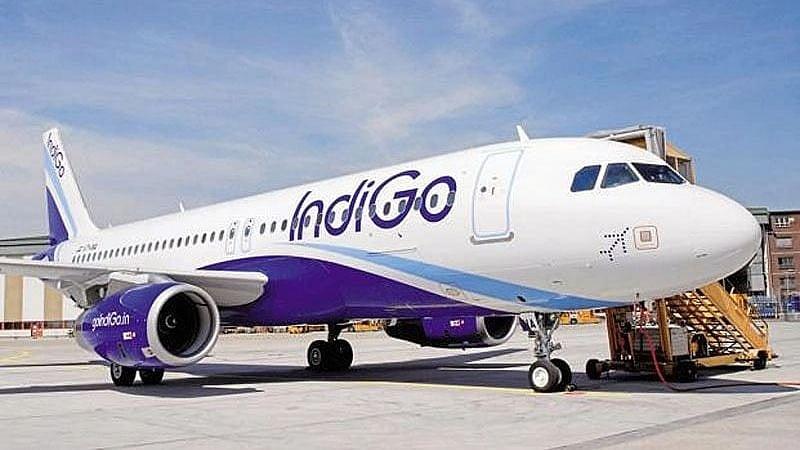
A high-alert security situation unfolded at Mumbai’s Chhatrapati Shivaji Maharaj International Airport early Wednesday morning after an anonymous call threatened to blow up an IndiGo aircraft. The call was reportedly received through the Sahar Airport hotline, prompting an emergency response from airport authorities and national security agencies. This alarming development comes in the wake of India’s military retaliation Operation Sindoor against nine terror camps located across Pakistan and Pakistan-Occupied Kashmir (PoK).
According to sources within the airport security apparatus, the caller specifically claimed that an explosive device was planted aboard an IndiGo plane, though no particular flight number was disclosed. Authorities wasted no time in mobilizing bomb disposal units, central industrial security force (CISF) personnel, and dog squads. Comprehensive checks and screenings were immediately initiated, following standard operating procedures for threat mitigation. While there was no immediate confirmation of an actual explosive, the situation is being treated with utmost seriousness.
India’s Directorate General of Civil Aviation (DGCA) confirmed that passenger safety remains the topmost priority. The aviation body is actively coordinating with airlines and airport operators across India, especially in the northern and western regions, where airspace restrictions are already in place due to increased security sensitivity post-Operation Sindoor.
Operation Sindoor was launched as a strategic tri-forces strike involving the Indian Army, Navy, and Air Force, aimed at eliminating terror infrastructure believed to be involved in planning and executing attacks on Indian soil. The strikes were carried out on nine locations including Kotli, Muridke, Chak Amru, and Muzaffarabad, which house the operational bases of Jaish-e-Mohammed, Lashkar-e-Taiba, and Hizbul Mujahideen. These strikes were a direct response to the April 22 terror attack in Pahalgam, which left 26 civilians dead.
Government sources have described the ongoing situation as a national emergency, particularly with Indian airspace now under tight surveillance. As a precaution, civilian flight movements have been significantly disrupted. IndiGo Airlines issued multiple updates on its social media handle X (formerly Twitter), stating that flights to and from Srinagar, Jammu, Leh, Chandigarh, Amritsar, and Dharamshala were affected due to evolving airspace conditions. The airline later added Bikaner to the list of affected sectors.
This disruption and the reported threat come amidst rising tension along the border and growing regional uncertainty. The Indian Armed Forces released an official statement around 2 am announcing the launch of Operation Sindoor. The statement read, “A little while ago, the Indian Armed Forces launched Operation Sindoor, hitting terrorist infrastructure in Pakistan and Pakistan-occupied Jammu and Kashmir from where terrorist attacks against India have been planned and directed. Altogether, nine sites have been targeted.”
While no militant group has claimed responsibility for the threatening call, security agencies are not ruling out the possibility of psychological warfare or coordinated attempts to disrupt India’s internal security following the cross-border strikes. A detailed investigation is underway to trace the origin of the threat call and determine its credibility.
The timing of the threat call has added to the heightened atmosphere post-strike. Following India’s targeted and non-escalatory operations, Pakistan has already retaliated with artillery shelling along the Line of Control, resulting in civilian casualties. The situation remains volatile, with national defense protocols being re-evaluated and upgraded across sensitive airports and strategic locations.
As per DGCA and security officials, there is no cause for public panic at the moment, but advisories have been issued urging travelers to stay updated on flight schedules and cooperate with security checks. The authorities continue to monitor the situation closely, reaffirming their commitment to passenger safety and national security.
According to sources within the airport security apparatus, the caller specifically claimed that an explosive device was planted aboard an IndiGo plane, though no particular flight number was disclosed. Authorities wasted no time in mobilizing bomb disposal units, central industrial security force (CISF) personnel, and dog squads. Comprehensive checks and screenings were immediately initiated, following standard operating procedures for threat mitigation. While there was no immediate confirmation of an actual explosive, the situation is being treated with utmost seriousness.
India’s Directorate General of Civil Aviation (DGCA) confirmed that passenger safety remains the topmost priority. The aviation body is actively coordinating with airlines and airport operators across India, especially in the northern and western regions, where airspace restrictions are already in place due to increased security sensitivity post-Operation Sindoor.
Operation Sindoor was launched as a strategic tri-forces strike involving the Indian Army, Navy, and Air Force, aimed at eliminating terror infrastructure believed to be involved in planning and executing attacks on Indian soil. The strikes were carried out on nine locations including Kotli, Muridke, Chak Amru, and Muzaffarabad, which house the operational bases of Jaish-e-Mohammed, Lashkar-e-Taiba, and Hizbul Mujahideen. These strikes were a direct response to the April 22 terror attack in Pahalgam, which left 26 civilians dead.
Government sources have described the ongoing situation as a national emergency, particularly with Indian airspace now under tight surveillance. As a precaution, civilian flight movements have been significantly disrupted. IndiGo Airlines issued multiple updates on its social media handle X (formerly Twitter), stating that flights to and from Srinagar, Jammu, Leh, Chandigarh, Amritsar, and Dharamshala were affected due to evolving airspace conditions. The airline later added Bikaner to the list of affected sectors.
This disruption and the reported threat come amidst rising tension along the border and growing regional uncertainty. The Indian Armed Forces released an official statement around 2 am announcing the launch of Operation Sindoor. The statement read, “A little while ago, the Indian Armed Forces launched Operation Sindoor, hitting terrorist infrastructure in Pakistan and Pakistan-occupied Jammu and Kashmir from where terrorist attacks against India have been planned and directed. Altogether, nine sites have been targeted.”
While no militant group has claimed responsibility for the threatening call, security agencies are not ruling out the possibility of psychological warfare or coordinated attempts to disrupt India’s internal security following the cross-border strikes. A detailed investigation is underway to trace the origin of the threat call and determine its credibility.
The timing of the threat call has added to the heightened atmosphere post-strike. Following India’s targeted and non-escalatory operations, Pakistan has already retaliated with artillery shelling along the Line of Control, resulting in civilian casualties. The situation remains volatile, with national defense protocols being re-evaluated and upgraded across sensitive airports and strategic locations.
As per DGCA and security officials, there is no cause for public panic at the moment, but advisories have been issued urging travelers to stay updated on flight schedules and cooperate with security checks. The authorities continue to monitor the situation closely, reaffirming their commitment to passenger safety and national security.