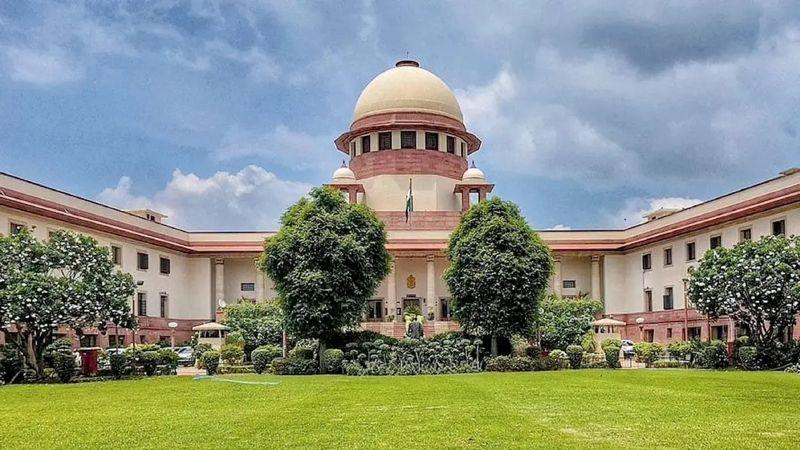
In a firm stance on refugee policies, the Supreme Court of India today denied a Sri Lankan national’s request to remain in the country, stating, "India is not a dharmashala (free shelter) that can entertain refugees from all over the world." The remark came from Justice Dipankar Datta, who was sitting on a bench alongside Justice K Vinod Chandran, while hearing the plea of a man convicted under anti-terror laws.
The petitioner, a Sri Lankan Tamil, was arrested in 2015 for alleged links to the now-defunct Liberation Tigers of Tamil Eelam (LTTE). In 2018, a trial court convicted him under the Unlawful Activities (Prevention) Act (UAPA) and sentenced him to 10 years in prison. The Madras High Court reduced the sentence to seven years in 2022 but ordered his deportation immediately after his release. Until then, he was instructed to reside in a refugee camp.
Arguing before the apex court, the petitioner stated that:
-
He had entered India legally on a visa.
-
His life was at risk if deported to Sri Lanka.
-
His wife and children currently reside in India.
-
He has already spent nearly three years in detention, and deportation proceedings are yet to commence.
In response, Justice Datta said, “Is India to host refugees from all over the world? We are struggling with 140 crore. This is not a dharmashala that we can entertain foreign nationals from all over.”
The petitioner’s lawyer invoked Article 21 of the Indian Constitution, which guarantees the protection of life and personal liberty, and Article 19, which outlines fundamental rights including movement and speech. However, the court rejected this reasoning.
-
Article 21 was not violated since the petitioner’s detention was in accordance with the law.
-
Article 19, which includes rights to speech, movement, and residence, is exclusive to Indian citizens.
The bench further questioned the petitioner's right to seek permanent residence in India and suggested that he seek asylum in another country if his life was truly in danger back home. The ruling underscores India’s current legal stance on foreign nationals and reinforces the principle that refugee rights do not equate to citizenship privileges under the Constitution. This case adds to the growing debate over India's refugee policy, particularly as the country balances humanitarian concerns with domestic legal limitations and population pressures.