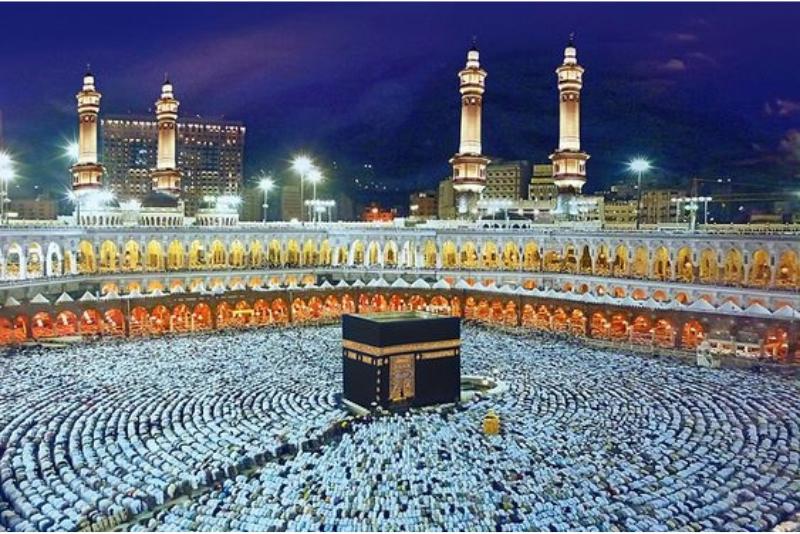
The annual Hajj pilgrimage, one of the five pillars of Islam, will be held this year from June 4 to June 9, 2025, depending on the sighting of the crescent moon. Over one million Muslims from around the world are expected to gather in Mecca, Saudi Arabia, for this spiritually significant journey.
Each year during the Islamic month of Dhu al-Hijjah, Muslims who are physically and financially able make the pilgrimage as an obligation of faith. The Hajj consists of a series of deeply symbolic rituals performed over five to six days. These include walking around the Kaaba, praying at Mount Arafat, collecting pebbles in Muzdalifah, and the symbolic stoning of the devil in Mina.
To maintain order, Saudi Arabia requires pilgrims to obtain permits and leave the country after the pilgrimage or after visiting sacred sites in Medina and Jeddah.
Hajj rituals trace their roots back to Prophet Ibrahim (Abraham), who followed God’s command to leave his wife Hajar and son Ismail in the desert of Makkah. These early acts of faith were later revived and institutionalized by Prophet Muhammad in 628 CE, making Hajj a cornerstone of Islamic practice.
Before beginning the pilgrimage, Muslims enter a state of spiritual purity known as ihram. Men wear two unstitched white cloths while women wear modest, loose-fitting garments. In ihram, pilgrims refrain from arguments, grooming, and other worldly distractions.
-
Tawaf: Circling the Kaaba seven times
-
Sa’i: Walking between the hills of Safa and Marwa
-
Arafat: Spending the day in prayer on Mount Arafat
-
Muzdalifah: Collecting pebbles after sunset
-
Mina: Performing the symbolic stoning of the devil
-
Eid al-Adha: Animal sacrifice to honor Prophet Ibrahim’s devotion
The pilgrimage concludes with a final circumambulation of the Kaaba and a return to normal attire. Many pilgrims also visit Medina, the resting place of Prophet Muhammad, before heading home. The other four pillars of Islam are the profession of faith (Shahada), daily prayers (Salah), almsgiving (Zakat), and fasting during Ramadan (Sawm). The Hajj remains a profound expression of unity, equality, and devotion among Muslims worldwide.