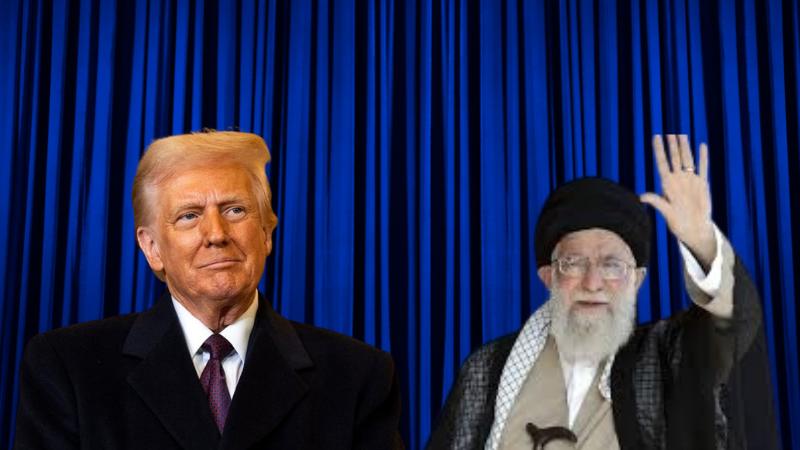
In a direct and defiant response to United States President Donald Trump's recent comments demanding Iran’s "unconditional surrender," Iran's Supreme Leader Ayatollah Ali Khamenei issued a stark warning, vowing that Tehran would not yield to threats or coercion. In a televised address delivered Wednesday, Khamenei asserted that any US military intervention would inflict irreparable damage, not just on Iran, but significantly on American interests as well.
Khamenei’s response came a day after President Trump, amid growing regional instability and continued hostilities between Israel and Iran, openly stated that Iran must surrender without conditions. Trump’s remarks followed his early exit from the G7 Summit in Canada, a move that fueled speculation regarding imminent US involvement in the escalating conflict, although no direct military action has yet been confirmed by Washington.
In his televised speech, Khamenei dismissed the aggressive tone taken by Trump and warned that speaking in the language of threats to the Iranian nation was a strategic misstep. He stated, “Intelligent people who know Iran, the Iranian nation, and its history will never speak to this nation in threatening language because the Iranian nation will not surrender, and Americans should know that any US military intervention will undoubtedly be accompanied by irreparable damage.” His comments emphasized the resilience of the Iranian people and signaled a firm stance amid a rapidly intensifying crisis.
He further elaborated that the Iranian people would not tolerate any externally imposed decisions, including peace or war. “The Iranian nation will stand firm against an imposed war, just as it will stand firm against an imposed peace, and this nation will not surrender to anyone in the face of imposition,” he said. Despite the heavy losses Iran has faced in recent days, including the deaths of high-ranking military and security officials in Israeli airstrikes, Khamenei maintained a combative tone and refused to entertain the notion of retreat.
In what appeared to be a calculated move to boost public morale and signal resilience, Khamenei reiterated his stance on social media, stating that Iran was not afraid of US threats. He wrote, “The US entering this matter is 100 percent to its own detriment. The damage it will suffer will be far greater than any harm that Iran may encounter. The US President threatens us. With his absurd rhetoric, he demands that the Iranian people surrender to him. They should make threats against those who are afraid of being threatened. The Iranian nation isn't frightened by such threats.”
Meanwhile, Trump doubled down on his warnings, stating on Truth Social that the US was aware of Khamenei’s exact location, though there were no immediate plans to act on that intelligence. “He (Khamenei) is an easy target, but is safe there - we are not going to take him out (kill!), at least not for now,” Trump said. His comments stirred controversy and added a provocative dimension to the already volatile situation, suggesting that US restraint may not be permanent.
While the United States has so far refrained from direct engagement in Israel’s “Rising Lion” military operation aimed at dismantling Iran’s nuclear capabilities, Trump’s increasingly combative rhetoric suggests a dwindling tolerance for Tehran’s actions. Iran, for its part, has also escalated its military response. On Wednesday, the Iranian government claimed to have launched its first hypersonic missile, the Fattah-1, at Israel in a significant military maneuver, marking a turning point in the confrontation. Explosions were reported in Tel Aviv shortly after the launch.
Israel responded with heavy aerial strikes, primarily targeting Tehran and surrounding areas. The conflict, now in its sixth day, has resulted in substantial casualties on both sides. Iran’s Health Ministry reported a staggering 585 deaths, most of them civilians, making it the hardest-hit party in the conflict so far. Israeli officials claimed 24 citizens had died and over 1,300 had been injured due to Iranian missile strikes.
With no ceasefire in sight and both leaders engaged in an increasingly personal war of words, concerns have grown over the possibility of the conflict spiraling into a broader regional or even global war. The situation is further complicated by the presence of proxy forces, cyber operations, and the possibility of clandestine support from other geopolitical powers.
Diplomatic channels remain largely frozen, and the language from both sides has only intensified. The future course of the conflict will likely hinge on the decisions made in Washington and Tehran in the coming days. If the rhetoric continues to escalate without a strategic off-ramp, the region could be heading toward a more devastating confrontation. As it stands, the Iranian leadership remains resolute, the American administration is visibly impatient, and the civilian toll continues to rise with each passing hour.