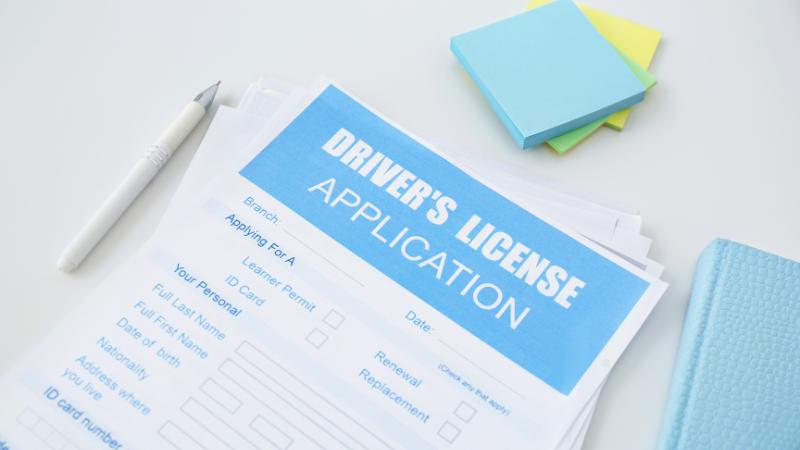
1. Determine Your Eligibility
The first step in obtaining a Texas driver’s license is to ensure that you meet the eligibility requirements. As an NRI, you must be a resident of Texas to apply. If you are planning to drive regularly in Texas, you are expected to obtain a Texas driver’s license within 90 days of becoming a resident.
To prove you live in Texas, you’ll need documents like:
- A utility bill (electricity, gas, water)
- Lease or rental agreement
- Bank statements showing your Texas address
- Any official document that verifies your residence in Texas
Once you confirm your residency in Texas, you will need to gather several important documents for your driver’s license application. These documents are essential for proving your identity, legal status, and Texas residency. The required documents are:
- Passport: Your valid passport is the main proof of your identity.
- Visa or I-94 Form: You need to show that you're legally in the U.S. This could be your work visa, student visa, or permanent residency card.
- Proof of Texas Residency: You need proof that you live in Texas. This could be a utility bill or a lease agreement.
- Social Security Number (SSN): If you have an SSN, provide it. If you don’t have one, you’ll need to show a letter from the Social Security Administration saying you’re not eligible.
- Proof of Legal Presence: If you're not a U.S. citizen, you’ll need to show documents proving you’re legally allowed to be in the U.S. (like a visa or green card).
After gathering all your documents, it’s time to schedule your appointment with the Texas Department of Motor Vehicles (DMV). The DMV recommends making an appointment to save time, especially in busy areas. You can schedule your appointment online through the Texas DMV website or by visiting your local DMV office in person.
It’s also important to check the DMV website to see if there are any special requirements or specific locations in your area that may have additional rules for NRIs.
4. Take the Written and Driving Tests
Once you arrive at the DMV for your scheduled appointment, you will be required to take a written knowledge test and, in most cases, a behind-the-wheel driving test.
- Written Knowledge Test: The written test will assess your understanding of Texas traffic laws, road signs, and safe driving practices. This test consists of multiple-choice questions. To prepare, review the Texas Driver Handbook available online.
- Driving Test: In most cases, NRIs will be required to pass a behind-the-wheel driving test. You’ll need to demonstrate that you can safely operate a vehicle and follow the rules of the road. Be sure to bring your own car for the test.
- If you have a valid driver’s license from your home country, you might not need to take the written or driving test. This depends on Texas laws and agreements with other countries. Check with the DMV for more details.
After you successfully pass the written and driving tests, you will need to submit your application for a Texas driver’s license. At this stage, you will also need to pay the required fees, which vary depending on the type of license and your age. Fees can be paid online or at the DMV office.The fees for obtaining a Texas driver’s license vary depending on your age and the type of license you are applying for. If you are applying for a provisional or commercial driver’s license, the fee structure may be different
6. Receive Your Texas Driver’s License
Once you complete the application process and pass all necessary tests, you will receive a temporary driver’s license. This temporary license is valid for up to 60 days and will allow you to drive while waiting for your official Texas driver’s license to arrive by mail.
Your official Texas driver’s license will be mailed to your address within a few weeks. The card will display your personal information, photograph, and the class of license you’ve been granted. Make sure to update the DMV with any changes to your address to avoid delays in receiving your permanent license.
Getting a Texas driver’s license as an NRI is a critical step to becoming a full-fledged resident of the state. While the process requires a bit of paperwork and a few tests, understanding the requirements ahead of time can make the process much smoother. Make sure to have all the necessary documents ready, prepare for the tests, and don’t forget to schedule your appointment in advance to save time.