Introduction
Mangala Gouri Vrata is one of the most sacred vratas observed by married Hindu women, particularly in South Indian states like Karnataka, Andhra Pradesh, Tamil Nadu, and Maharashtra. This vrata is dedicated to Goddess Gauri, a benevolent form of Parvati Devi, and is performed to ensure the well-being, long life, and prosperity of one’s husband and household. The vrata is traditionally observed on all Tuesdays (Mangala-var) in the Shravan month—known as Aadi in Tamil and Sravana Masam in Telugu.
Who Can Perform and When?
The Mangala Gouri Vrata is especially significant for newly married women, who begin observing it from the first Shravan month after marriage and continue it for five consecutive years. However, any married woman seeking blessings for her family’s peace, husband’s long life, and overall prosperity can observe it.
In 2025, according to the South Indian Panchangam, the vrata will fall on the following Tuesdays:
July 29, 2025 – First Tuesday (Very important; vrata must start on this day)
August 5, 2025 – Second Tuesday
August 12, 2025 – Third Tuesday
August 19, 2025 – Fourth Tuesday
August 26, 2025 – Fifth Tuesday
If, due to unavoidable reasons, one is unable to observe the vrata on any Tuesday, it is permitted to do it on a Friday within the same Shravan month, on Varalakshmi Vrata day (August 8, 2025), the day before Vinayaka Chavithi (August 26, 2025), or even on Vijayadashami/Dussehra. However, starting the vrata on the first Tuesday of Shravan is compulsory.
Detailed Ritual Procedure (Puja Vidhi)
Preparations and Setup
On the day of the vrata, women wake up early before sunrise and take a head bath. The home, especially the puja area, is thoroughly cleaned. A beautiful rangoli (kolam) is drawn at the entrance and near the altar using rice flour or colored powders to welcome Goddess Gauri.
A mangal kalasha (sacred water pot) is prepared using a brass, silver, or copper pot. The pot is filled with clean water, turmeric, kumkum, and coins. Five fresh betel leaves are placed over the mouth of the pot, and a coconut smeared with turmeric is set atop as the divine symbol of Goddess Gauri. This kalasha is placed on a mound of raw rice or turmeric rice on a decorated wooden platform (manai or chowki).
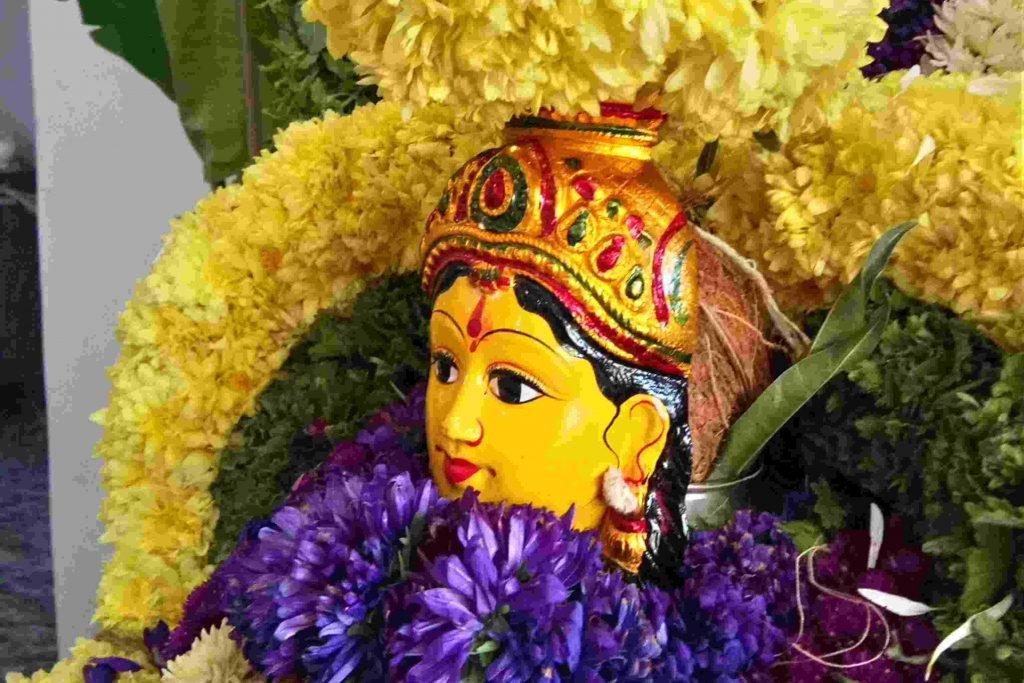
Next, an image or idol of Goddess Gauri is placed near or on top of the kalasha. Some use a silver or clay idol, while others shape the goddess using turmeric (known as Arishina Gauri). The idol is adorned with a new saree or blouse piece, gold or imitation ornaments, bangles, and fresh flowers—mainly marigold and lotus if available.
Lighting the Lamps
Five lamps (deepams) are lit in front of the deity, representing the five forms of feminine energy: Dharma, Artha, Kama, Moksha, and Bhakti. These lamps are traditionally placed on raw rice and kept burning throughout the puja.
Offerings and Naivedyam
Naivedyam (sacred food offering) is prepared and offered with devotion. Women usually make holige/obbattu (a sweet flatbread with jaggery filling), payasam (kheer), and other traditional items like puliyogare or coconut rice. Seasonal fruits, betel leaves, betel nuts, turmeric, and kumkum are also offered to the goddess. These offerings are placed before the idol, and prayers are offered with folded hands.
Chanting and Archana
Devotees recite the Gauri Ashtottara Shatanamavali (108 names of Goddess Gauri) or Gauri Sahasranama. Some women also chant the Lalitha Sahasranamam or sing traditional Mangala Gouri bhajans. During the archana (ritual offering), haldi (turmeric), kumkum, and flowers are offered at the feet of the goddess while chanting her names. A special sacred thread with 16 knots (Shodasha Granthi) is worshipped and then tied to the right hand, symbolizing protection and devotion.
Listening to the Story (Vrata Katha)
Why Mangala Gouri Vrata is observed: full vrat katha and divine blessings explained. After the main puja is complete, the devotee must read or listen to the story of the Mangala Gouri Vrata, which narrates how Goddess Gauri blessed a devoted wife and brought her dead husband back to life. (This story is given in Article 2.) The story is a vital part of the ritual and is believed to complete the vrata. It teaches that unwavering devotion and faith in Gauri Devi can protect and bless a woman’s married life.
Aarti and Conclusion
Finally, mangalarti (waving of the camphor flame) is performed, and the entire household can participate. After the aarti, tamboolam—a respectful offering of betel leaf, areca nut, fruits, turmeric, and kumkum—is given to at least five married women (sumangalis) along with any gifts like bangles, mirror, or blouse pieces. Women then seek blessings from elders and break their fast after offering food to the deity.
Spiritual Significance
The Mangala Gouri Vrata is not just a religious duty but a deeply spiritual experience. It enhances a woman’s inner strength, instills discipline and devotion, and reinforces the sacred bond between husband and wife. It is also a celebration of feminine power (Shakti) and collective prayer among women in the family or community. Gauri Devi, when pleased, bestows auspiciousness, harmony, progeny, and prosperity. Generations of women have followed this practice with great faith, passing it on as part of their cultural and spiritual heritage.