Two Ohio state lawmakers are proposing legislation that would expand the state’s name, image, and likeness (NIL) laws to protect residents from the growing threat of deepfakes and unauthorized digital impersonations. The bill seeks to apply the same principles that allow college athletes to profit from their personal brand to everyday Ohioans, ensuring that all individuals have control over how their likeness is used in the digital age.
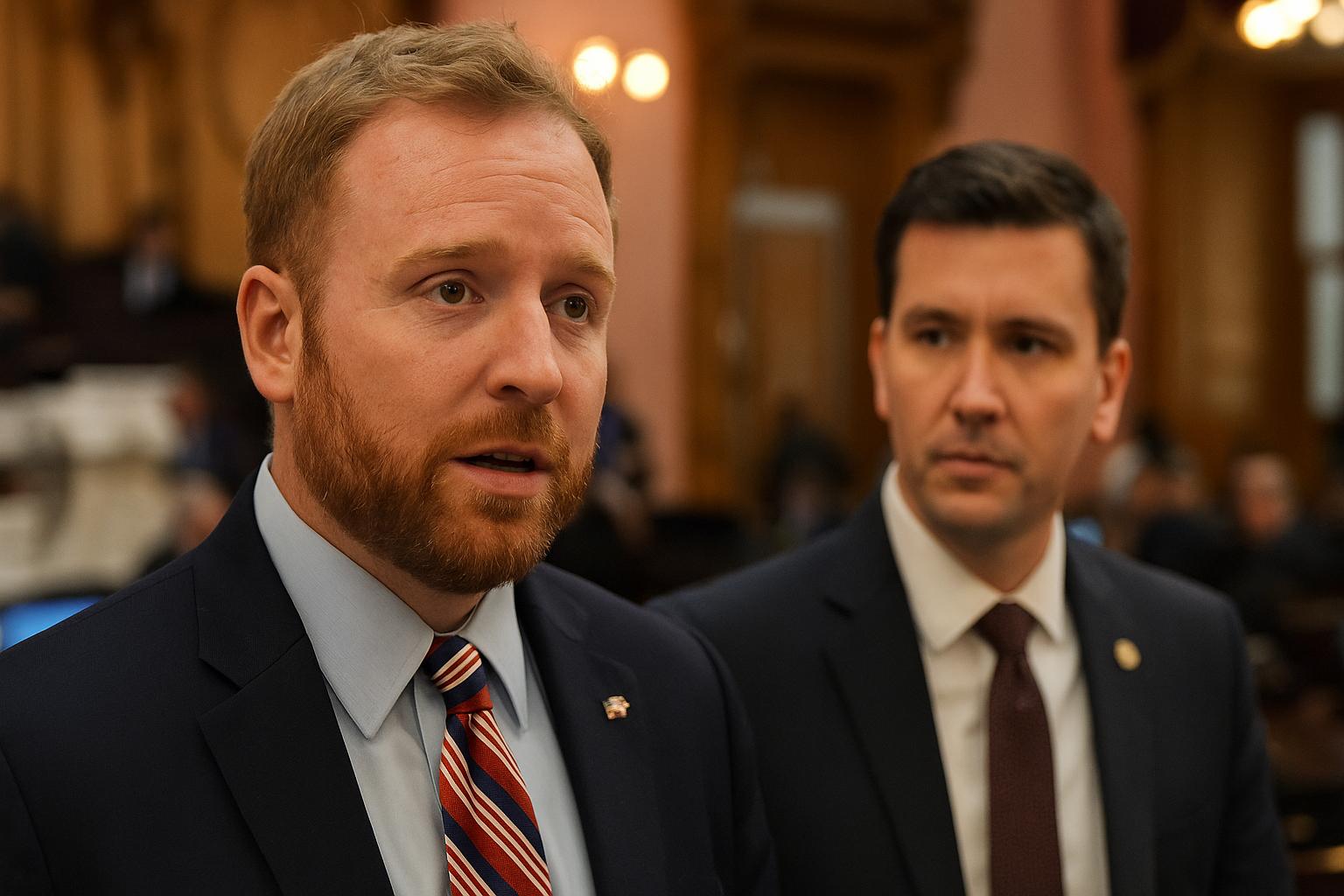
Republican state representatives Adam Mathews of Lebanon and Ty Mathews of Findlay are co-sponsoring House Bill 185, which aims to prohibit the unauthorized use of anyone’s likeness without written consent. The measure would remove existing language in the NIL statute that limits these protections to individuals whose image carries “commercial value,” thereby extending the right of publicity to all Ohio residents.
“This gives it to all of those that may not be Ryan Day, Joe Burrow, or other household names that get paid to be in commercials,” Rep. Adam Mathews said. He emphasized that while artificial intelligence technologies like deepfakes prompted the proposal, the law would also apply to other forms of manipulated imagery, including photoshopped or manually altered images.
Under the proposal, individuals would have the right to take legal action against anyone who uses their likeness without permission. The bill also includes explicit penalties for malicious use of deepfakes—particularly in cases where such content is used to defame, harass, or mislead the public. However, lawmakers maintained that existing exemptions in the NIL framework for literary, historical, and artistic works would remain intact.
The legislation has received support from Ohio Attorney General Dave Yost, who described deepfakes as a “growing threat” to personal privacy and public trust. However, the Motion Picture Association (MPA), representing major film studios, has expressed significant concern about the bill’s potential implications for free expression.
In written testimony, the MPA argued that the proposal would place an undue burden on filmmakers, artists, and media producers by forcing them to prove that their work qualifies for existing exceptions. “This in and of itself is a substantial expansion of the right of publicity and materially shifts the balance from protecting free speech to protecting individual likenesses,” the association wrote.
The MPA warned that the bill’s broad scope—especially its reliance on whether “a reasonable trier of fact” could confuse a digital depiction with reality—could have far-reaching consequences. The group cited the example of films like Forrest Gump, which digitally inserted actor Tom Hanks into scenes with historical figures such as Presidents Kennedy and Nixon. Under the proposed law, such portrayals could be deemed presumptively illegal without explicit consent from the estates of those individuals.
To address these concerns, the MPA suggested amendments that would restrict liability to individuals who “knowingly” create or distribute deepfakes with the intent to harm, extort, or harass others. The association also urged lawmakers to include explicit protections for works involving public interest, commentary, criticism, satire, parody, and scholarship.
Rep. Adam Mathews, however, dismissed the idea of reinstating the “commercial purpose” language, arguing that it would undermine the entire intent of the legislation. “That would gut the bill,” he said. His co-sponsor, Rep. Ty Mathews, also pushed back against the MPA’s claims, insisting that the measure would not meaningfully restrict free speech.
“I believe that this bill is not going to really restrict their capability at all,” Ty Mathews said, though he acknowledged that the measure does carry First Amendment implications. He added that if a filmmaker wanted to create a fictionalized or disparaging image of a real person, they would first need that person’s consent. “If some Hollywood filmmaker wants to create an image of you someday, they would need your permission if they’re going to utilize your image in a disparaging way,” he said.
The MPA countered that parody and satire are long-protected forms of free expression under U.S. law, pointing to shows like Saturday Night Live, The Simpsons, and South Park as examples of how creative expression often relies on the depiction of real individuals for commentary.
“Satirized portrayals of real-life individuals have long enjoyed strong constitutional protections,” the association said. “This bill risks chilling that tradition.”
Recognizing the sensitivity of the issue, Rep. Ty Mathews later clarified that the legislation does contain explicit protections for traditional satire and parody, adding that lawmakers are working to ensure artistic freedom is preserved.
As deepfake technology continues to evolve, lawmakers across the country are struggling to strike a balance between protecting privacy and safeguarding free speech. Ohio’s proposal, if enacted, would represent one of the most comprehensive state-level attempts to regulate digital impersonation while preserving constitutional rights—a balance that remains at the center of the growing national debate over artificial intelligence and personal identity.