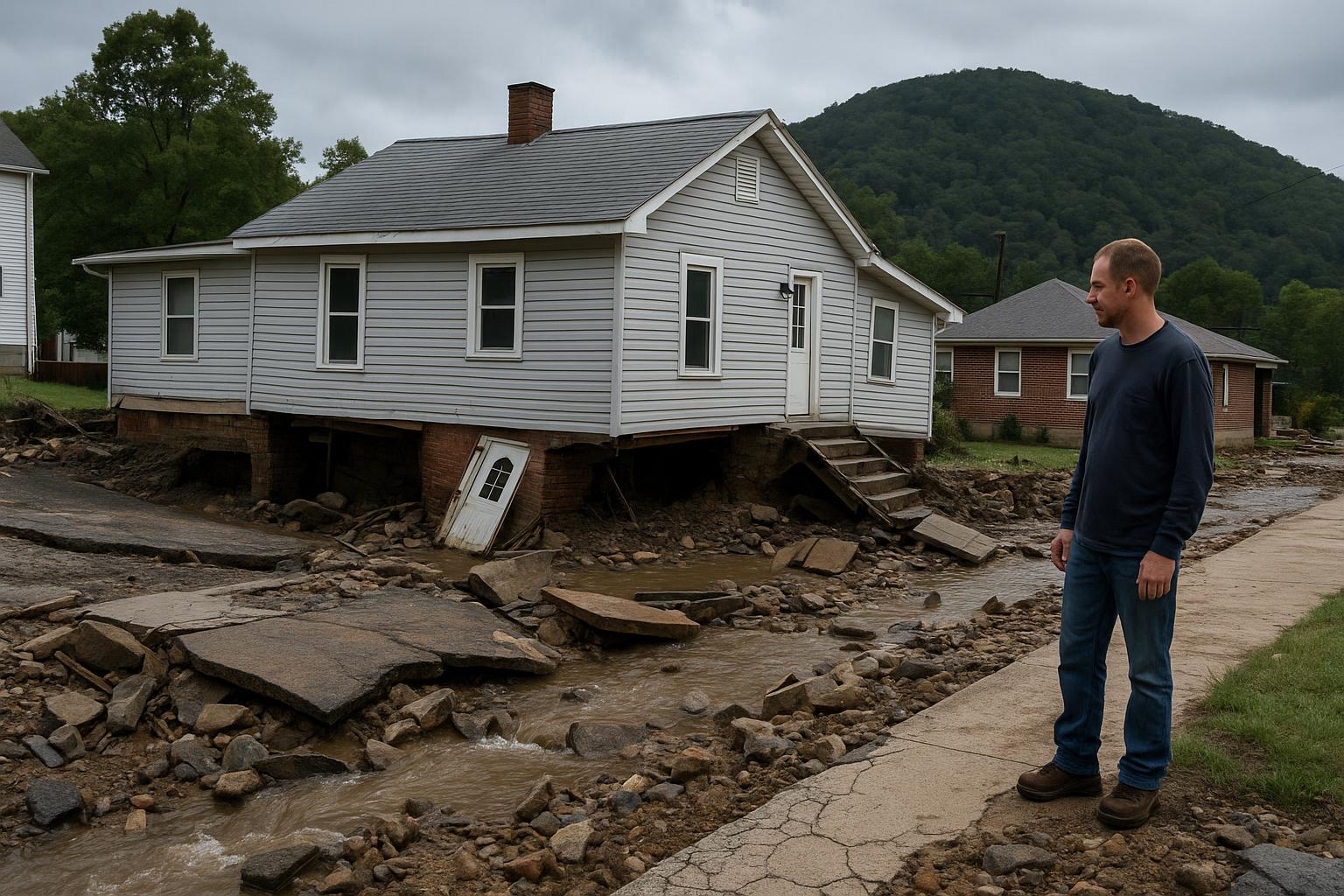
The Federal Emergency Management Agency has again denied Maryland’s request for federal disaster relief following the devastating floods that struck Allegany and Garrett counties in May. The decision, which also rejected an appeal filed by Governor Wes Moore, leaves residents and local governments in the state’s western panhandle without anticipated federal recovery funding.
The flooding caused extensive damage to homes, roads, and public infrastructure, prompting state and local officials to seek federal assistance to help communities rebuild. In Westernport, emergency crews were forced to evacuate nearly 200 people from an elementary school as rising waters inundated parts of the town. Months later, Mayor Judy Hamilton said the denial dealt another blow to residents already struggling to recover.
“This decision from FEMA is a profound disappointment for the resilient people of Westernport, who have faced incredible challenges since the May floods,” Hamilton said in a statement Thursday. “While this news is a setback, our community’s spirit remains unbroken.”
FEMA first rejected Maryland’s disaster declaration request in July, concluding that federal aid was not warranted despite agency assessments showing more than $33 million in damages across the two counties. State officials filed an appeal, arguing that the scale of destruction justified federal intervention to support recovery efforts for both families and public entities.
Governor Moore expressed frustration with the decision, saying that the state had exhausted all federal channels to secure relief. “While we disagree with both this process and outcome, our resolve is unbroken,” Moore said. “Our administration will continue to stand with the people of Western Maryland and do everything we can to help them rebuild.”
Moore’s administration has been vocal about what it sees as a lack of responsiveness from federal authorities. The governor suggested that the rejection may have been politically motivated, alleging that President Donald Trump’s administration has politicized disaster relief funding. Moore accused the federal government of punishing Maryland, which voted against the president in the 2024 election.
Despite the lack of federal aid, Moore emphasized that Maryland would not leave its western communities behind. In June, the governor made the first-ever use of the State Disaster Recovery Fund, allocating $459,375 to help affected residents and municipalities begin cleanup and repair work. The following month, he directed an additional $1 million in relief from the Low Income Home Energy Assistance Program to assist households still reeling from the flooding’s aftermath.
Local leaders say that while state support has been critical, it is not enough to cover the extensive damage sustained across Allegany and Garrett counties. Roads remain washed out, public buildings continue to require major repairs, and some residents have yet to return to their homes. Officials have urged both state and federal agencies to revisit how damage assessments are conducted, arguing that rural regions like western Maryland face unique recovery challenges that are often underestimated in federal evaluations.
Mayor Hamilton said Westernport will continue to pursue all available funding sources to rebuild infrastructure and assist displaced families. “We are a strong community,” she said. “Our residents have always stood together in times of crisis, and we will do the same now. We’re not waiting for others to come save us, but we will continue fighting for the support we deserve.”
The state’s emergency management officials plan to reassess damage data and coordinate with local partners to identify additional funding opportunities through grants and private partnerships. For now, many communities in Maryland’s western counties are relying on local volunteer organizations and limited state funds to sustain recovery efforts through the winter months.
While FEMA’s latest decision has left residents disappointed, state leaders say they remain determined to advocate for those still suffering the long-term effects of the May floods. Moore reiterated that the state will continue working “shoulder to shoulder” with affected communities, underscoring that rebuilding efforts will move forward — with or without federal assistance.