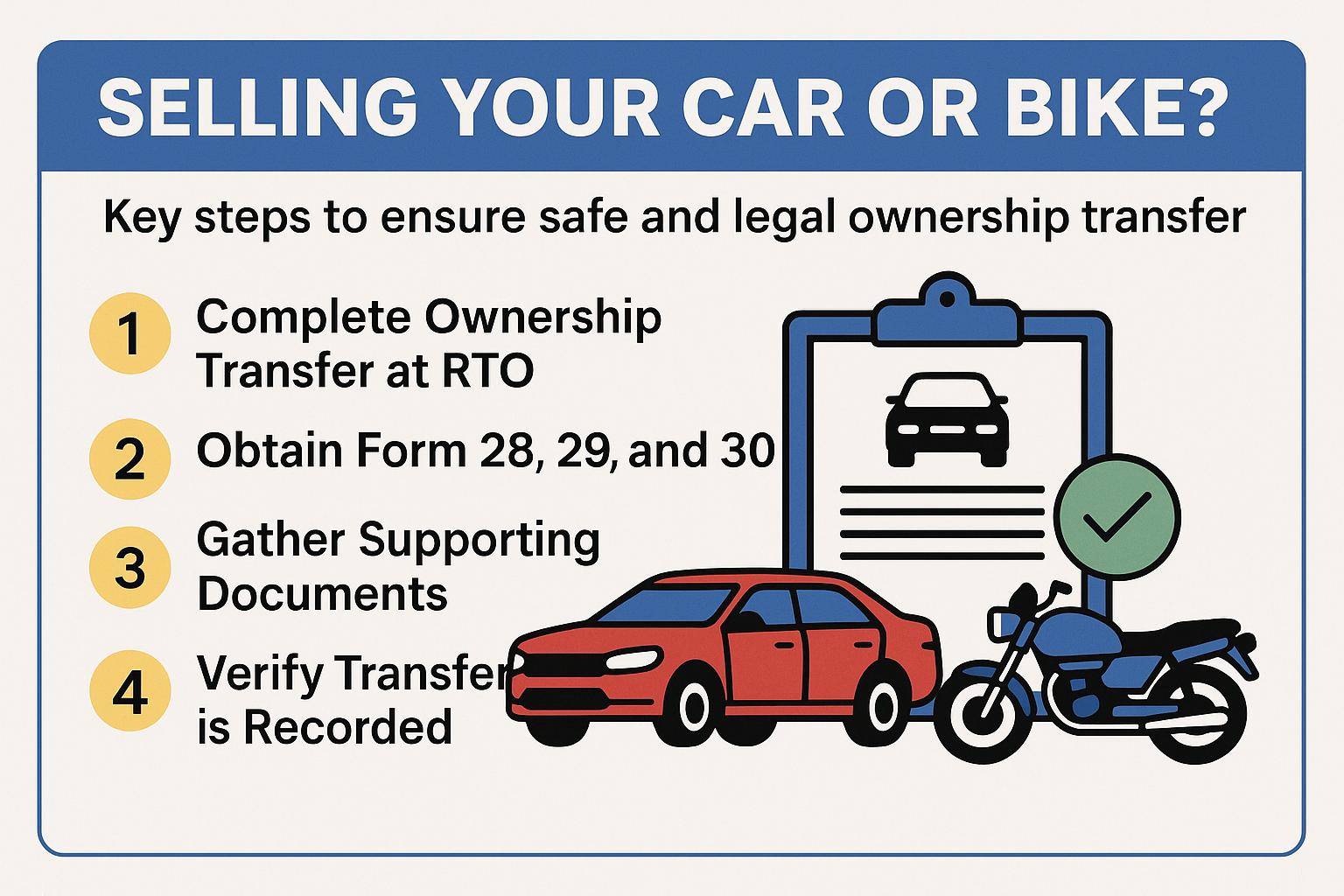
The most critical step in selling any vehicle is the transfer of ownership. Until the Registration Certificate (RC) is officially updated at the Regional Transport Office (RTO), the vehicle remains legally registered under your name. This means that if the buyer commits a traffic offence, causes an accident, or uses the vehicle for any illegal activity, the responsibility may still fall on you. Therefore, handing over the vehicle and collecting payment is not enough. The sale process is only considered complete when the ownership transfer is officially recorded at the RTO.
Whether the sale is made directly to a private buyer, through an online platform, or via a dealership exchange program, the seller should always confirm that the new owner has submitted the required forms and that the RTO has accepted the transfer request. It is advisable to obtain written confirmation or acknowledgment from the RTO once the process is completed. This step ensures that your name is no longer associated with the vehicle in official records.
Proper documentation is at the core of a safe and lawful vehicle sale. When transferring ownership, three forms are essential — Form 28, Form 29, and Form 30. Each serves a specific purpose in ensuring that the transaction is recorded accurately and legally recognized.
Form 28 acts as a No Objection Certificate (NOC) issued by the RTO. It is particularly required if the vehicle is being sold or transferred to another state. This form confirms that there are no pending dues, legal cases, or restrictions on the vehicle and that the RTO has no objection to its transfer. Obtaining this form in advance helps avoid delays during the ownership change.
Form 29 serves as the official Notice of Transfer of Ownership. This form informs the RTO that the vehicle has been sold and that the previous owner is no longer responsible for it. It must be submitted by the seller soon after the sale. Once filed, it acts as an official record that ownership has changed hands.
Form 30 is the Application for Transfer of Ownership, which must be filled out and submitted by the buyer. This form finalizes the ownership change in the RTO’s records. It ensures that the new owner’s name, address, and identification details are updated in the Registration Certificate. Without this step, the transfer remains incomplete and the vehicle stays under the previous owner’s name.
In addition to these mandatory forms, sellers should also collect a few supporting documents for a smooth transfer. These include the original RC book, valid Pollution Under Control (PUC) certificate, recent insurance papers, and a copy of the buyer’s identification proof. If the vehicle was under finance, a loan clearance certificate from the bank or lender is also required before initiating the transfer.
Once the forms and supporting documents are ready, both the seller and buyer must visit the RTO or submit the application through an approved digital platform, depending on the region’s transport authority. The RTO verifies the information, checks for pending fines or challans, and updates the ownership details. The new RC is usually issued within a few weeks.
After submitting all the paperwork, it is advisable for the seller to keep copies of every form, receipt, and acknowledgment for future reference. These serve as proof that the sale was completed according to legal requirements and that ownership has been officially transferred. This documentation becomes crucial in case of disputes, traffic violations, or insurance claims arising after the sale.
Even after the formalities are completed, sellers should double-check online RTO records to confirm that the vehicle is no longer listed under their name. Many states in India allow users to verify registration details through official transport department websites. This small step ensures complete peace of mind and eliminates potential future liabilities.
In conclusion, selling a vehicle responsibly is not just about negotiating a good price — it is about ensuring legal clarity and protecting yourself from unwanted complications. Completing the RTO paperwork, submitting Forms 28, 29, and 30, and verifying ownership transfer are critical for a clean and secure transaction. By handling these formalities diligently, sellers can ensure that their old car or bike leaves their hands without leaving behind any legal or financial burdens.