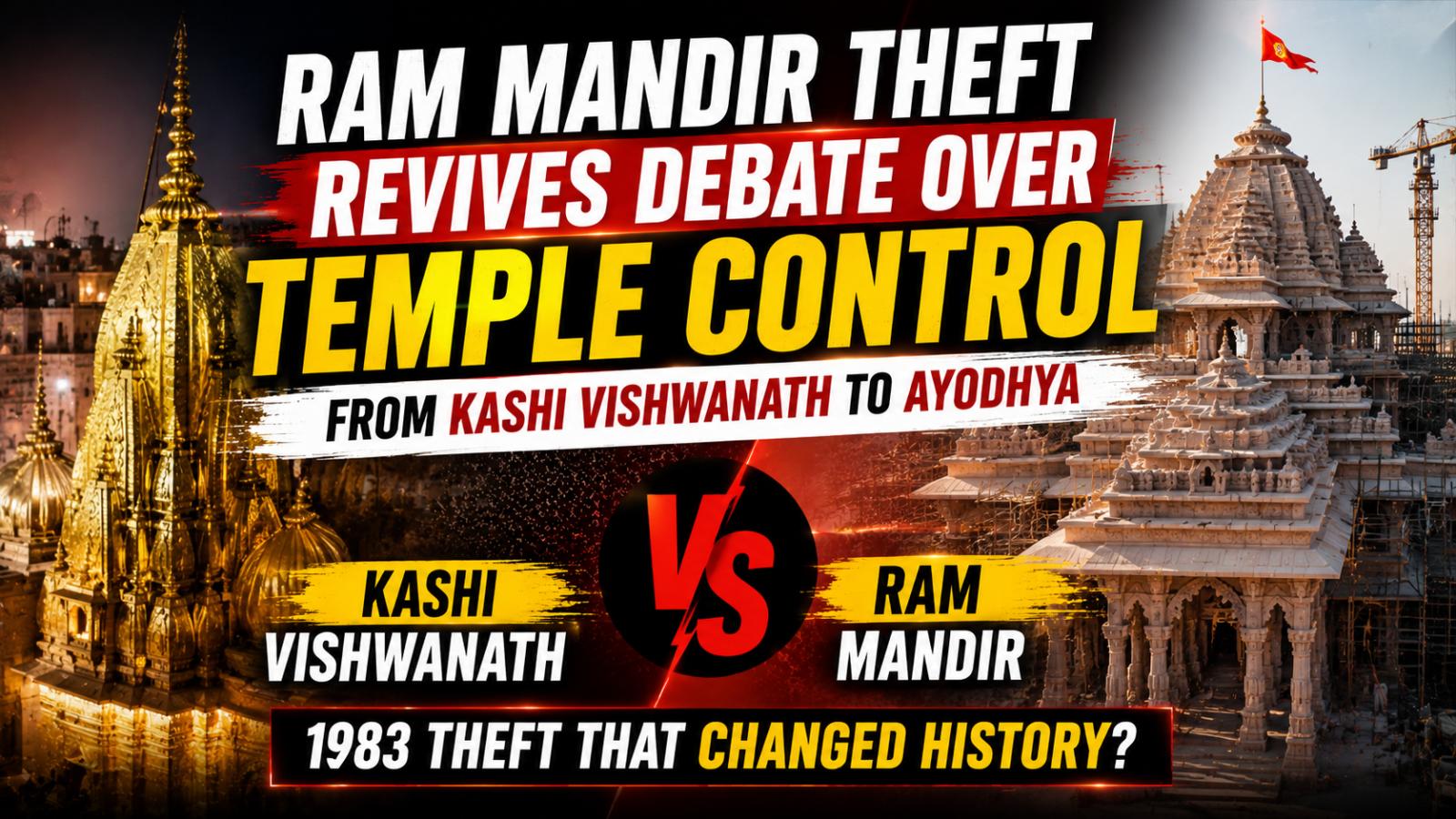
The alleged donation theft controversy surrounding the Ram Temple in Ayodhya has reopened an old and politically sensitive debate over who should manage some of India’s most prominent temples. As questions are raised about accountability and security at the shrine, attention has once again turned to an episode from more than four decades ago, when a major theft at the Kashi Vishwanath Temple in Varanasi eventually led to a complete change in its administrative structure.
The current controversy has prompted the Vishwa Hindu Parishad to clearly state its opposition to any government takeover of the Shri Ram Janmabhoomi Teerth Kshetra Trust. While the organisation has indicated that professional management and the appointment of an accountable chief executive officer may be acceptable, it has maintained that administrative authority should remain with the temple trust. The debate has gained further attention amid an ongoing investigation into the alleged Ram Temple donation theft. Against this backdrop, the 1983 Kashi Vishwanath case is being remembered as an example of how a security failure and concerns over management can fundamentally change control of a major religious institution.
How the 1983 theft changed Kashi Vishwanath administration
On January 5, 1983, thieves stole around 2.55 kg of gold from ornaments associated with the Shivling at the Kashi Vishwanath Temple. Several kilograms of silver ornaments and other valuables were also reported stolen from the temple complex. The incident triggered widespread protests in Varanasi and raised serious questions about security arrangements inside one of Hinduism’s most important places of worship. An FIR was registered, and police later recovered stolen ornaments and arrested multiple accused in connection with the case.
Investigators reportedly suspected that the crime may have involved insider assistance. There were questions about the absence of forced entry, open security grills and how such a large quantity of valuables could be removed from the temple without immediate detection. Although the criminal investigation eventually led to convictions and orders concerning the return of recovered ornaments, the theft’s biggest impact was on temple administration.
The incident exposed deeper concerns surrounding the shrine’s management. Reports from the period pointed to inadequate financial records, the absence of a comprehensive inventory of assets and disputes between hereditary mahants over control of the temple. These administrative concerns had existed before the theft, but the January 1983 incident became a major turning point. The Uttar Pradesh government subsequently moved to change the management structure of the temple through legislation.
Government takeover followed concerns over management
The Uttar Pradesh government headed by then Chief Minister Sripati Mishra introduced an ordinance that later became the Uttar Pradesh Kashi Vishwanath Temple Act, 1983. The law transferred administrative control from hereditary mahants to a newly established management structure. The stated objective was to improve the administration of the temple and its endowments.
Since then, the Kashi Vishwanath Temple has been administered through a statutory framework involving a temple trust, trustees and an executive system operating under government-backed arrangements. The takeover did not end disagreements over traditional rights. Members of families associated with the temple’s earlier hereditary management continued to question the administrative change and pursued legal arguments regarding ownership, history and traditional authority.
Former mahant Rajendra Tiwari had publicly maintained that his family’s historical association with the temple gave it a legitimate claim to traditional management responsibilities. The dispute became part of a larger national debate over whether governments should directly influence the administration of religious institutions. The Kashi Vishwanath episode remains one of the most frequently discussed examples of how allegations of weak administration and a major security breach can lead to long-term changes in temple governance.
Ayodhya controversy brings the old debate back
The circumstances surrounding the Ayodhya Ram Temple and the 1983 Kashi Vishwanath theft are different. The present Ayodhya case remains under investigation, while the Kashi Vishwanath episode involved a theft from the sanctum area and led to major legislative intervention. Still, the latest controversy has revived the broader question of whether major temples should remain independently managed by religious trusts or come under government-supported administrative structures when allegations of mismanagement emerge.
The VHP has taken a firm position against government control of the Ram Temple while supporting stronger professional accountability within the existing trust structure. The organisation’s position reflects a longstanding debate around temple administration in India. Several major temples across the country operate under laws, boards or state-supported administrative systems, while others are managed by independent religious trusts.
The Kashi Vishwanath theft showed that a single security failure can become the trigger for a much larger administrative transformation when it is combined with concerns about financial transparency, internal disputes and management standards. More than four decades later, the Ayodhya controversy has brought those questions back into national discussion. The outcome of the current investigation will be closely watched, but the larger debate is already clear: who should be responsible for managing, protecting and ensuring transparency at India’s most important religious institutions?