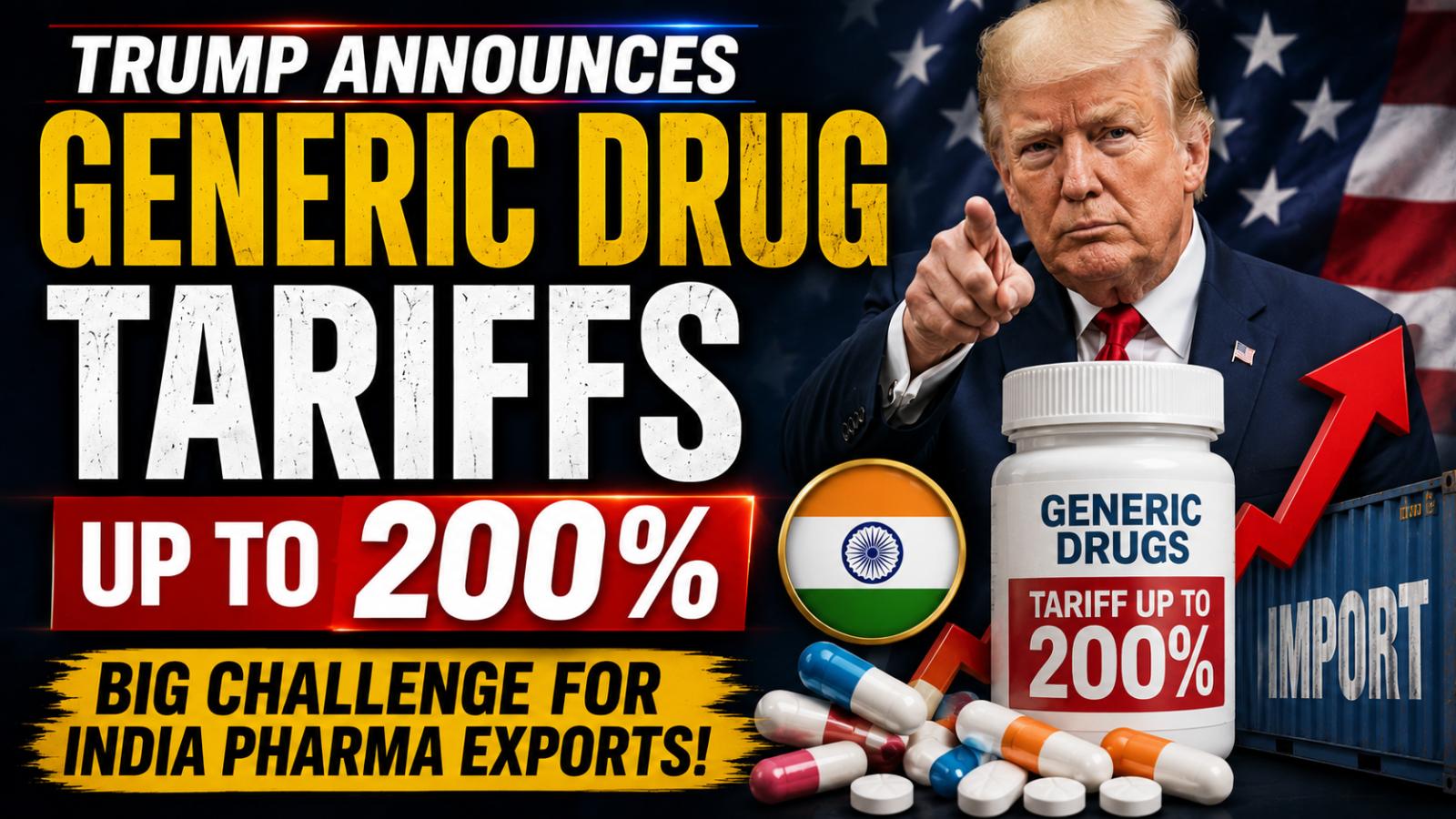
Trump's generic drug tariff plan introduces a phased import duty that could reach 200% within three years, encouraging pharmaceutical companies to manufacture in the United States. The proposal could significantly affect India's pharmaceutical industry, which supplies nearly 40% of generic medicines used in the US.
Trump Generic Drug Tariffs Target India Pharma Exports
Trump Announces New Generic Drug Tariff Policy
US President Donald Trump has unveiled a phased tariff policy targeting imported generic medicines, introducing a long-term strategy aimed at bringing pharmaceutical manufacturing back to the United States. Under the proposal, imported generic drugs will continue entering the American market without tariffs until August 1, 2028. After that period, imports will face a 100% tariff for one year before increasing to 200%.
Trump announced the policy through his Truth Social platform, describing it as an incentive for pharmaceutical companies to establish manufacturing facilities inside the United States. According to the president, the temporary zero-tariff period provides companies with enough time to relocate production and invest in American manufacturing infrastructure before higher import duties take effect.
The administration says the objective is to strengthen domestic pharmaceutical production, reduce dependence on foreign suppliers and improve long-term healthcare security.
India Pharma Exports Face Long-Term Challenge
The proposed tariff structure could have significant implications for India's pharmaceutical sector, which has become one of the world's largest producers of affordable generic medicines. Indian manufacturers currently supply approximately 40% of all generic drugs consumed in the United States by volume, making the American market one of the industry's most important export destinations.
Industry analysts say the phased implementation provides manufacturers with time to evaluate their investment strategies. Companies that already operate facilities within the United States may be better positioned to adapt, while exporters relying entirely on overseas production could face increasing pressure if the tariffs are implemented as announced.
Although the policy does not immediately affect existing exports, the long-term financial impact could be substantial for manufacturers that choose not to establish American production facilities.
India Remains the Pharmacy of the World
India continues to hold a leading position in global pharmaceutical manufacturing and is widely recognized as the "Pharmacy of the World." The country operates more than 3,000 manufacturing facilities approved by the US Food and Drug Administration, representing the highest concentration of FDA-approved pharmaceutical plants outside the United States.
Speaking previously at the USISPF India Leadership Summit, Union Health Secretary Punya Salila Srivastava highlighted India's contribution to global healthcare. She noted that Indian pharmaceutical companies have consistently supported affordable healthcare by supplying high-quality generic medicines worldwide while maintaining strong regulatory compliance.
According to official government figures, Indian generic medicines generated an estimated $219 billion in healthcare savings for the United States during 2022 alone. Between 2013 and 2022, those savings totaled approximately $1.3 trillion, demonstrating the significant role Indian manufacturers continue to play in reducing prescription drug costs for American patients.
US Manufacturing Push Reshapes Global Supply Chains
Trump's announcement reflects a broader effort to encourage companies across several industries to relocate manufacturing operations to the United States. The administration argues that domestic production will strengthen national supply chains while reducing dependence on overseas manufacturers for essential medicines.
For pharmaceutical companies, however, establishing new manufacturing facilities requires substantial capital investment, regulatory approvals and years of operational planning. Industry experts say many firms will likely evaluate whether expanding production inside the United States is more economical than absorbing future import tariffs.
The policy also raises broader questions about global pharmaceutical supply chains, healthcare costs and international trade. While the administration believes reshoring production will strengthen domestic manufacturing, industry observers note that changes of this scale could influence medicine pricing, investment decisions and global pharmaceutical trade over the coming years.
Information in this article is based on President Donald Trump's public statements on Truth Social, official remarks by Union Health Secretary Punya Salila Srivastava, publicly available US FDA data and government information regarding pharmaceutical manufacturing.