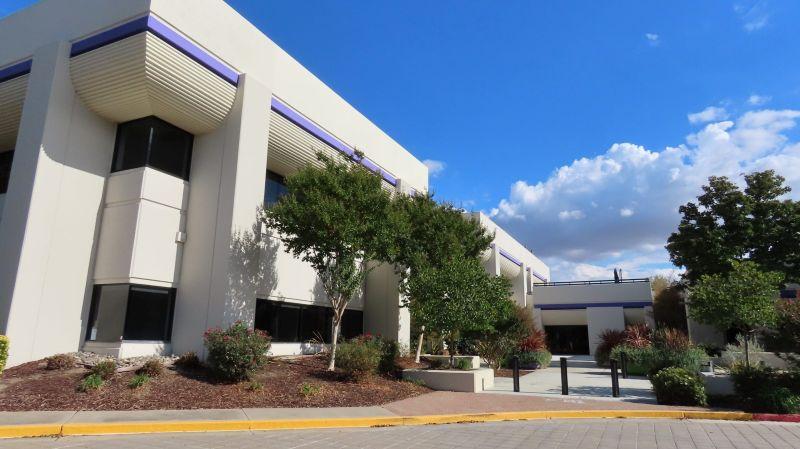
Imagine stepping into a high school where students aren't weighed down by repetitive lectures or standard tests but instead are energized by meaningful projects and real-world challenges. At 1331 E Calaveras Blvd, such a learning space has come to life. The Milpitas High School (MHS) Extension, located at the newly developed Innovation Campus, opened in August 2024 and welcomed its inaugural batch of 70 freshmen and sophomores. These students embarked on a unique educational journey that offers a refreshing departure from traditional high school learning.
The MHS Extension is not a separate entity from Milpitas High School but rather an integral expansion of it, although situated roughly 2.2 miles away. While students remain part of the greater MHS community, they experience their full school day on the Innovation Campus. The new setup is built around an innovative academic model, designed to foster collaboration, creativity, and deep learning. With a structure that includes four 90-minute periods from Monday to Thursday and a full six-period schedule on Fridays, students benefit from a rhythm that allows for deeper engagement with each subject.
According to Assistant Principal Robert Richardson, students also have a dedicated period for project-based learning, often referred to as PBL. These sessions, particularly the seventh period, are focused on passion-driven projects. The MHS Extension emphasizes hands-on, experiential learning, with electives in engineering and digital media. Courses such as Intro to Engineering, Architectural Design, Digital Media, and Advanced Multimedia give students exposure to fields they are likely to pursue after graduation.
Sophomore Bryan Nguyen, who transferred from the main MHS campus, felt that his earlier school experience lacked the hands-on opportunities he desired. He said the MHS Extension gave him a better sense of direction toward his goal of becoming a mechanical engineer. Access to advanced tools and relevant projects helped him feel like he was gaining real skills aligned with his ambitions. Fellow sophomore Addison Tuet shared a similar sentiment. At the main campus, she felt lost in a crowd, unsure how her work connected to future career goals. At the Extension, however, she feels more in control of her education and appreciates the ability to make personalized choices.
The project-based learning model empowers students by putting them at the center of the learning process. Rather than memorizing textbook content, students create, build, and experiment. Richardson emphasized that the goal is to cultivate deeper learning by allowing time for students to collaborate meaningfully and explore subjects thoroughly. The results are tangible: students retain information longer, build critical thinking skills, and gain confidence in their abilities.
Freshman Norah Bonifacio, who came from Thomas Russell Middle School, said that the smaller class sizes have made a noticeable difference. With just 10 students in her math class, she gets personalized attention and a stronger grasp of concepts. Despite being at a separate campus, students like Bonifacio remain connected to the wider MHS community. Those involved in sports are transported daily by bus to the main campus for practices, maintaining social and extracurricular ties.
The Innovation Campus itself is equipped with modern facilities including a makerspace, STEAM lab, production studio, community room, and a new Esports Lab. All students are provided with MacBooks to enhance their learning. Additionally, the MHS Extension offers dual enrollment opportunities, allowing students to take college-level courses taught onsite by professors from the San Jose Evergreen Community College District.
Principal Greg Wohlman, who leads both the MHS main campus and the Extension, was deeply involved in planning this groundbreaking educational program. He noted that one of the most distinctive features of the MHS Extension is that every student and staff member chose to be there, which has created a positive and intentional community. He believes this choice-driven environment is what makes the school truly innovative and effective.
In an era where educational reform is often discussed but rarely implemented in meaningful ways, the MHS Extension stands as a powerful example of what is possible when a school district listens to students’ needs and commits to preparing them for the real world. From its emphasis on project-based learning to the provision of cutting-edge resources and personalized academic pathways, this new campus is reshaping what high school can be—one student at a time.