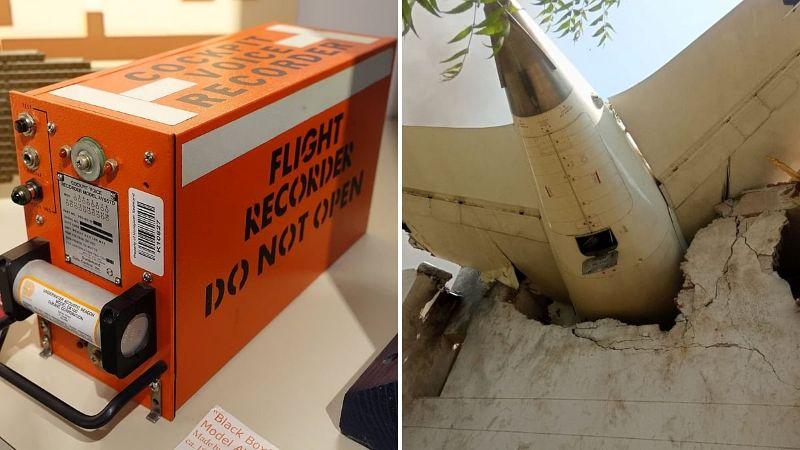
The black box recovered from Air India flight AI 171, which crashed in Ahmedabad on June 12, is being sent to the United States for further analysis. The flight, a Boeing 787 Dreamliner headed to London, tragically crashed into a hostel building at BJ Medical College seconds after takeoff, claiming 274 lives, including more than two dozen civilians on the ground.
Initial reports reveal the cockpit voice recorder (CVR) and flight data recorder (FDR), collectively known as the black box, suffered severe external damage from the post-crash blaze. The intense heat at the site reportedly reached up to 1,000 degrees Celsius, beyond typical thermal exposure limits for aviation recorders. Though black boxes are engineered to survive extreme conditions, this fire has left the onboard data modules severely compromised.
Because India currently lacks the technological infrastructure to retrieve data from such extensively damaged flight recorders, authorities plan to send the FDR to the National Transportation Safety Board (NTSB) lab in Washington, USA. The NTSB lab is globally recognized for its advanced data recovery capabilities. Once data is extracted, the findings will be shared with India’s Aircraft Accident Investigation Bureau (AAIB), which has been tasked with completing the crash investigation within three months.
The recovery and decoding of the black box are critical to uncovering what exactly led to the fatal accident. Experts expect that insights from both the FDR and CVR will shed light on the aircraft's mechanical behavior, crew response, and timeline of events during those final moments.
Speculation over the cause of the crash includes a possible dual engine failure. Captain Steve Scheibner, a former US Navy pilot, suggested this scenario in an interview, citing the likely deployment of the aircraft’s ram air turbine (RAT) shortly after takeoff a safety feature typically activated when both engines lose power.
While no official conclusion has been drawn yet, the forthcoming black box analysis is expected to provide much-needed clarity. The delay in decoding could range from several days to months, depending on the internal damage. In the meantime, families of the victims and aviation experts await definitive answers that may also influence future air safety protocols.