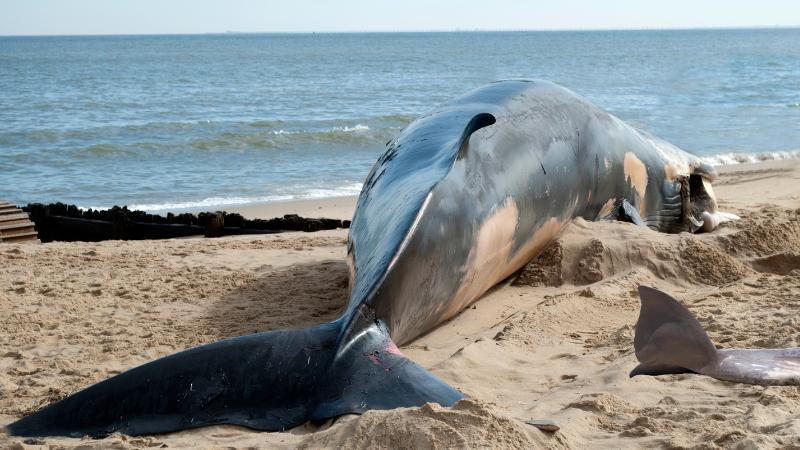
United States Representative Sam Liccardo, a Democrat from San Jose, is raising serious concerns about whether recent federal job and funding cuts are weakening the ability of national agencies to protect marine life in the San Francisco Bay Area. His inquiry comes amid a troubling spike in whale deaths recorded along Northern California's coastal waters. According to regional scientific data, at least 24 whales have died in the Bay Area so far this year. A significant number of those deaths were reportedly caused by collisions with large ships and smaller boats, suggesting a growing crisis for marine mammal safety in one of the country’s most ecologically significant marine corridors.
What makes this alarming is not just the sheer number of fatalities, but also the broader context. This year has seen an unusually high number of whales appearing in the Bay Area, with scientists noting that while some appear in normal condition, others are showing signs of being emaciated or distressed. These patterns point to deeper issues affecting the Pacific ecosystem, possibly including food scarcity, climate-related migration changes, and increased human maritime activity. With this background, Liccardo has written a formal letter to the National Oceanic and Atmospheric Administration (NOAA), pressing the agency to clarify whether it is actively investigating the whale deaths and whether recent staffing and resource reductions are compromising its ability to do so.
The letter, which has received support from 20 other California lawmakers including all representatives from the Bay Area, demands transparency from NOAA. It also urges the agency to account for how budget cuts may be influencing their capacity to monitor and respond to marine mammal emergencies and environmental threats in real time. Liccardo emphasized the urgency of the matter, stating that the public deserves answers and that the federal government must allocate its best scientific minds to address the issue, assuming those individuals are still in place following staffing reductions.
"Do we think other species are being impacted as well? How might this be affecting our oceans more generally? And of course, what can we do about it?" Liccardo said, expressing concern that the problem may not be limited to whales alone. The potential ripple effects on the ocean's ecological balance, as well as implications for fisheries, tourism, and coastal communities, could be significant if left unchecked.
The silence from NOAA so far has prompted lawmakers to consider other avenues. Liccardo and his colleagues have made it clear that if the agency fails to respond to their inquiry, they will explore formal legislative or oversight actions to seek the necessary information. This could include congressional hearings or additional correspondence to compel accountability and transparency from the responsible authorities. For Liccardo, the goal is not only to prevent further whale deaths but also to strengthen federal oversight of environmental protections across California’s vast marine territories.
The broader context of federal environmental resource allocation also plays a role in this concern. In recent years, several agencies, including NOAA, have faced pressures to scale back certain programs due to budget constraints or policy shifts. Marine biology experts warn that reducing staff and cutting critical research or enforcement operations may result in delayed responses to environmental threats, particularly in areas like the Bay, where commercial shipping activity continues to intensify alongside fragile ecosystems.
As more sightings of vulnerable or malnourished whales are reported near the Golden Gate and along the Marin coastline, local environmental groups have echoed Liccardo’s demands. They argue that more must be done to create protected migration corridors, enforce speed limits for vessels in key areas, and improve federal-state coordination in monitoring and rescue operations.
The situation underscores a growing tension between economic infrastructure and environmental stewardship. The San Francisco Bay is not only a major gateway for shipping and trade but also a vital habitat for marine life, including whales, sea lions, and countless migratory bird species. With marine biodiversity under increasing threat from human activity, calls like Liccardo’s highlight the need for policy focus, public awareness, and governmental responsibility.
In the coming weeks, environmental advocates, researchers, and lawmakers will be watching closely to see how NOAA responds to this letter and whether additional measures will be taken to address what many now consider a whale mortality crisis in the Bay Area. Whether through enhanced protections, improved monitoring, or increased funding, the urgency to act is clear—not only to protect marine mammals but to safeguard the broader health of California’s coastal ecosystems.