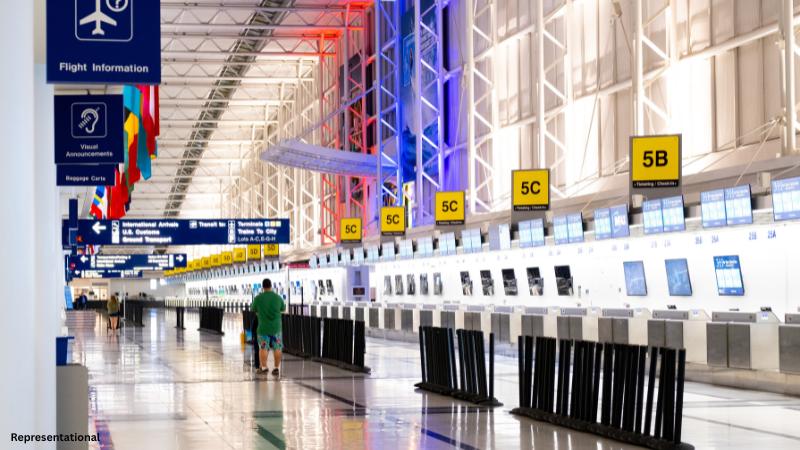
London Heathrow Airport experienced hours of disruption on Monday after fears of a chemical leak led to panic, medical emergencies, and the full evacuation of Terminal 4. The incident began shortly before 5 pm when reports surfaced of a “mysterious chemical” in the air, prompting emergency services to rush to the scene. Ambulances, fire crews, and hazardous materials teams arrived quickly as passengers were moved outside to a safe distance.
Witnesses described chaotic scenes as men in hazmat suits and masks entered the terminal while safety screens were erected. Passengers were kept roughly 160 yards from the building as teams investigated what was believed to be a potentially hazardous substance. By the time emergency services had secured the area, 21 people required medical treatment, and one person was transported to hospital.
The London Ambulance Service confirmed its response began at 4.50 pm. It deployed ambulance crews, cycle responders, an incident response officer, and a hazardous area response team. “We treated 21 patients before taking one to the hospital,” the service reported. Although the nature of the suspected chemical was not immediately clear, the sheer number of people who felt unwell raised fears of a dangerous leak.
After hours of uncertainty, authorities confirmed that the scare turned out to be unfounded. Around 8 pm, police announced that “no trace of any adverse substance” had been detected in Terminal 4. Officials concluded that the health concerns appeared to be related to a mass hysteria event, in which widespread panic caused physical symptoms among travelers. The Metropolitan Police said that while around 20 people reported injuries, none of the cases were life-threatening or life-changing.
A Heathrow Airport spokesperson later confirmed that the terminal was cleared to reopen after safety checks were completed. “Emergency services have confirmed Terminal 4 is safe to reopen and we are doing everything we can to ensure all flights depart as planned today. We are very sorry for the disruption caused. The safety and security of our passengers and colleagues is our number one priority,” the statement read.
Despite the all-clear, the scare caused several hours of delays for passengers, many of whom were advised to check with their airlines for the latest updates before returning to the airport. Staff worked into the evening to help travelers get to their destinations after the disruption.
The incident has raised questions about how the rumors of a chemical leak began and why they spread so quickly through the terminal. Investigators have not yet determined what triggered the initial alarm, but the speed at which panic set in has drawn attention to the vulnerabilities of crowded public spaces during emergency scares.
For passengers caught up in the chaos, the day was one of fear and frustration. Many described seeing hazmat teams enter the building as rumors spread through the crowds outside. Others recounted the uncertainty of not knowing whether flights would depart and whether they were in any danger.
By late evening, the airport resumed normal operations, and flights gradually returned to schedule. While the incident turned out to be a false alarm, it served as a reminder of the importance of emergency preparedness at one of the world’s busiest airports. With more than 80 million passengers passing through Heathrow annually, even a short disruption can ripple through global flight schedules.
Authorities said inquiries into the incident are ongoing. For now, the official explanation remains that mass hysteria contributed to the sudden wave of reported illnesses. Passengers and airport staff alike expressed relief that no hazardous substance was discovered, though the scare has left many shaken. Heathrow officials reassured travelers that safety remains their top priority and pledged continued vigilance in preventing and responding to future incidents.