A social media post by an Australian woman has triggered widespread outrage after she described Diwali decorations in a Sydney neighbourhood as a “threat” to Western culture. The remarks have sparked an intense online debate over cultural coexistence, diversity, and the meaning of multiculturalism in modern Australia.
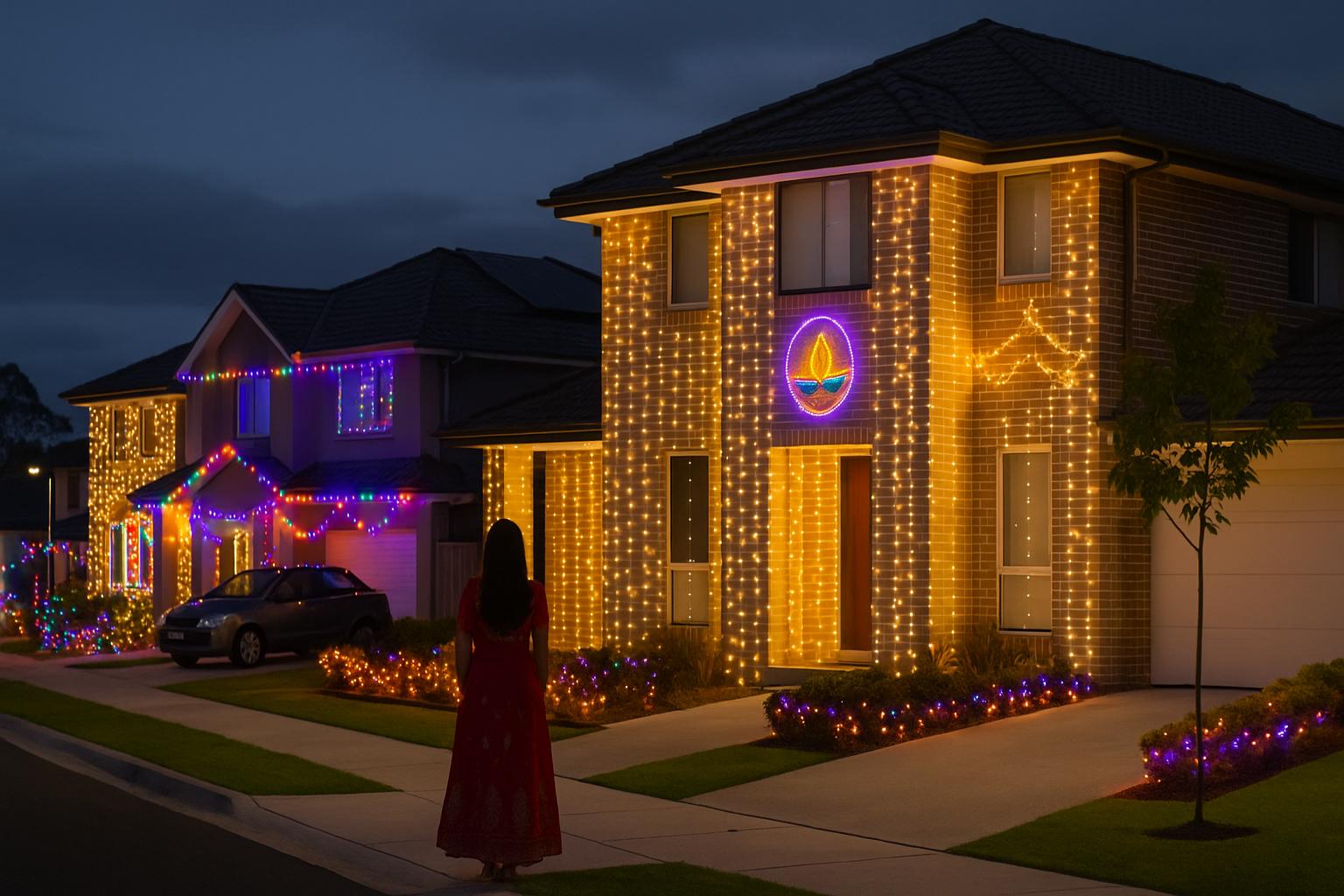
The controversy began when Kobie Thatcher, an Australian resident, posted a short video on X (formerly Twitter) showing several homes in Nirimba Fields, a suburb in northwest Sydney, decorated with bright lights for Diwali. Alongside the clip, she wrote, “These houses are not lit up for Christmas. They are lit up for Diwali. Just about everyone in this neighbourhood of Nirimba Fields is Indian. The West has reached a pivotal moment. We must preserve our own culture before we lose it.”
Her comments quickly went viral, drawing thousands of responses from users condemning the post as intolerant and divisive. Many accused Thatcher of displaying ignorance about India’s festival of lights and misunderstanding Australia’s multicultural identity.
One user responded, “That is the best example of hardworking people accepting Australia as their home and maintaining their culture while embracing the Australian way of life. They live peacefully, lawfully, and contribute to the local economy.” Another wrote, “A peaceful festival of lights where good triumphs over evil is threatening you exactly how?”
Several others defended the Indian community’s role in enriching Australia’s social fabric, pointing out that Indian Australians often celebrate both Diwali and Christmas with equal enthusiasm. “The Indian community celebrates Christmas too. You’re targeting the wrong group—they represent inclusion, not division,” one commenter said.
Despite the backlash, Thatcher stood by her comments and replied to critics saying, “They can celebrate it as much as they want in India.” Her defiance drew even more criticism, with many calling her remarks “petty,” “uninformed,” and “un-Australian.”
Another social media user remarked, “A few Indian families putting up lights to celebrate their biggest festival offends you? Those same households will be celebrating Christmas soon. That’s the essence of multicultural harmony.”
The incident has since ignited a broader conversation about how Australia defines and practices multiculturalism. Experts and community members say that while Australia has long prided itself on being a melting pot of cultures, such comments reflect lingering resistance among some to changing demographics.
Indian Australians, now one of the fastest-growing migrant groups in the country, have contributed significantly to various sectors—from education and medicine to small businesses and technology. In suburbs like Nirimba Fields, Diwali has become an annual event that brings together families of different backgrounds to share food, music, and the spirit of community.
Community leaders have emphasized that Diwali celebrations, marked by lamps and lights symbolising the victory of good over evil, are non-political and non-threatening expressions of joy and faith. Many have called for greater awareness about cultural traditions to prevent misinformation and hostility.
Public reaction also highlighted how immigrant communities adapt to their host nations while preserving their roots. Many Australians of Indian origin expressed disappointment at the negative portrayal of Diwali, stressing that their celebrations often include neighbours from diverse backgrounds.
The controversy mirrors recurring tensions across Western societies where immigration and cultural identity continue to intersect. As Australia grows more diverse, such incidents reveal both the challenges and opportunities in balancing cultural pride with inclusion.
Ultimately, the episode surrounding Kobie Thatcher’s post underscores how social media can amplify cultural misunderstandings but also how it can spark meaningful conversations about coexistence. For many Australians responding online, the message was clear: embracing diversity is not a threat to Western culture—it strengthens it.
The colourful Diwali lights of Nirimba Fields, rather than symbolising division, have come to represent something far brighter — the resilience of multicultural Australia and its shared belief that joy, light, and respect can transcend cultural boundaries.